
Paris in One Day and 2,000 Years: a Walking Itinerary Through the City's Origins
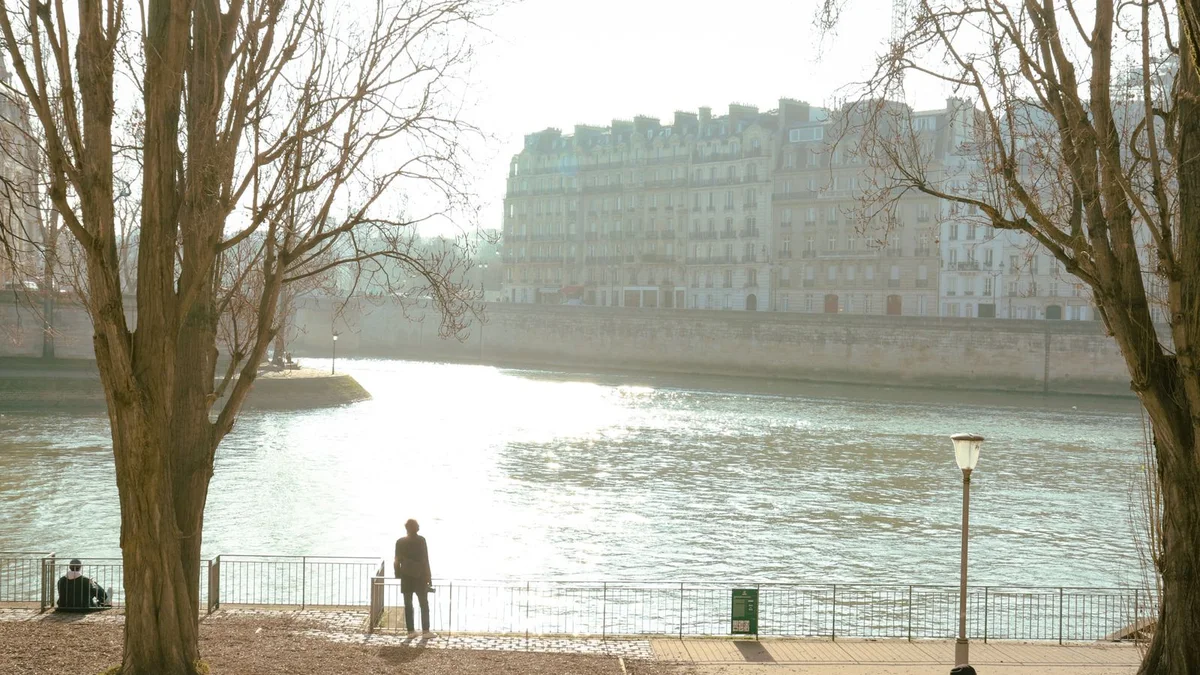
Most Paris itineraries show you monuments. This one shows you time. In one day and four kilometres on foot, it retraces the city’s history in the order it was written, from the Roman tiers of the Left Bank to the banks of the Seine, and it ends where stones are no longer enough: in front of the river, at golden hour, when the city of the past takes its place again before your eyes.
The itinerary in short: in the morning, the Lutetia arena and the Cluny baths, the only two Roman monuments still standing in Paris; at midday, the île de la Cité and its archaeological crypt, two hundred metres from the freshly discovered Gallic rampart; in the afternoon, the place de Grève and the quays; at the end of the day, The Origins of Paris, a one-hour guided walk on the riverbanks where our virtual-reality binoculars bring back Lutetia, the Vikings and medieval Paris exactly where they happened. Do it Tuesday to Sunday, to avoid Monday closures.
Why start at the far end of the Left Bank
Roman Paris was not built on the island but on the Left Bank, along the cardo running down from the montagne Sainte-Geneviève, today’s rue Saint-Jacques. So that is where to start, and it gives the day its logic: you walk towards the river as the city did, and each stop is more recent than the last.
Morning: Lutetia, the Roman town
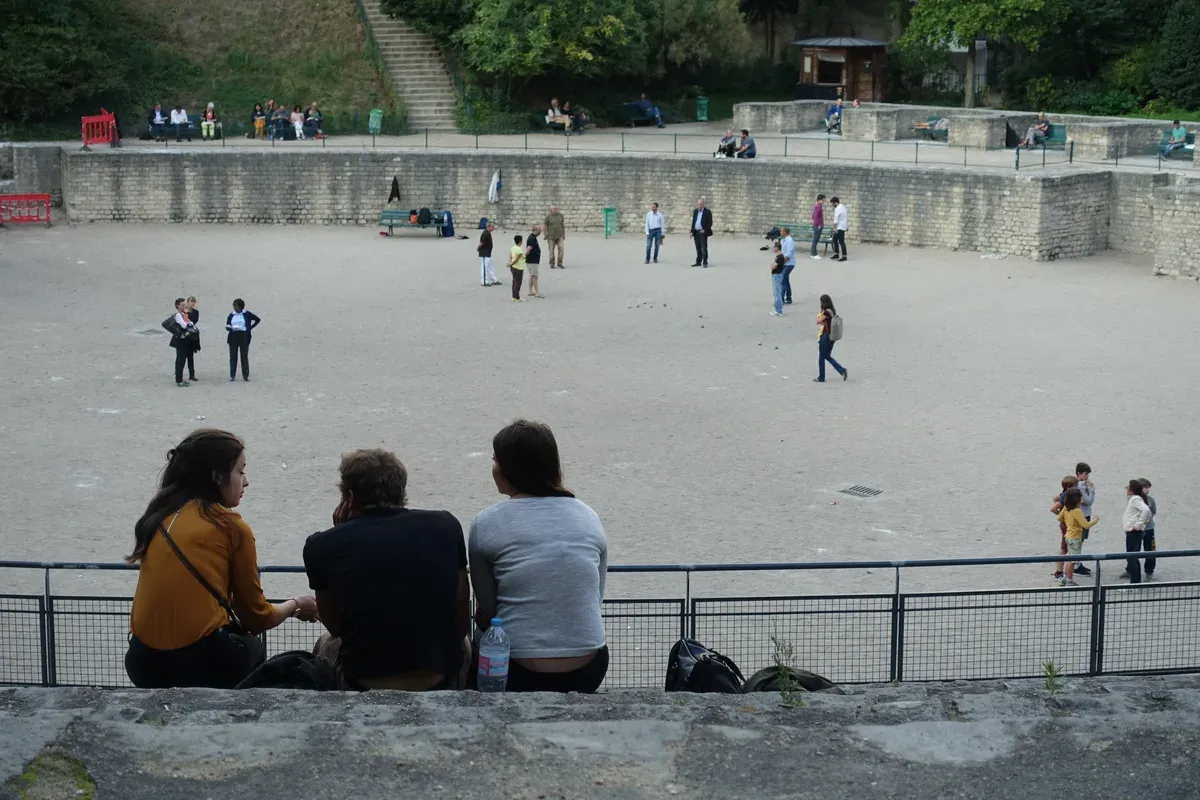
The Lutetia arena: a 1st- and 2nd-century amphitheatre, rediscovered in 1869 and saved by a campaign Victor Hugo lent his voice to. Photo Guilhem Vellut, CC BY 2.0.
Start with the arènes de Lutèce, on rue Monge, free and open from the morning. You enter through what looks like an apartment-building doorway and come out in a Roman amphitheatre where children play football: the tiers are restored, the floor is sand, and the animal cages still open onto the ring. Rediscovered in 1869 when rue Monge was cut through, then buried again, the arena owed its survival to a preservation campaign Victor Hugo lent his voice to; the square that shelters it opened in 1892.
Then walk down rue Monge and boulevard Saint-Germain, a quarter of an hour, to the Cluny baths. The frigidarium, the cold room of Lutetia’s public baths, has kept its Gallo-Roman vaults, and it houses the Pillar of the Boatmen, the oldest dated monument in Paris, offered by the guild of Seine boatmen. The museum is closed on Mondays; it is free for under-18s and for EU residents under 26.
Midday: the island, where it all began
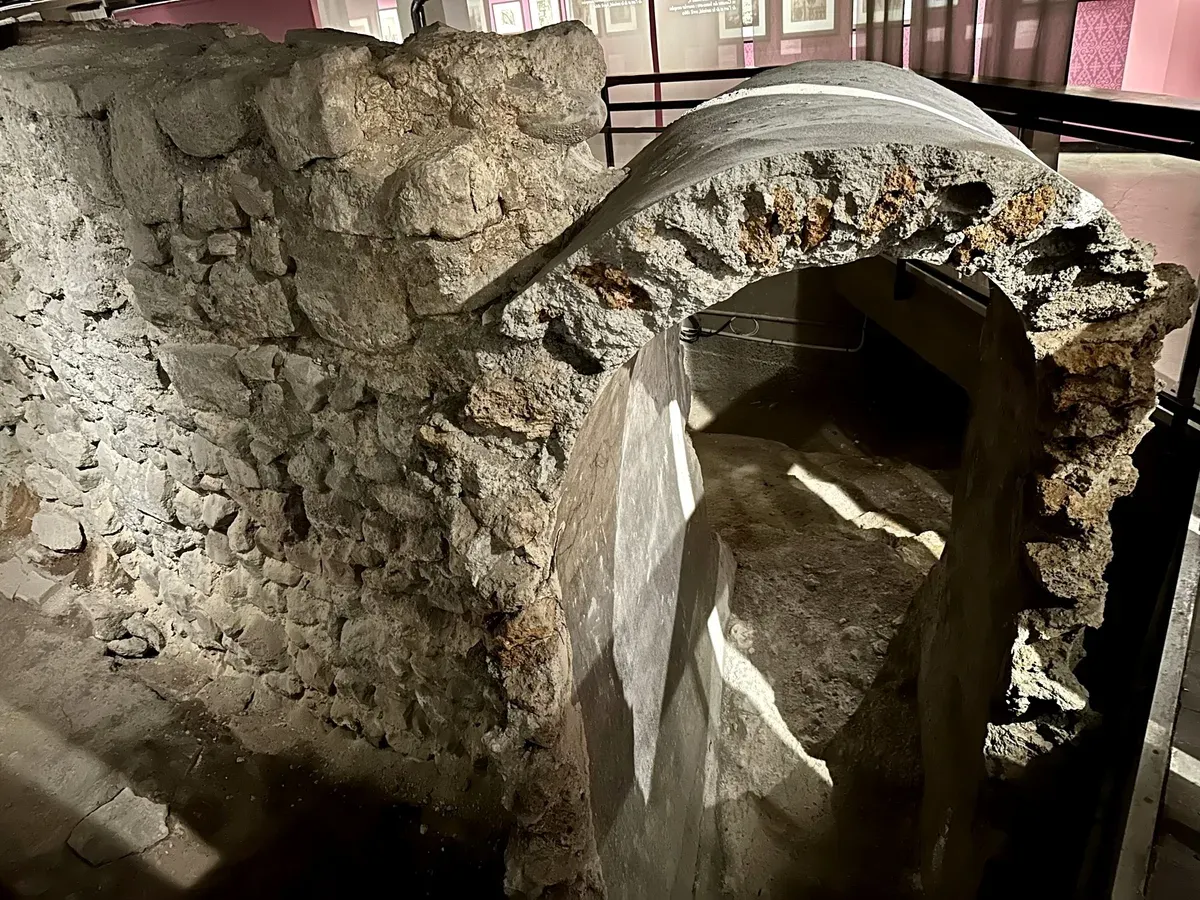
Beneath the parvis of Notre-Dame, the archaeological crypt stacks the ancient quay, the Late Roman rampart and the medieval cellars. Photo APK, CC BY-SA 4.0.
Cross the Petit-Pont. You are on the île de la Cité, and beneath your feet lies the archaeological crypt, open Tuesday to Sunday from 10 am to 6 pm, free for under-18s. Uncovered during the parvis excavations of the 1960s and 1970s, it shows the city in cross-section over two thousand years: the quay of the ancient port, the 4th-century rampart, the foundations of medieval streets. And since September 2026 it has a neighbour: two hundred metres away, under the Hôtel-Dieu, archaeologists have uncovered a twenty-metre Gallic rampart, possibly that of the Parisii’s oppidum described by Caesar. The dig is not open to view, but you will walk past it.
Have lunch on the island or, better, on the neighbouring île Saint-Louis, away from the terraces of the parvis. If you are with children, this is ice-cream time.
Afternoon: the square that gave French a word
Cross back to the Right Bank over the pont d’Arcole: the square in front of the Hôtel de Ville was for six centuries the place de Grève, the port of Paris and the site of its executions, the one that gave French the expression “faire grève”, to go on strike. Nothing on the spot says so, which is what makes the rest of the day necessary. Take time for a coffee, then go down to the quays: the start of the last stage is five minutes away.
End of the day: the living city, at last
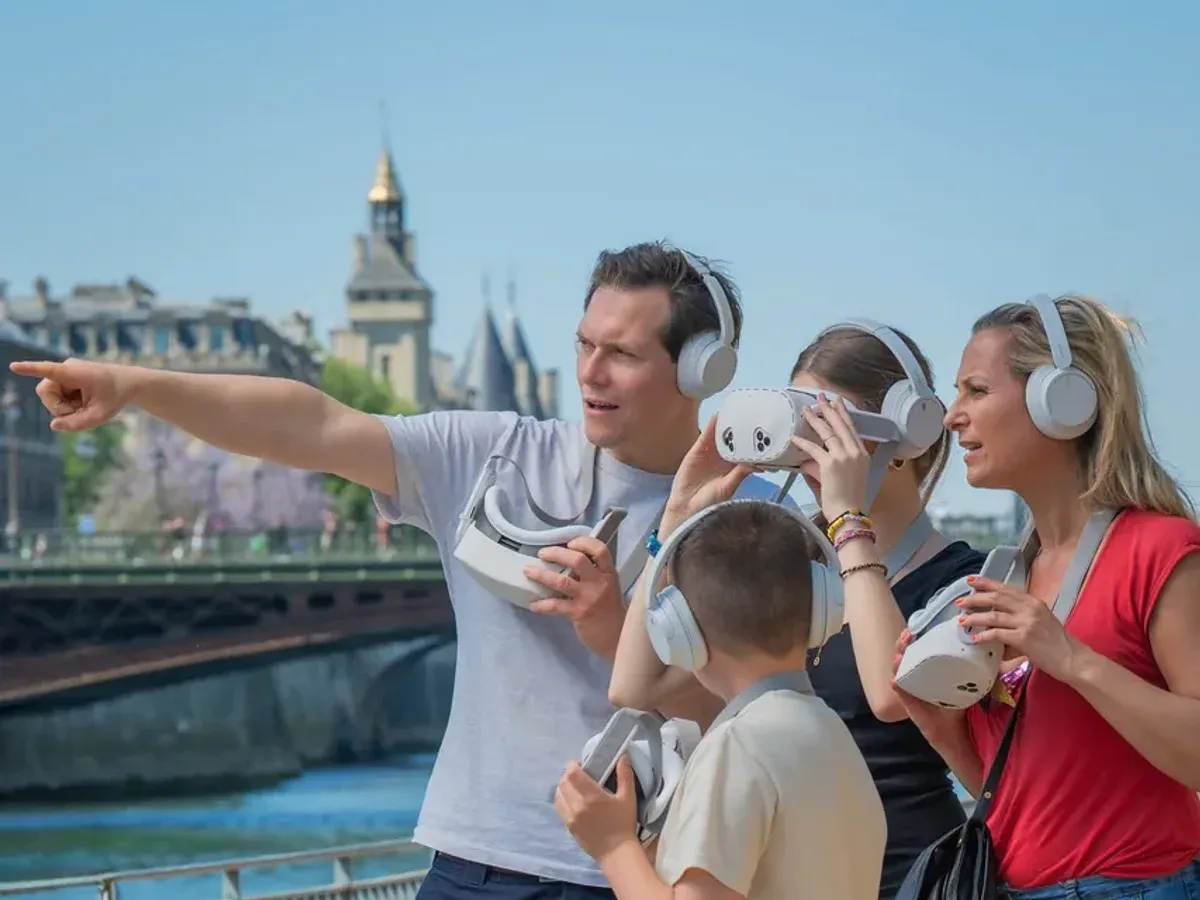
On the riverbanks, the binoculars are held in front of the eyes like ordinary binoculars: you stay together, outdoors, in the real landscape.
All day you have seen stones, remarkable ones. What is missing is what no museum can give: the living city, in the very place where it lived. That is the idea behind The Origins of Paris. Meet under the pont Louis-Philippe, on the voie Georges-Pompidou, two minutes from Pont Marie metro. For one hour, a guide leads you along 1.2 km of riverbank to the île Saint-Louis, and at each stop the virtual-reality binoculars bring back the scene that took place there: Gallo-Roman Lutetia, whose baths and arena you have just seen; the Viking siege of 885; the medieval place de Grève, which you have just crossed without recognising it; the building site of Notre-Dame; the flood of 1910; the 1889 World’s Fair, and more than fifteen eras in all, each validated by our scientific committee.
Book the late-afternoon slot: it is the one with low light on the river, and in winter the one where the walk ends in illuminated Paris. The visit is open from age 8, in French, English or Spanish, and runs in almost any weather. It is the only stage of the day that needs booking, and the only one not to miss: it gives all the others their meaning.
Evening: end where you arrived
The walk leaves you on the île Saint-Louis at dinner time. Its streets have hardly changed since the 17th century; pick a side street rather than the main one. And if you still want more, the Marais is ten minutes away, with its medieval street plan and its free museums for another day.
The rules of this itinerary
- Follow the chronological order: Roman Left Bank, medieval island, merchant Right Bank, then the riverbanks. It is the order of the city, and it is what makes the day legible.
- Avoid Mondays: the Cluny baths and the archaeological crypt are closed that day.
- Book the Origins for late afternoon, before you set off, and keep the rest of the day free of bookings.
- Allow four kilometres of walking, all flat from Cluny onwards, plus the final kilometre of the guided walk.
The questions we get asked
How long does it take? A full day, 10 am to 8 pm, with time for lunch. If you only have an afternoon, keep the archaeological crypt, the place de Grève and The Origins of Paris: the three fit in four hours.
Is it suitable for children? From age 8, yes: the arena is a playground, the crypt reads like a picture book in stone, and the final walk is designed for families, with children keeping the binoculars in front of their eyes without being cut off from the group. Under 8, keep the arena and the island, and skip the crypt.
And in the rain? The baths, the crypt and lunch are under cover; the Origins run in most weather, and a shower on the quays is part of the journey. If it settles in, the covered passages of the 19th century are a short metro ride away.
In short
A one-day walking itinerary to retrace two thousand years of Paris in order: the Lutetia arena and the Cluny baths in the morning, the île de la Cité and its archaeological crypt at midday, the place de Grève in the afternoon, and to finish, at golden hour, The Origins of Paris on the riverbanks, where everything you saw in stone comes back to life in its place. Tuesday to Sunday, one slot to book, and the whole city as a museum.
Sources and practical links
- Square des arènes de Lutèce et square Capitan, City of Paris (in French).
- The Gallo-Roman baths, musée de Cluny, national museum of the Middle Ages (in French).
- Archaeological crypt of the île de la Cité, Paris Musées.
- The Origins of Paris, meeting point, times and booking.
- Images: Lutetia arena, photo Guilhem Vellut (CC BY 2.0); archaeological crypt, photo APK (CC BY-SA 4.0), via Wikimedia Commons; visitors of The Origins of Paris, Timescope.