
Why Is a Strike Called a "Grève" in French?
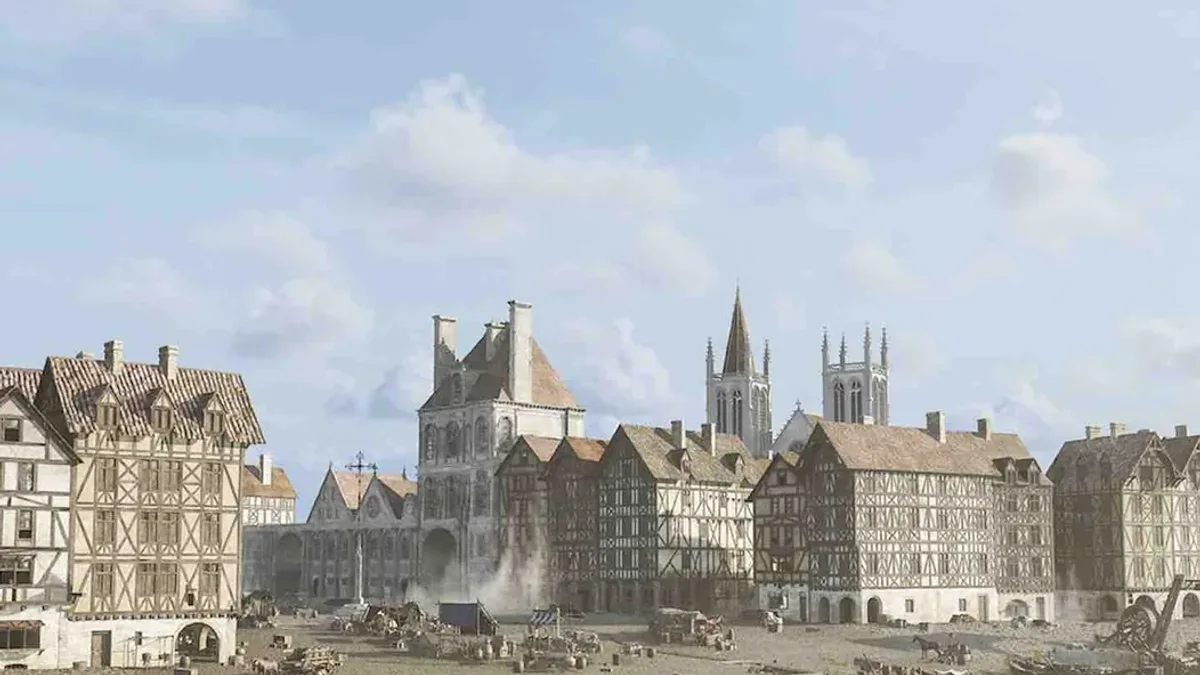
Every time France stops working, the same question comes up abroad: why do the French call a strike a “grève”? The answer lies neither in law nor in union vocabulary. It lies on a square in Paris, in front of the City Hall, and it begins with a beach.
“Faire grève”, the French for going on strike, comes from the place de Grève, today’s place de l’Hôtel-de-Ville in Paris. A “grève” is a bank of sand and gravel, and this gently sloping riverbank served as the city’s main port. Workers without a job would gather there waiting to be hired: “être en grève” first meant looking for work. The meaning flipped in the 19th century, when collectively stopping work became the new way of ending up on the square.
A beach in the heart of Paris
The word first. In French, a “grève” is a shore of sand and gravel, a word still used for the banks of the sea or the Loire; the Académie française and the CNRTL trace it to an old root meaning coarse sand. And in the Middle Ages, the right bank of the Seine had exactly that, facing the Île de la Cité: a gently sloping bank where boats could beach and unload. This was the port de Grève, the great port of Paris. Wine, wheat, wood and hay arrived there by river before moving on to the Halles market, and the square that opened behind the bank became the city’s first nerve centre.
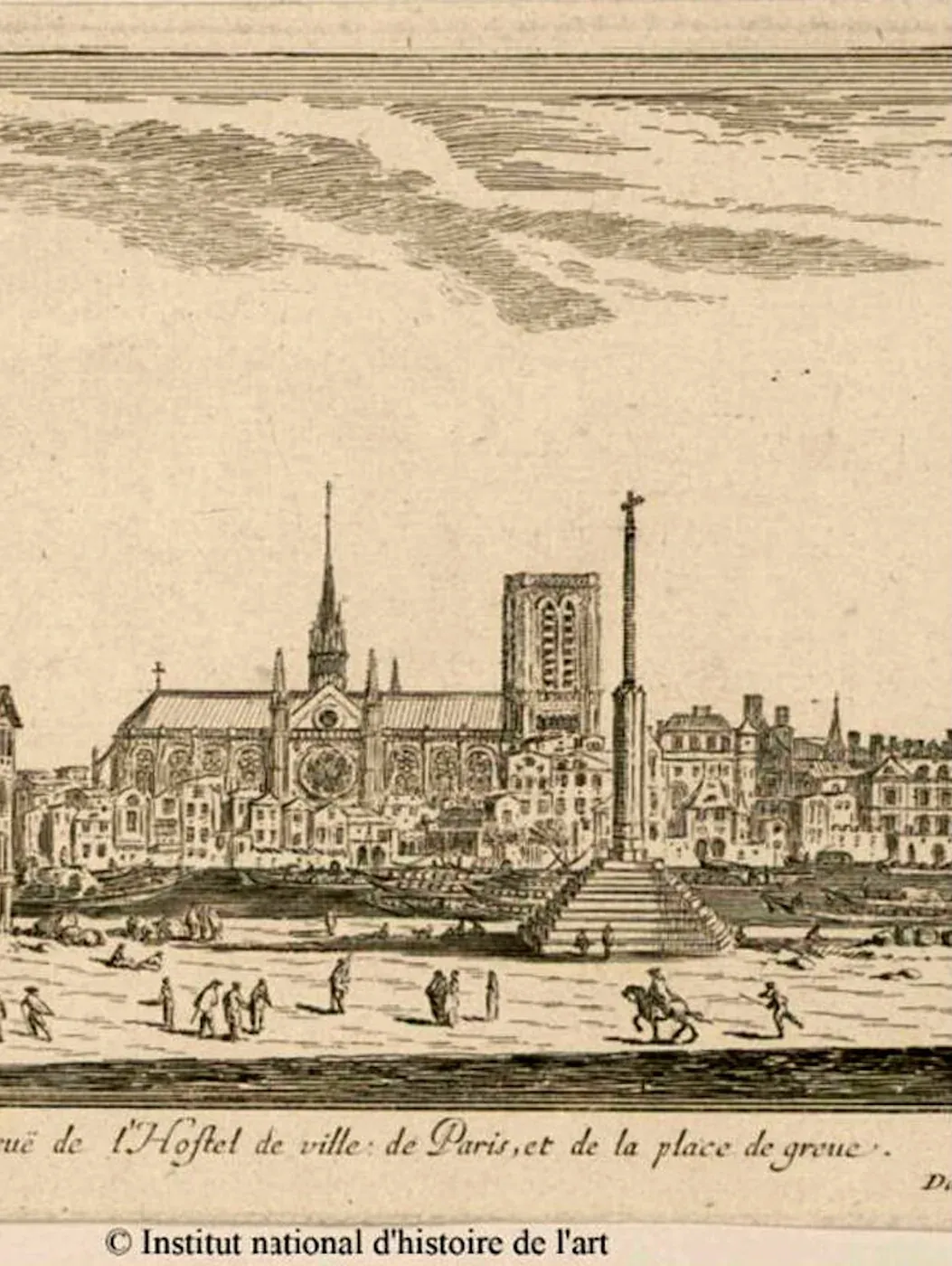
“View of the Hôtel de Ville of Paris and the place de Grève”: the square, its Renaissance City Hall, and the riverbank that gave it its name.
The hiring square
A port needs arms. Unloading the boats and rolling the barrels to the warehouses: the port de Grève needed a large, changing workforce every morning. So a habit settled in that would last for centuries: workers without a job came to wait on the square, and employers came to pick their day labourers there. “Être en grève”, in old Paris, meant exactly that: standing on the square, available, waiting to be hired. The phrase described unemployment, not protest. Our article on medieval Paris sets the scene of that river-facing city.
The square of all Paris
The place de Grève was more than an open-air labour exchange. In 1357, Étienne Marcel, provost of the merchants, installed the city government there in the “maison aux Piliers”; under King François I, a City Hall inspired by Florentine palaces rose in its place, and the square became the civic heart of the capital: royal celebrations and Midsummer bonfires. It was also its darkest stage, the site of public executions, where Ravaillac, the assassin of King Henri IV, was put to death in 1610.
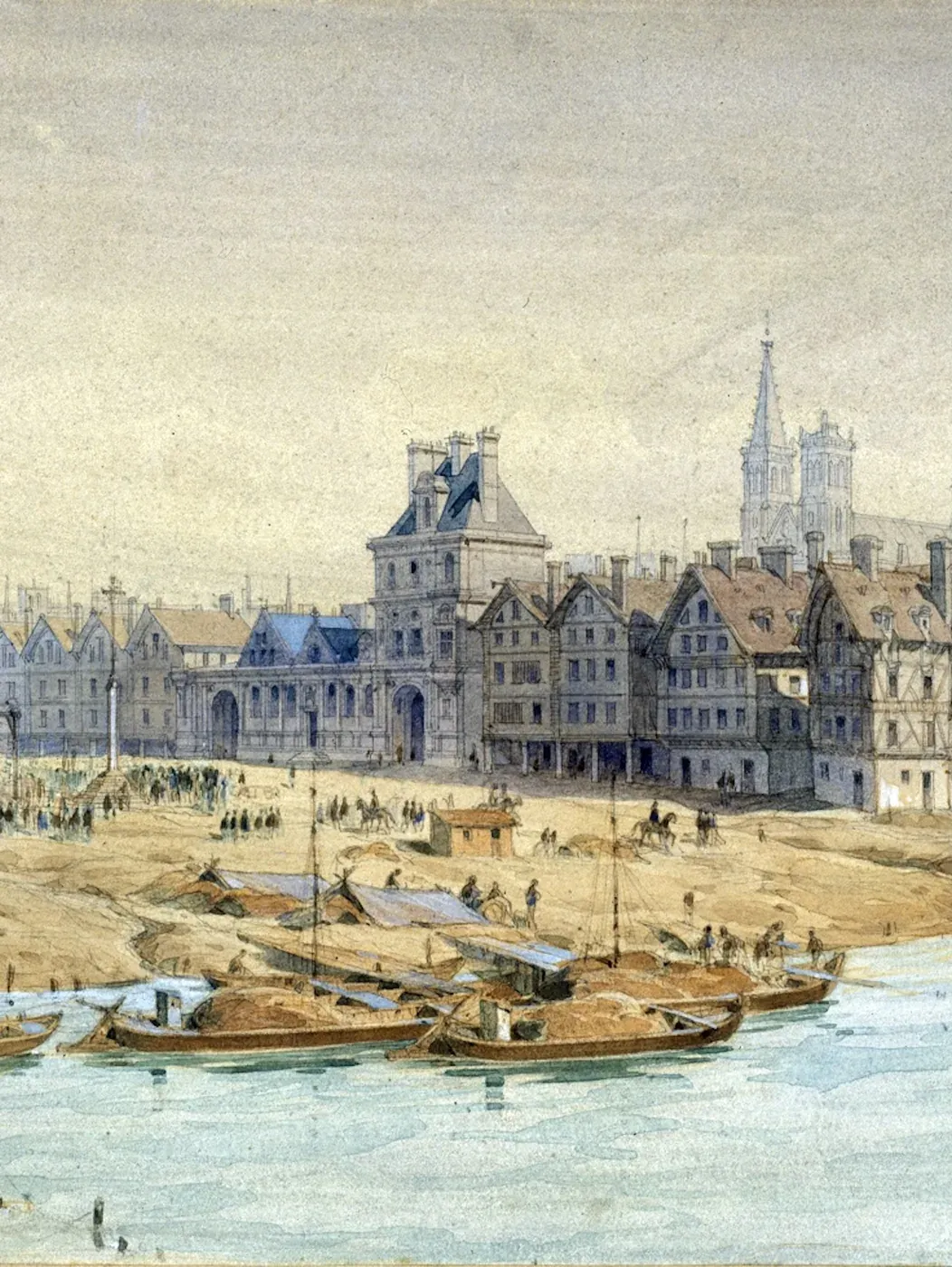
The place de Grève as seen by Theodor Hoffbauer in the 19th century: the civic heart of Paris was also the stage of its executions.
In 1803, the square was renamed place de l’Hôtel-de-Ville. The name Grève disappeared from the map of Paris; it was about to survive everywhere else.
The day the meaning flipped
In the 19th century, everything turned over. In the working-class Paris of the faubourgs and workshops, stopping work together became the weapon of those who had only their arms, and the vocabulary followed the reverse path of the hiring line: “se mettre en grève” no longer meant waiting for work on the square, it meant leaving work to apply pressure. For decades the gesture was a crime, punished by the Penal Code as “coalition”; it took the Ollivier law of 25 May 1864 for a collective work stoppage to stop being an offence, and the preamble of the 1946 Constitution for the right to strike to become a constitutional principle. A medieval sandbank had become, word for word, a fundamental right.
What is left of the place de Grève?
Almost nothing, which is what makes the story dizzying. The bank vanished under the stone quays over the centuries, the square was enlarged and repaved, and today’s place de l’Hôtel-de-Ville, also named Esplanade de la Libération, gives no hint of the sandy port. The last remnant of the grève of Paris is immaterial: the word itself, spoken millions of times at every strike.
There is one place, though, where the place de Grève can be seen again: a few hundred metres away, on the riverbanks, The Origins of Paris reconstructs the place de Grève of centuries past, its boats beached on the sand and its porters, based on archives and validated by our scientific committee. There, you can literally see what “être en grève” used to mean.
In short
The French word for strike comes from the place de Grève, the sandy bank that served as the main port of Paris, today’s place de l’Hôtel-de-Ville. Workers waited there to be hired: being “en grève” meant looking for work. The 19th century flipped the meaning, the 1864 law decriminalised the act, and the 1946 Constitution made it a right. The word never left the square.
Sources
- “Grève”, Dictionnaire de l’Académie française, 9th edition (in French).
- Etymology of “grève”, CNRTL, CNRS (in French).
- “25 May 1864: the right to strike”, Le Livre scolaire, on the Ollivier law (in French).
- “Qu’est-ce que le droit de grève ?”, Vie publique, French Republic (in French).
- The History behind The Origins of Paris, our historical dossier on the place de Grève, sourced and validated by our scientific committee.