
What Did Paris Look Like in the Middle Ages?
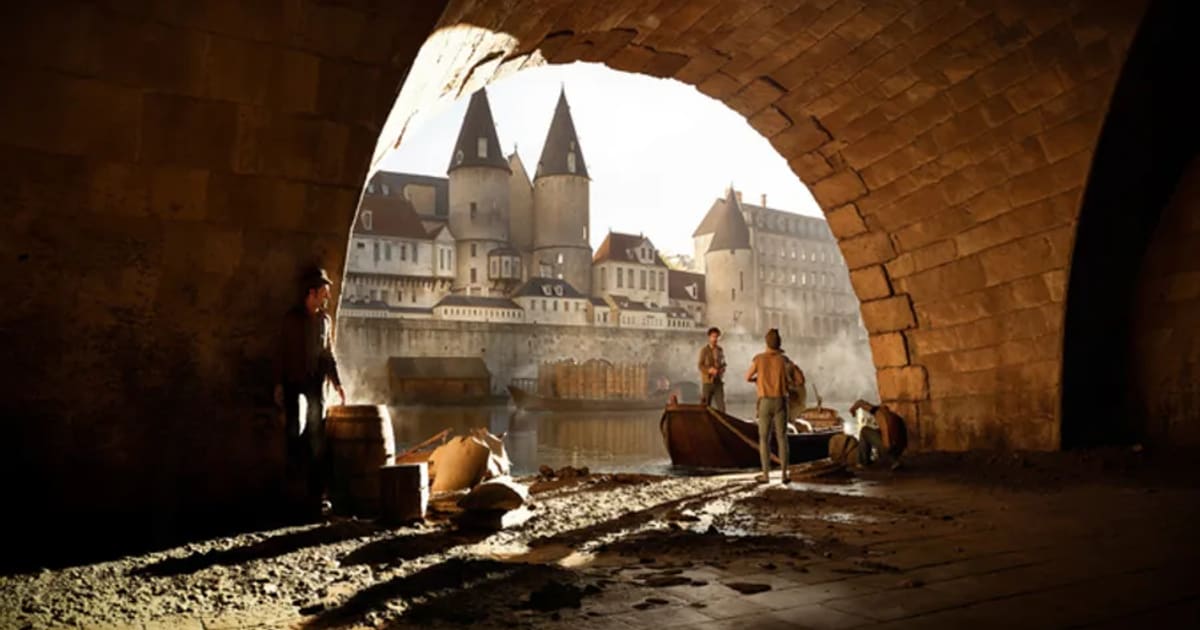
To picture Paris in the Middle Ages, forget the grand boulevards and imagine a dense, noisy city entirely turned towards its river. Here’s the scene.
In the Middle Ages, Paris was a fortified city organized around three spaces: the Île de la Cité (power and the Church), the Right Bank (commerce) and the Left Bank (the universities). The Seine wasn’t a border, it was the city’s vital centre. Water, food, goods, news: everything passed through it.
The Île de la Cité, seat of power
This is where it all began. Cradle of ancient Lutetia, the Île de la Cité became in the Middle Ages the seat of royal power (the Palais de la Cité, of which the Conciergerie and the Sainte-Chapelle survive) and of religious power, with the colossal building site of Notre-Dame de Paris, begun in 1163.
The Right Bank: merchants, trades and Place de Grève
The Right Bank was the Paris that worked. Goods arrived by boat and docked at Place de Grève (today’s Place de l’Hôtel-de-Ville). The trade guilds shaped entire neighbourhoods, and Les Halles, created in the 12th century, became the belly of Paris.
The Left Bank: the Paris of students
On the other bank, around the Montagne Sainte-Geneviève, the University of Paris emerged in the 12th century. Students from all over Europe, masters, colleges (including the Sorbonne, founded around 1257): they spoke Latin, hence the name “Latin Quarter,” which has stuck to this day.
A city protected by its ramparts
In the late 12th century, King Philip Augustus had the city ringed with a fortified wall and a fortress built to the west to defend the Seine: the Louvre, then not a palace but a military castle. You can still see remains of the Philip Augustus wall on rue des Jardins-Saint-Paul, in the Marais.
Where to see medieval Paris today?
- The Conciergerie and the Sainte-Chapelle, on the Île de la Cité.
- The Cluny Museum (national museum of the Middle Ages), built on Gallo-Roman baths.
- The rampart remains on rue des Jardins-Saint-Paul.
- Saint-Germain-des-Prés church, one of the oldest in Paris.
- The streets of the Marais, whose medieval layout partly survived Haussmann.
But seeing stones isn’t seeing the living city. That’s exactly what we reconstruct: with The Origins of Paris, you stand on the banks of the Seine and, through our virtual-reality Binoculars, watch medieval Place de Grève come back to life before your eyes, aligned onto the real landscape, a true virtual tour of medieval Paris. Every detail is validated by a scientific committee: what you see is historically sourced.
In short
Medieval Paris was a river city, dense and fortified, split between power (the Cité), commerce (Right Bank) and learning (Left Bank). Much of that geography still structures today’s Paris; you just need to know where to look. To place the period in the wider story, our guide to the history of Paris in six eras runs through twenty centuries.