
Our story
We build time machines
It all starts with a question everyone asks when arriving somewhere: what did this place look like, before? For ten years we have been answering it by putting virtual reality within everyone's reach: letting anyone witness history exactly where it took place. Gateways between present and past, opened right on the street. Here is how it all began.
Pompeii, the spark
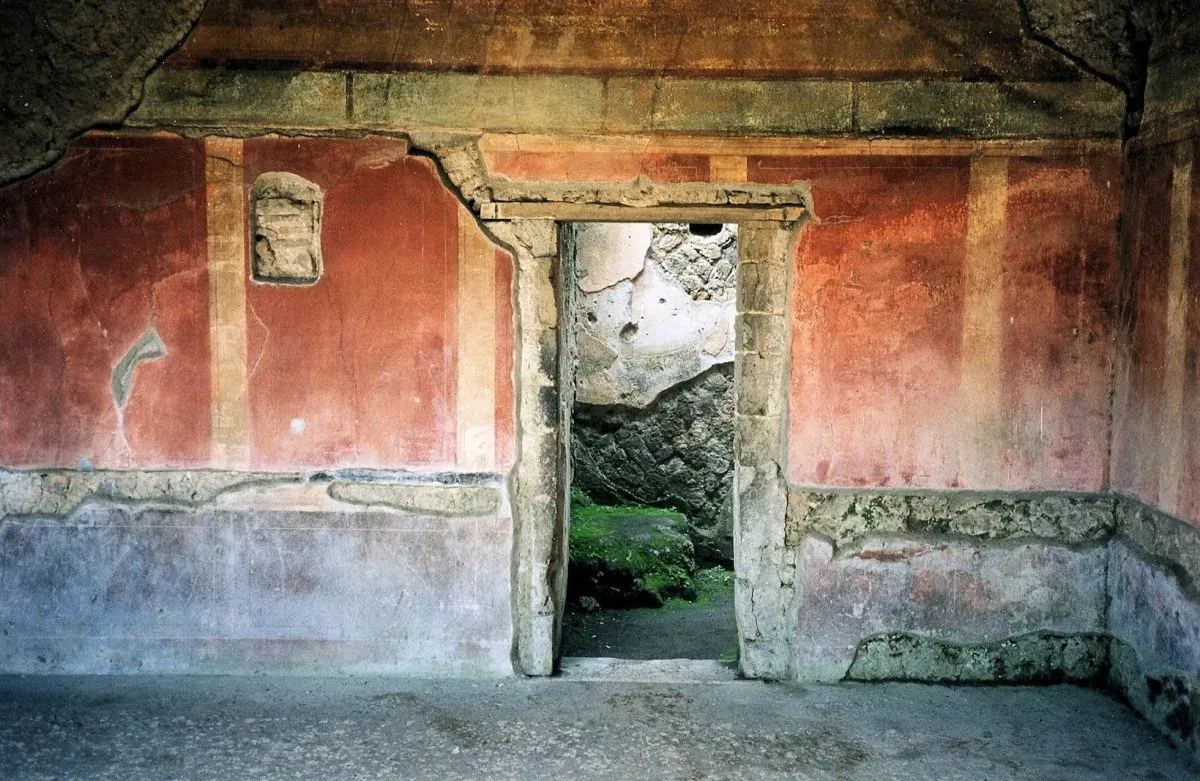
The idea was born on the way back from Pompeii. Adrien Sadaka and Basile Segalen, two friends and history enthusiasts, came home frustrated: standing on site, it was impossible to picture the city before the eruption of Vesuvius.
"Not being able to see history is what frustrates us when we want to know a city's past."
The intuition never let go: what if you could see, from the very spot where you stand, what a place has lived through? In 2015 they founded Timescope to make it real.
A broomstick, a parasol stand and a headset
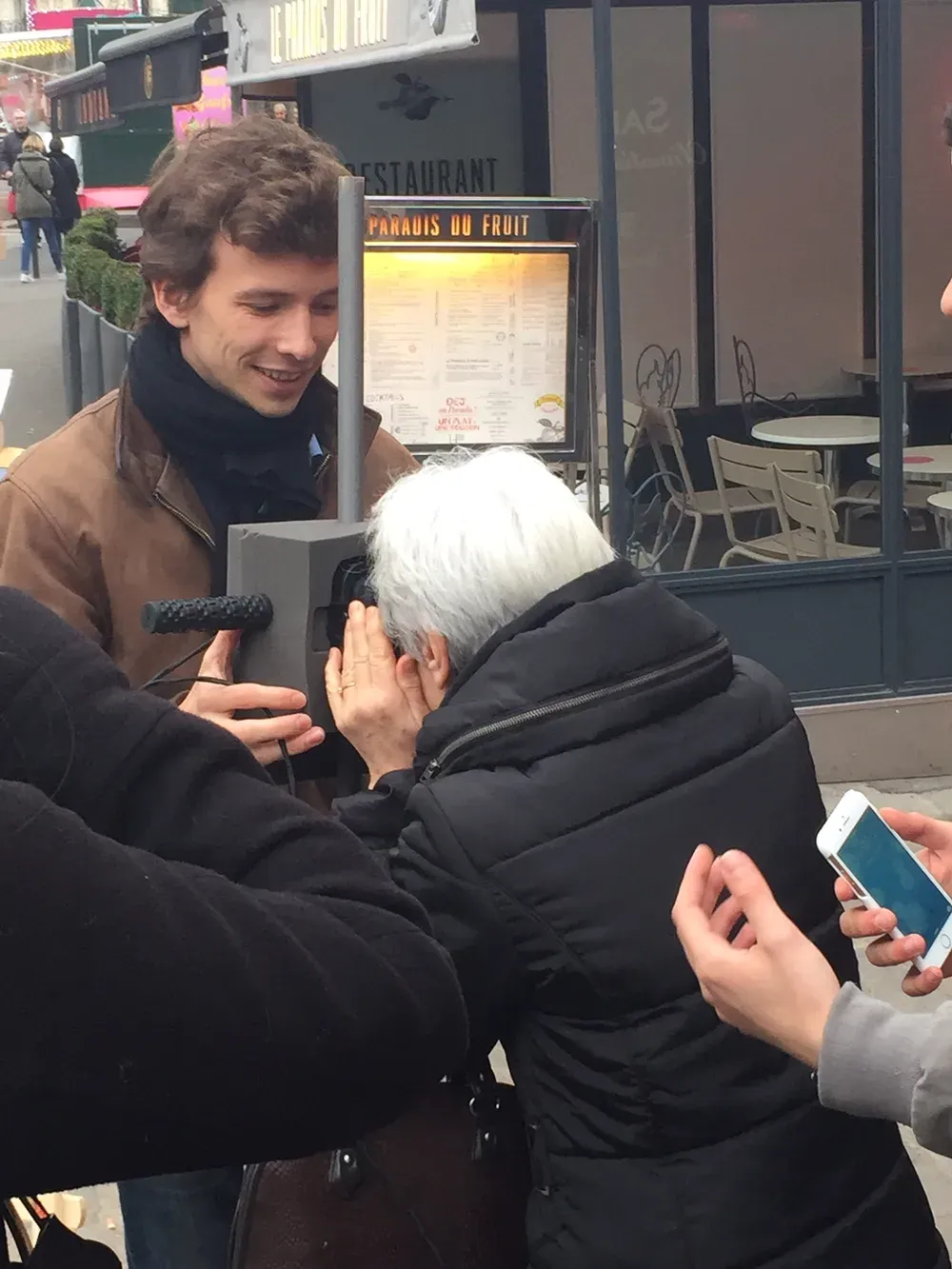
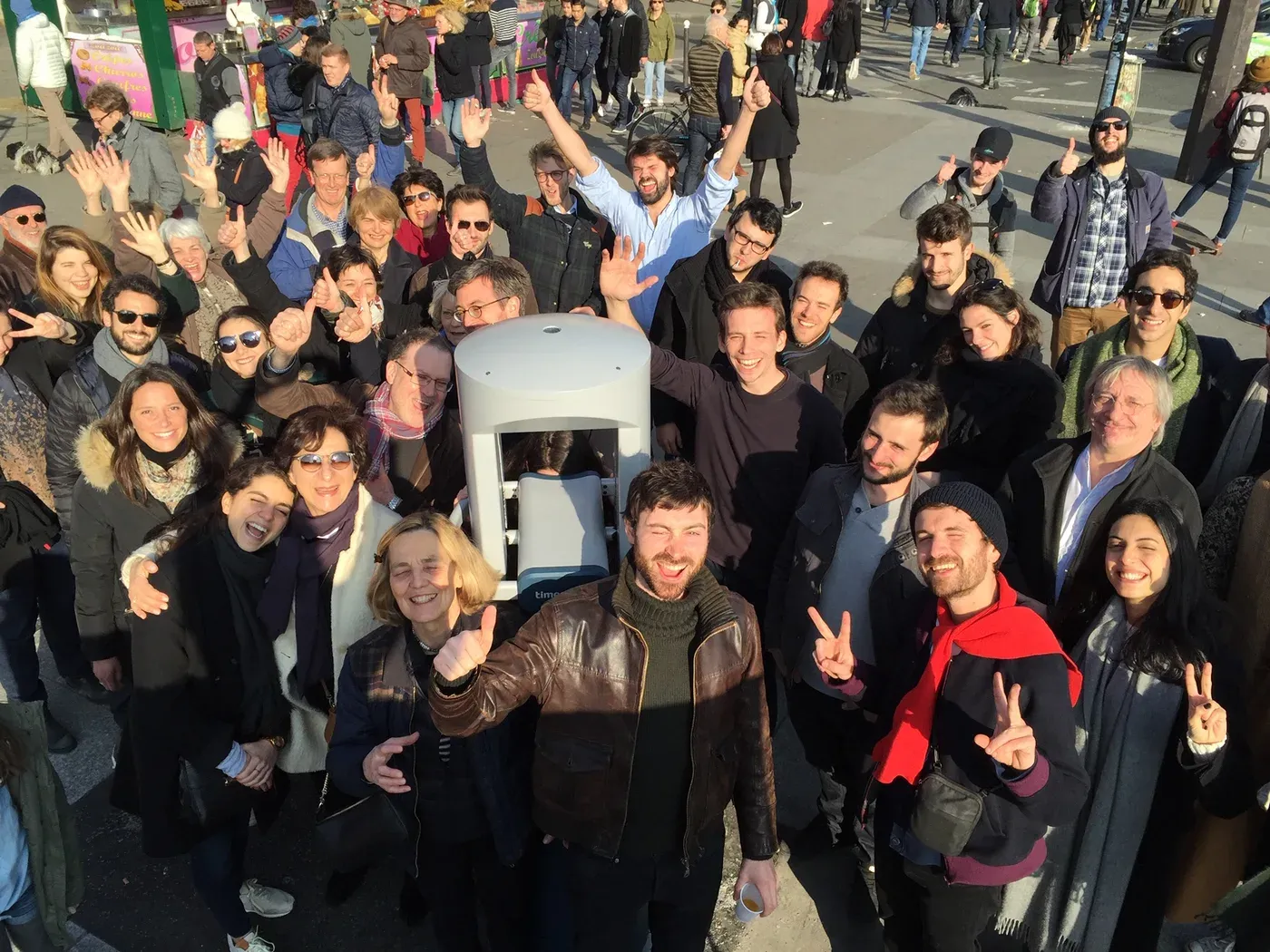
Timescope's first "time machine" did not look like much: a second-hand Oculus DK2 developer headset, mounted on a broomstick planted in a parasol stand. Set up in the middle of Place de la Bastille, the contraption stopped passers-by in their tracks. They tried it, smiled, called their friends over: a queue formed.
The vision stood up, quite literally. What remained was to invent the machine.
Inventing a machine that did not exist
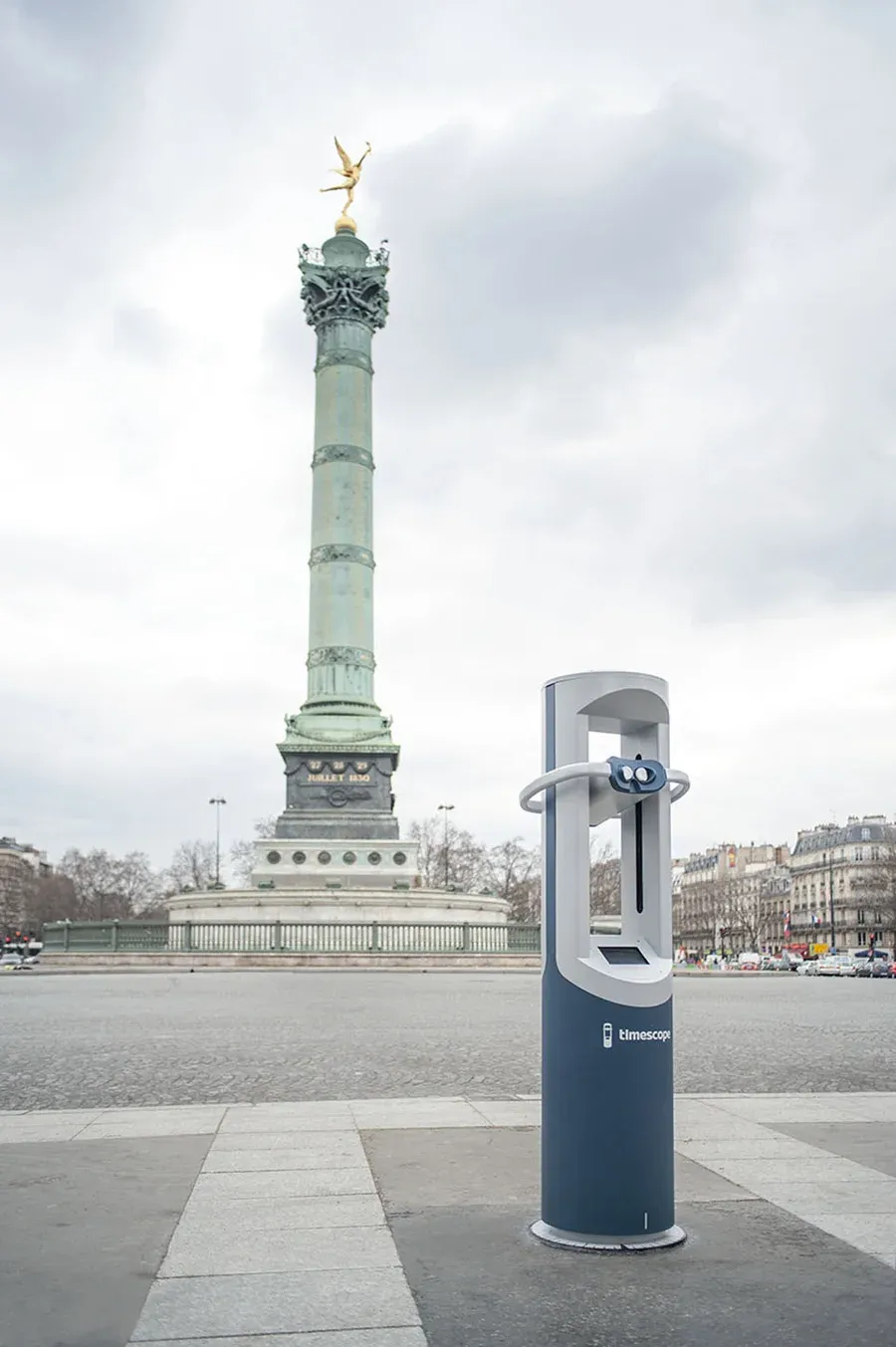
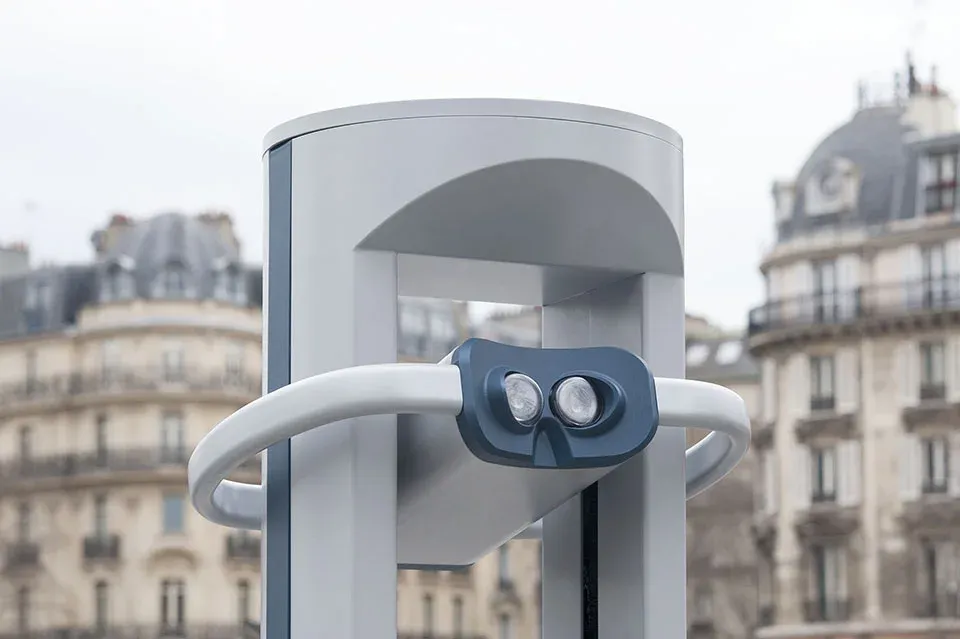
No device in the world could then deliver virtual reality in self-service, outdoors, day and night, in all weathers. Everything had to be designed. Incubated at Agoranov, the team spent its days in the Parisian workshops of Usine IO: prototype after prototype, the Timescope kiosk took shape, styled by designer Pierre Charrié. 360°-rotating binoculars, a casing built to withstand weather and vandalism, accessibility for all, fully autonomous operation around the clock.
The world's first self-service virtual-reality kiosk was born. "A time machine, coming soon to Paris," announced Le Figaro as early as January 2016. In March it was installed on Place de la Bastille, with the authorisation of the City of Paris.
What passers-by saw
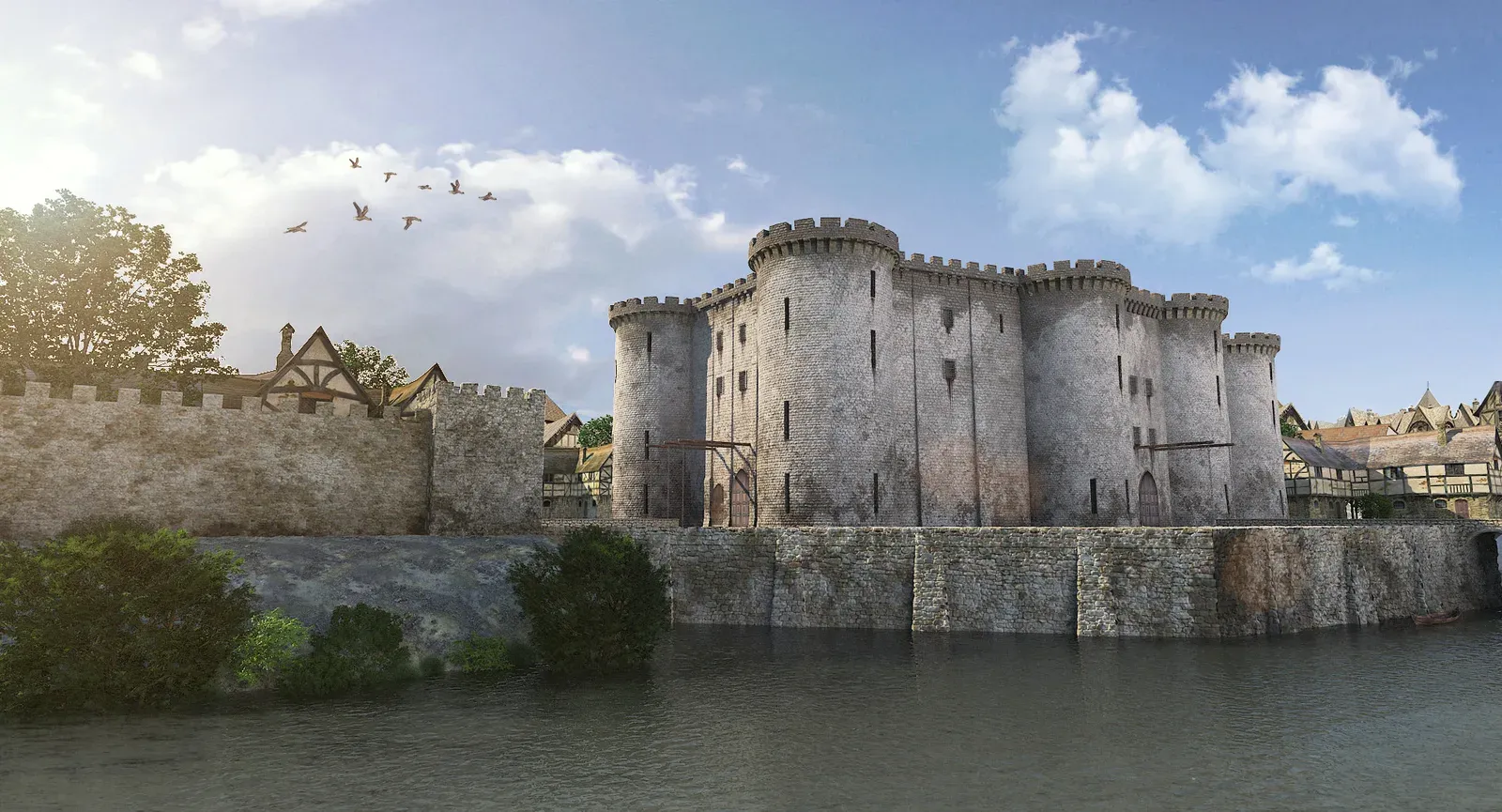
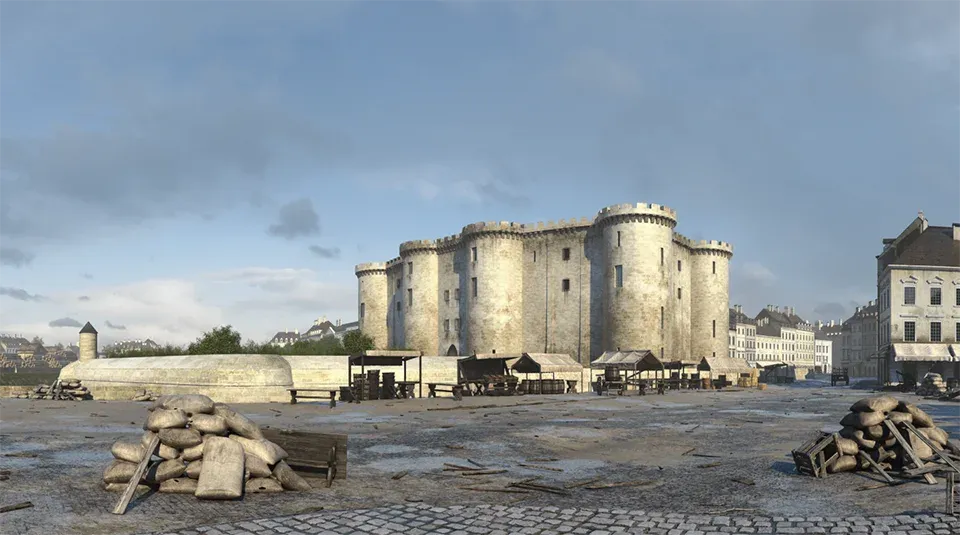
La Bastille, two eras to choose from: 1416 or 1789
From the very first kiosk, the rule that would never change: every image is validated by a historian. The Bastille reconstructions were established with Héloïse Bocher, author of Démolir la Bastille (Vendémiaire, 2012). Two eras for €2, and the original 360° demo is still online.
MirageLab, the other half of the story
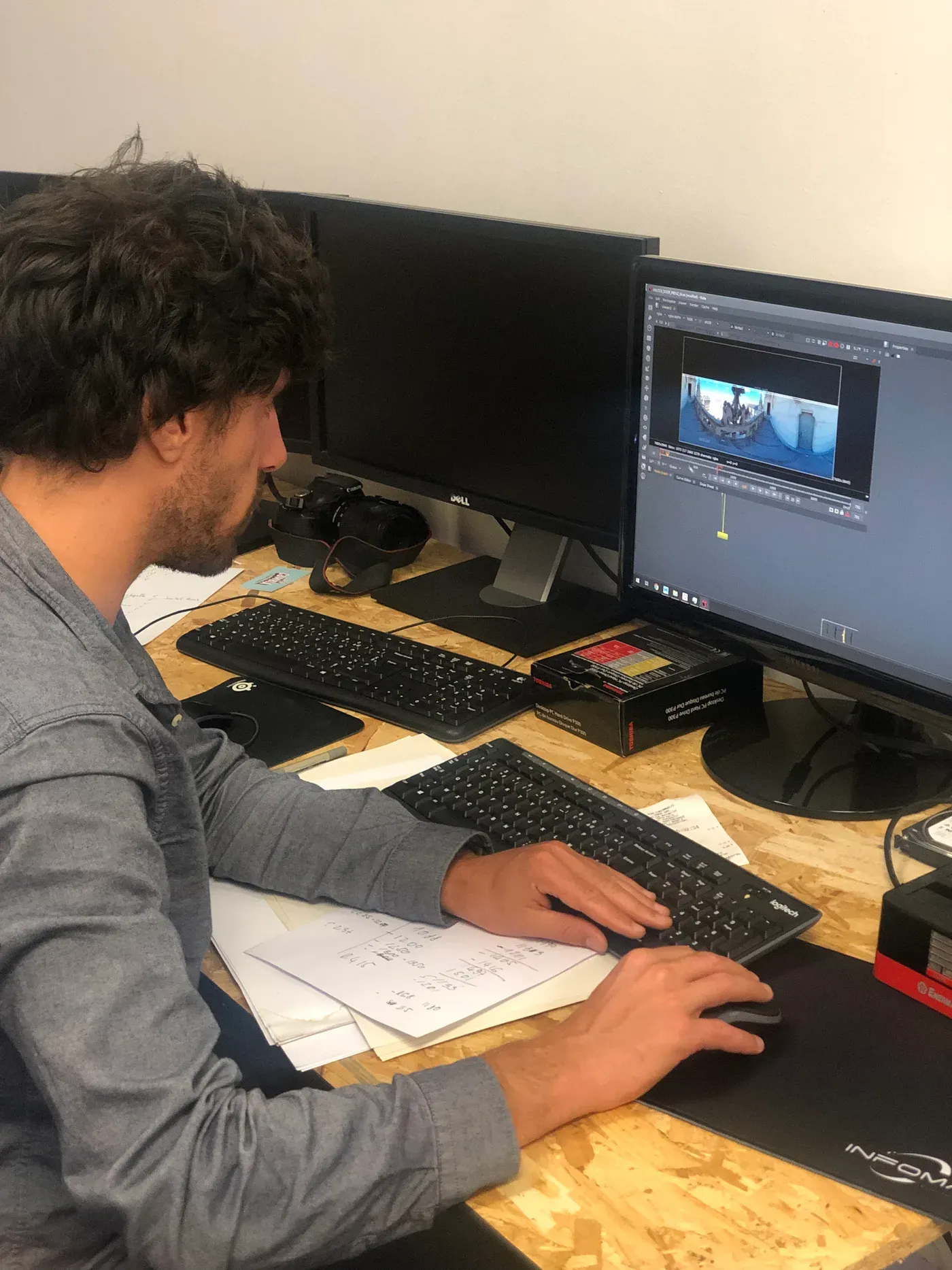
At the same time, Victor de Kiss and Léo Laparra founded MirageLab, a 3D studio built on three pillars: sources, realism, storytelling. Victor came from film visual effects (The Little Prince, Wonder Woman, Pirates of the Caribbean, Alien); Léo, art director, from seven years in Parisian creative studios.
From the very first reconstruction, every Timescope creation came out of their workshop. Two companies on paper; in practice, a single team.
The kiosk spreads, the great venues open their doors
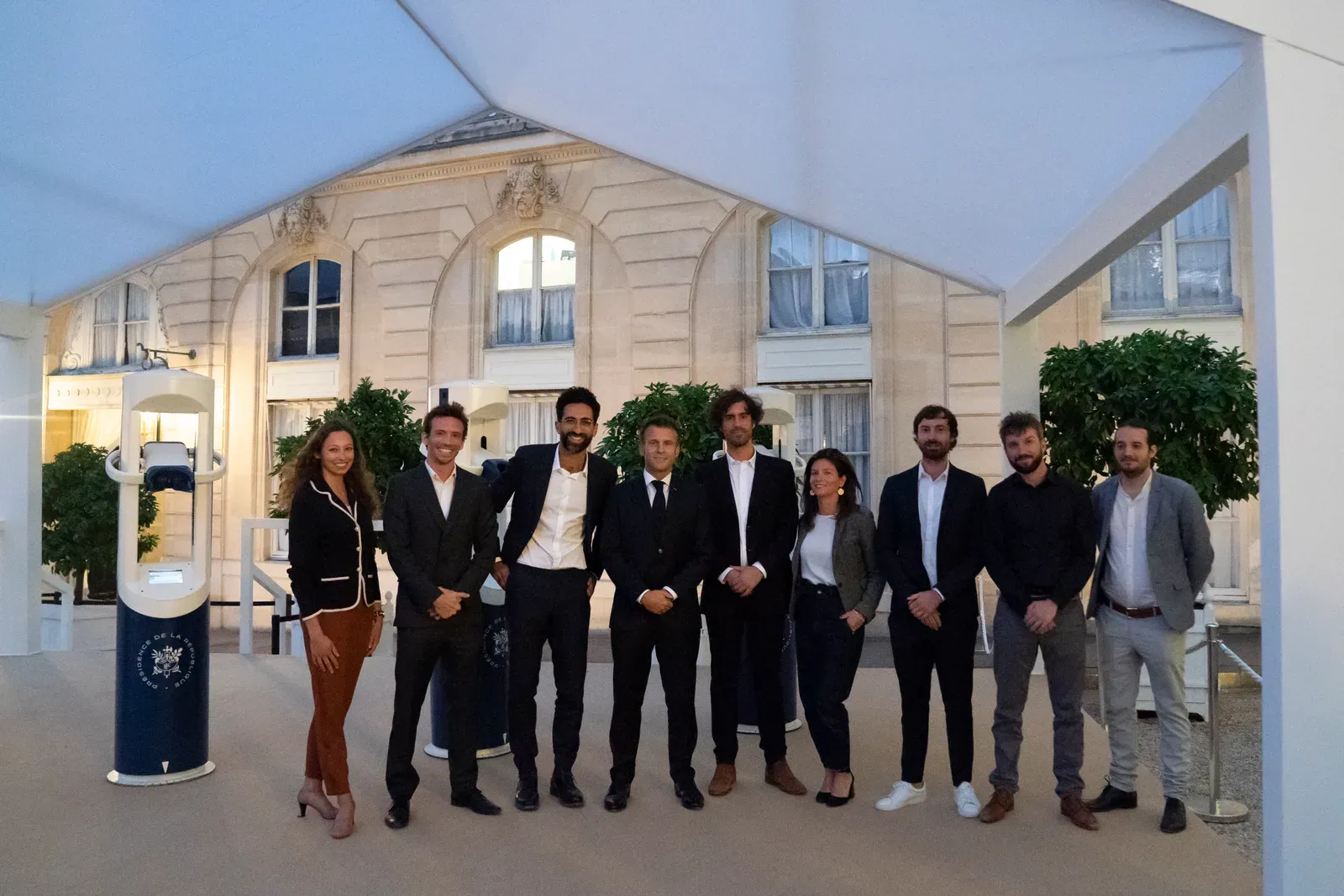
Up to forty kiosks ran in parallel, some used 800 times a week. In 2019 the Centre des Monuments Nationaux inaugurated our reconstructions at the top of the Arc de Triomphe; the French Presidency opened the doors of the Élysée Palace; the Musée d'Orsay, Chambord and Versailles followed. With Magnicity, our time journeys reached the observation decks of Montparnasse, Berlin, Rotterdam and Chicago. And on the memorial sites of northern France, a kiosk did more than tell a story: at the Fraternisations Monument in Neuville-Saint-Vaast, visitor numbers were multiplied by 3.5. In September 2022, the team presented its work at the Élysée Palace, alongside the President of the French Republic, during the European Heritage Days.
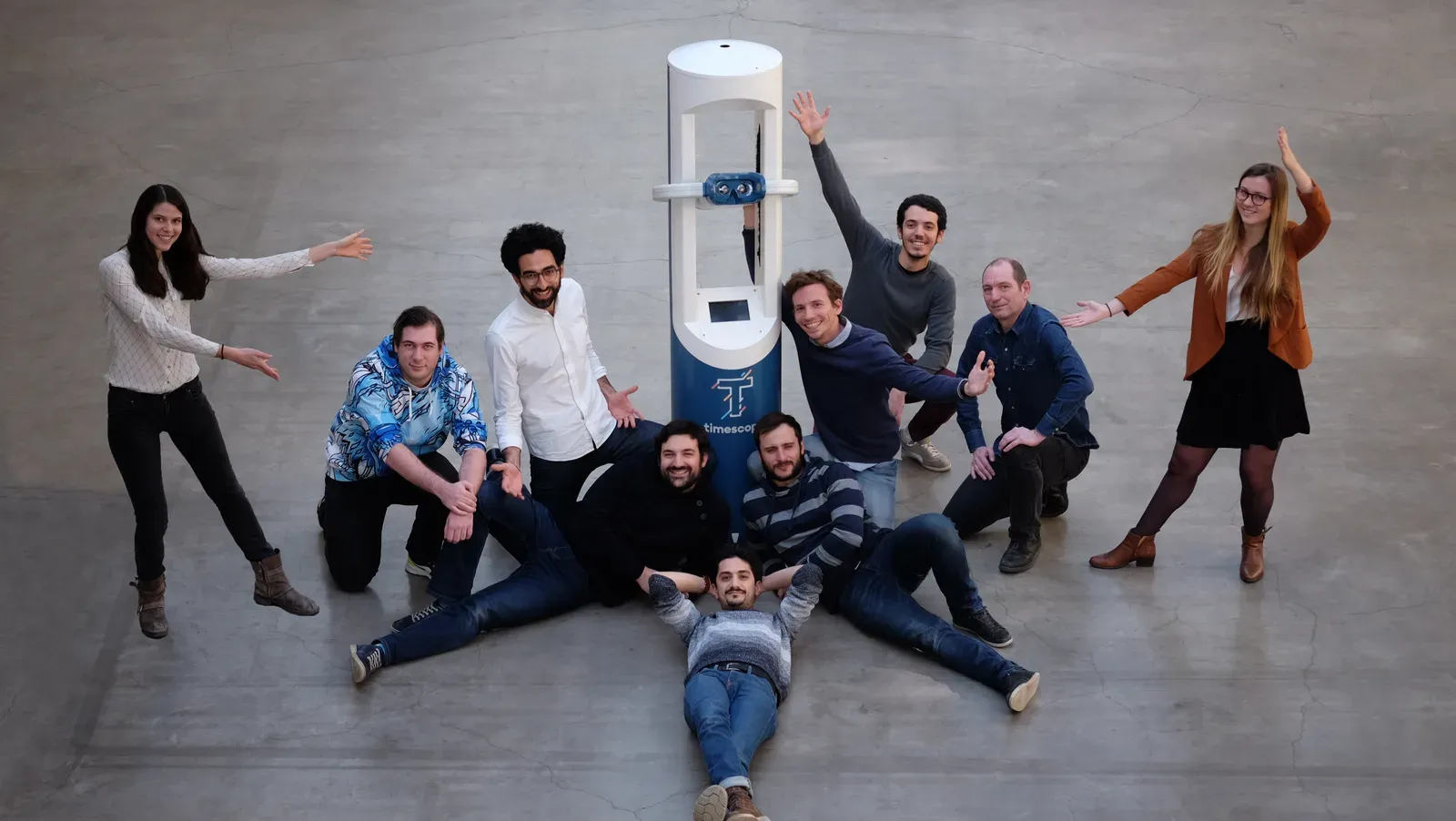








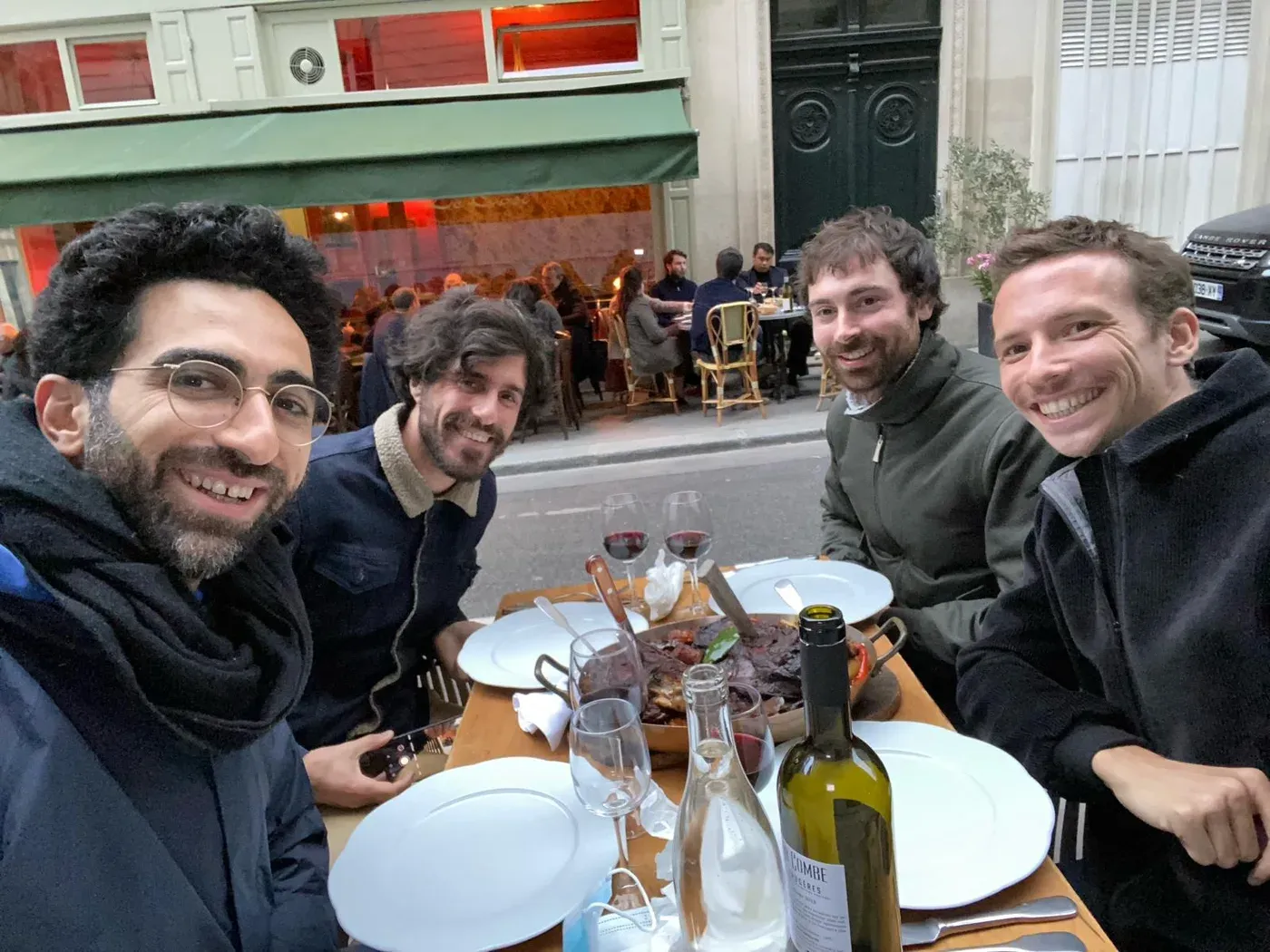
Four partners, one house
What was obvious became official: Timescope integrated MirageLab, and Victor and Léo became partners. Eléonore Létang-Dejoux, head of production, soon joined the circle and became one of its pillars. Since la Bastille, this adventure has never been the story of two founders: it is a shared vision, built together, year after year.
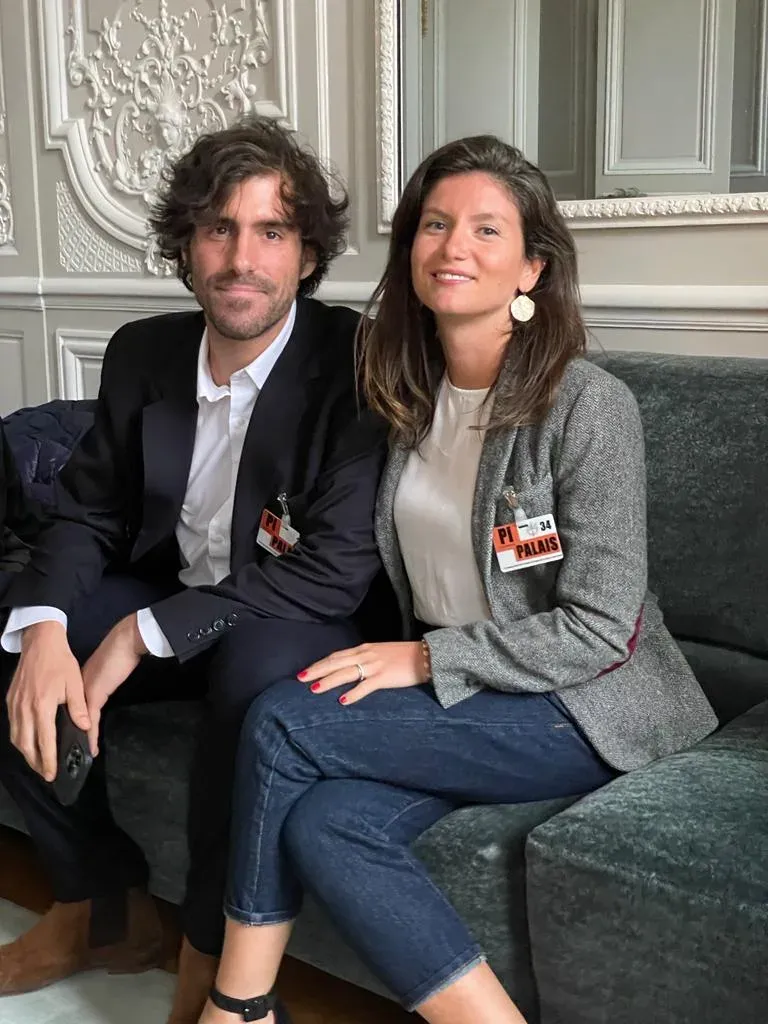
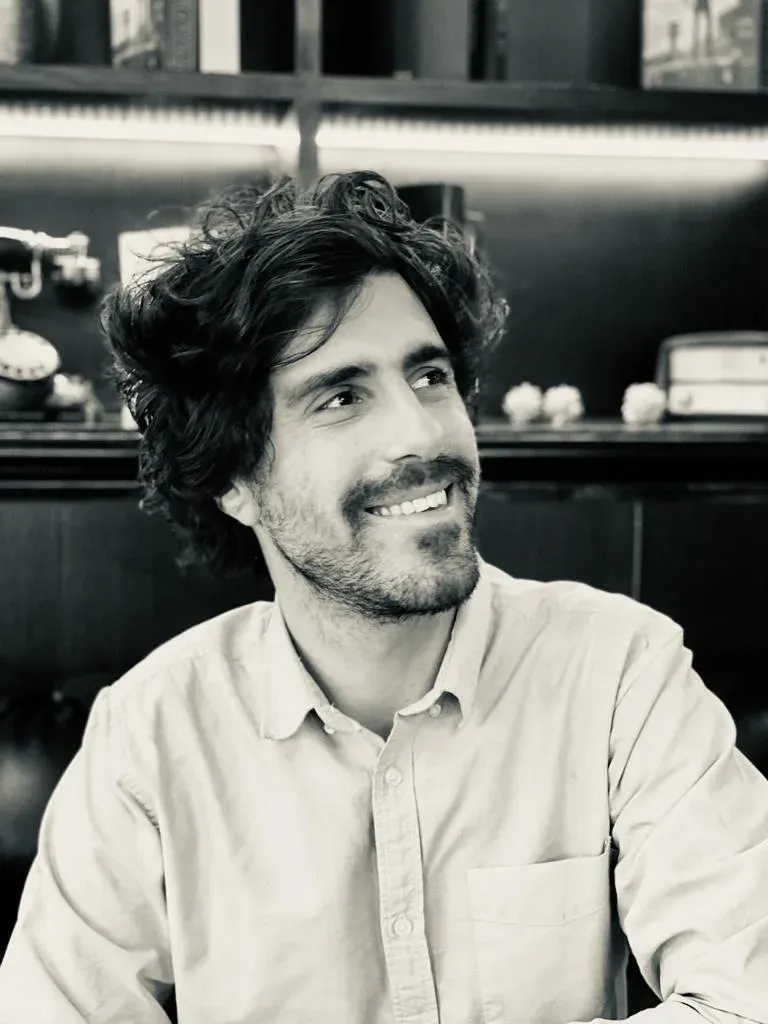
Victor was tragically taken from us in 2024. We think of him every day, and strive to live up to his creativity, his enthusiasm and everything he brought us over the years.
The whole city becomes the playground
On 25 June 2025, The Origins of Paris opened on the banks of the Seine: an open-air guided walk where the time binoculars summon 2,000 years of history all along the way. On 17 April 2026, The Symbol of Paris answered it at the foot of the Eiffel Tower.
This is not a pivot: it is the same vision as at la Bastille, scaled up to the whole city. The kiosk showed the past of one crossroads; our walks bring it back to life step by step, in small groups, right where each scene actually happened. Everything you see remains validated by our scientific committee, true to the method born with Héloïse Bocher in front of the Bastille.
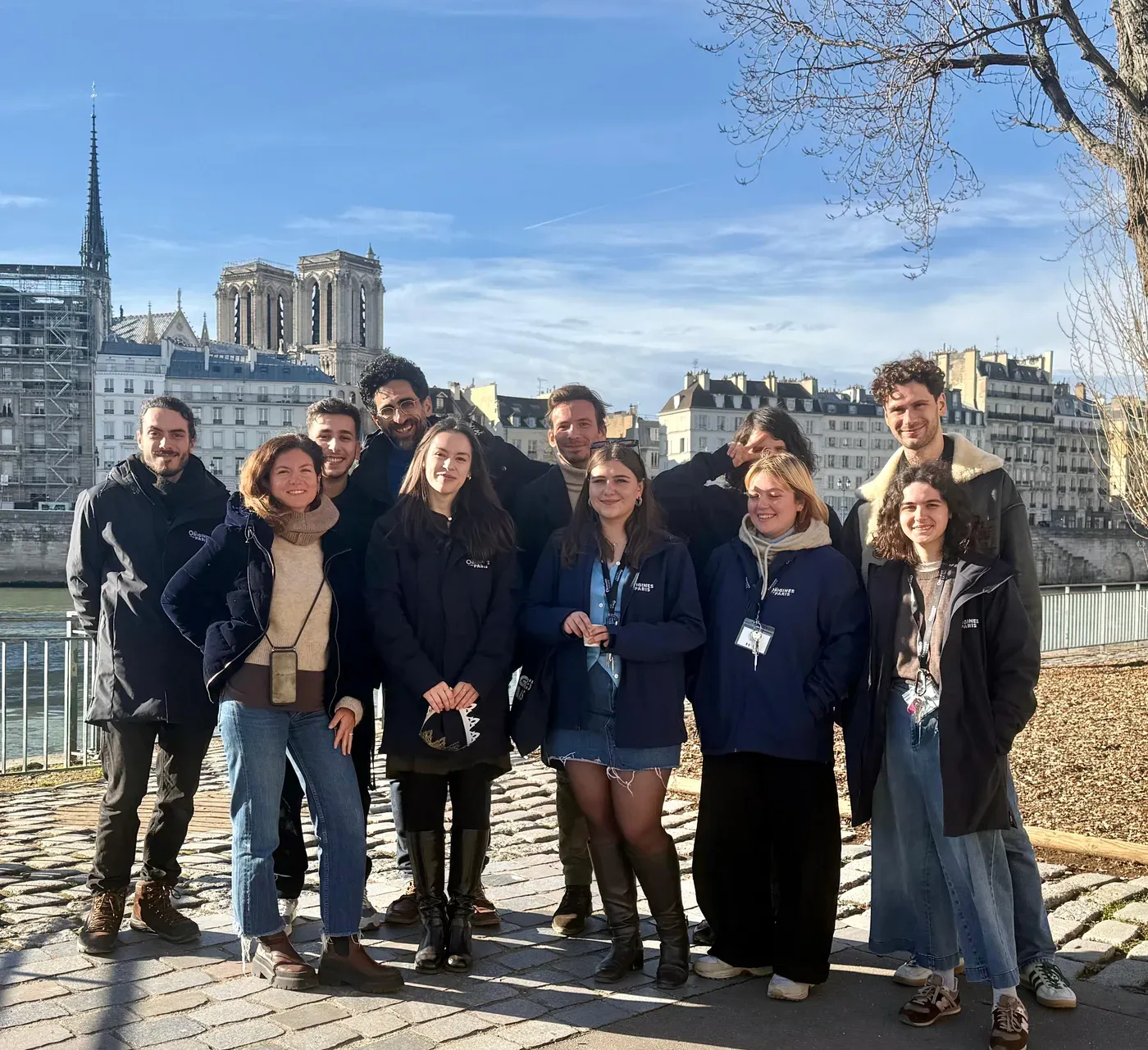
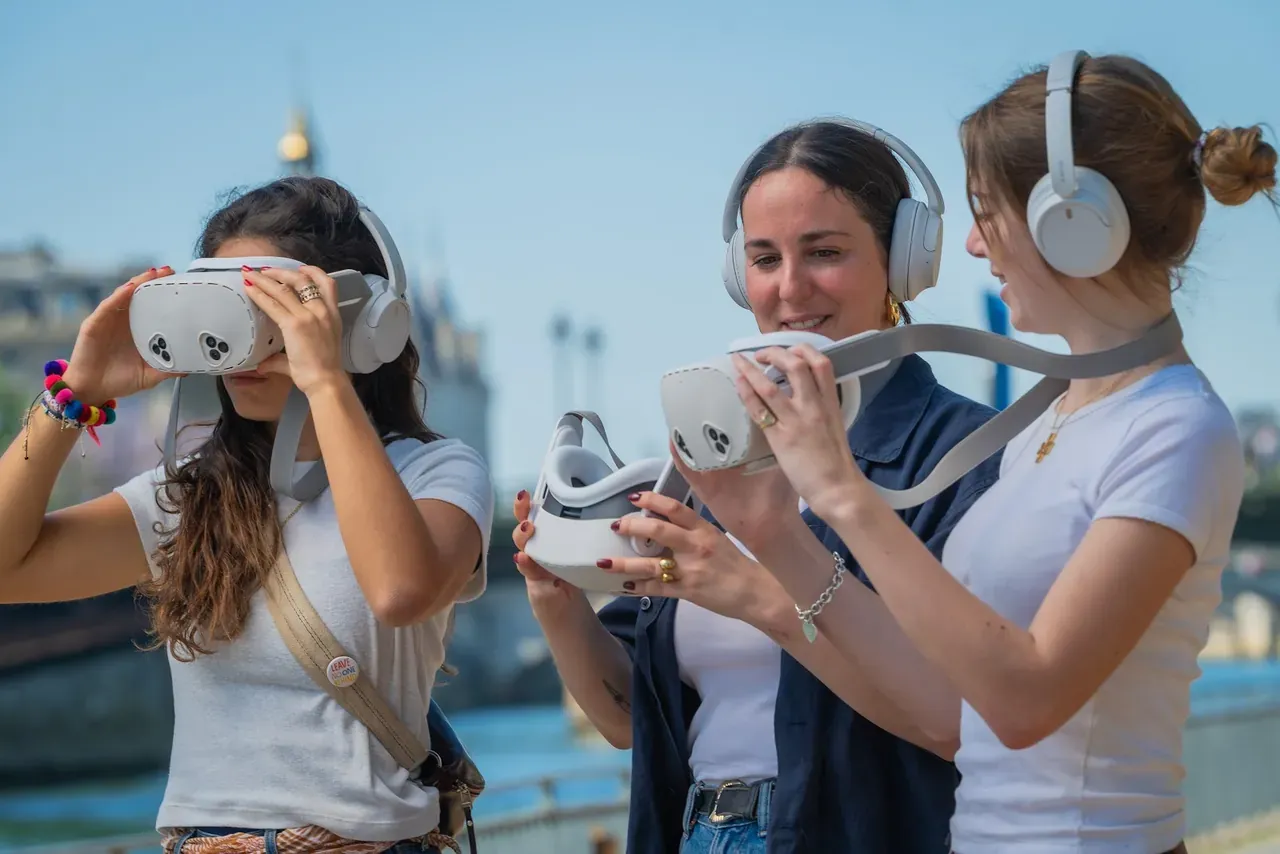
History, lived for real
From the broomstick at la Bastille to open-air walks: thousands of visitors now travel back in time in Paris. The story unfolds chapter after chapter.