Teachers & group leaders

A school trip in Paris, where history actually happened

One hour on foot, outdoors, on the very sites of the events. At each stop your pupils raise virtual-reality binoculars and find the landscape in front of them as it was a hundred, a thousand or two thousand years ago. The rest of the time they walk, listen and ask a guide questions.

Request a quote Download the booklets

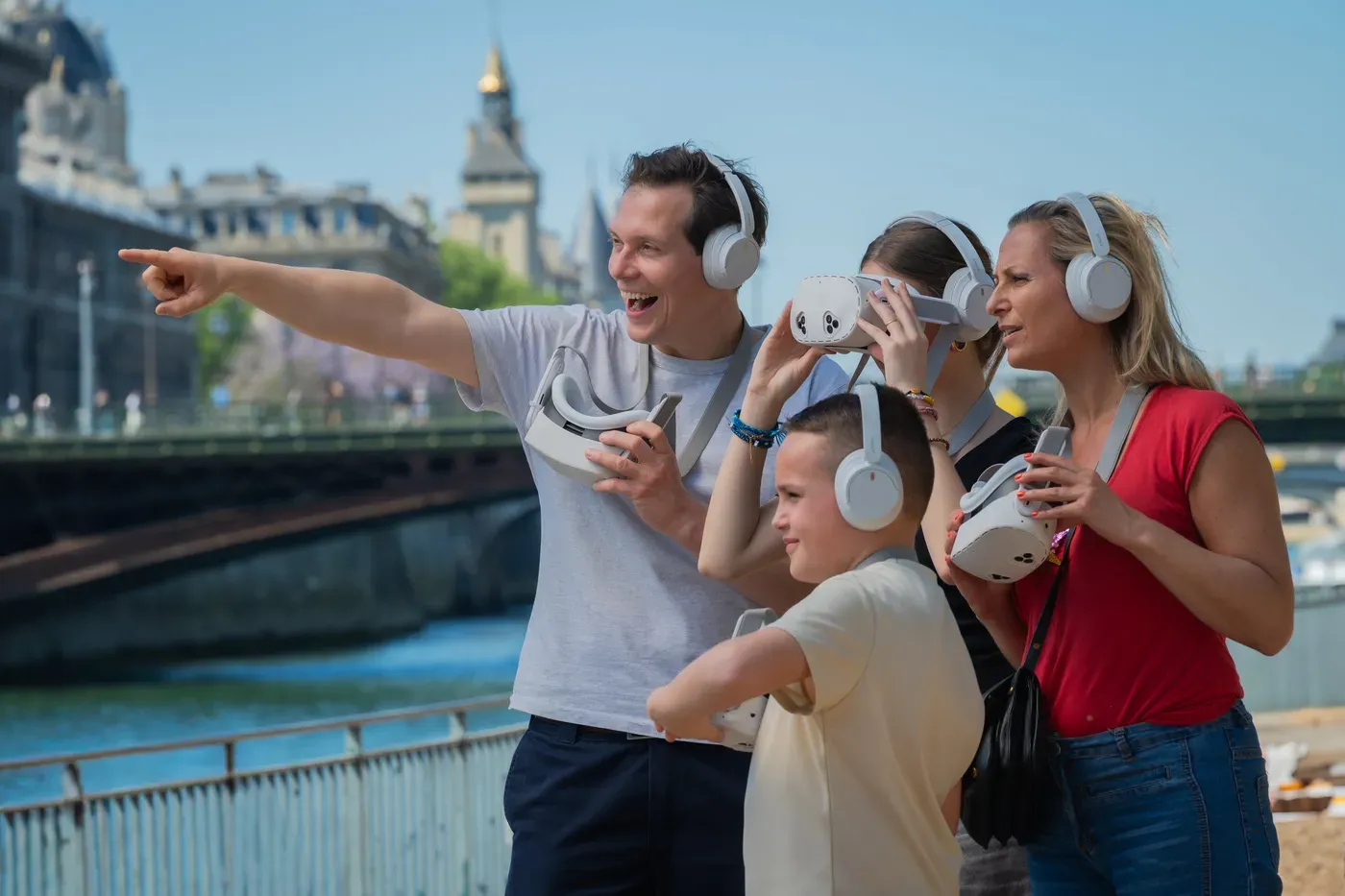
A guide points out a detail of the landscape to a boy and a teenage girl wearing Timescope binoculars, on the banks of the Seine

1 hguided visit, in an accompanied group

From age 8from primary to secondary, booklets per level

15pupils per departure, successive departures beyond

3languages: French, English, Spanish

Outdoorson the very sites where history happened

19 €child rate ages 8-15, quote for school groups

What your pupils experience

The class moves as an accompanied group, with a Timescope guide who narrates and sets the pace. At observation points, each pupil raises their binoculars: these are not closed headsets but binoculars held up to the eyes while standing still. Pupils stay outdoors, with you — the image overlays the real place instead of replacing it.

That is what makes the exercise workable with a class: nobody is isolated inside a headset, the teacher keeps the group in sight, and attention naturally returns to the real landscape between stops.

How we reconstruct the past →

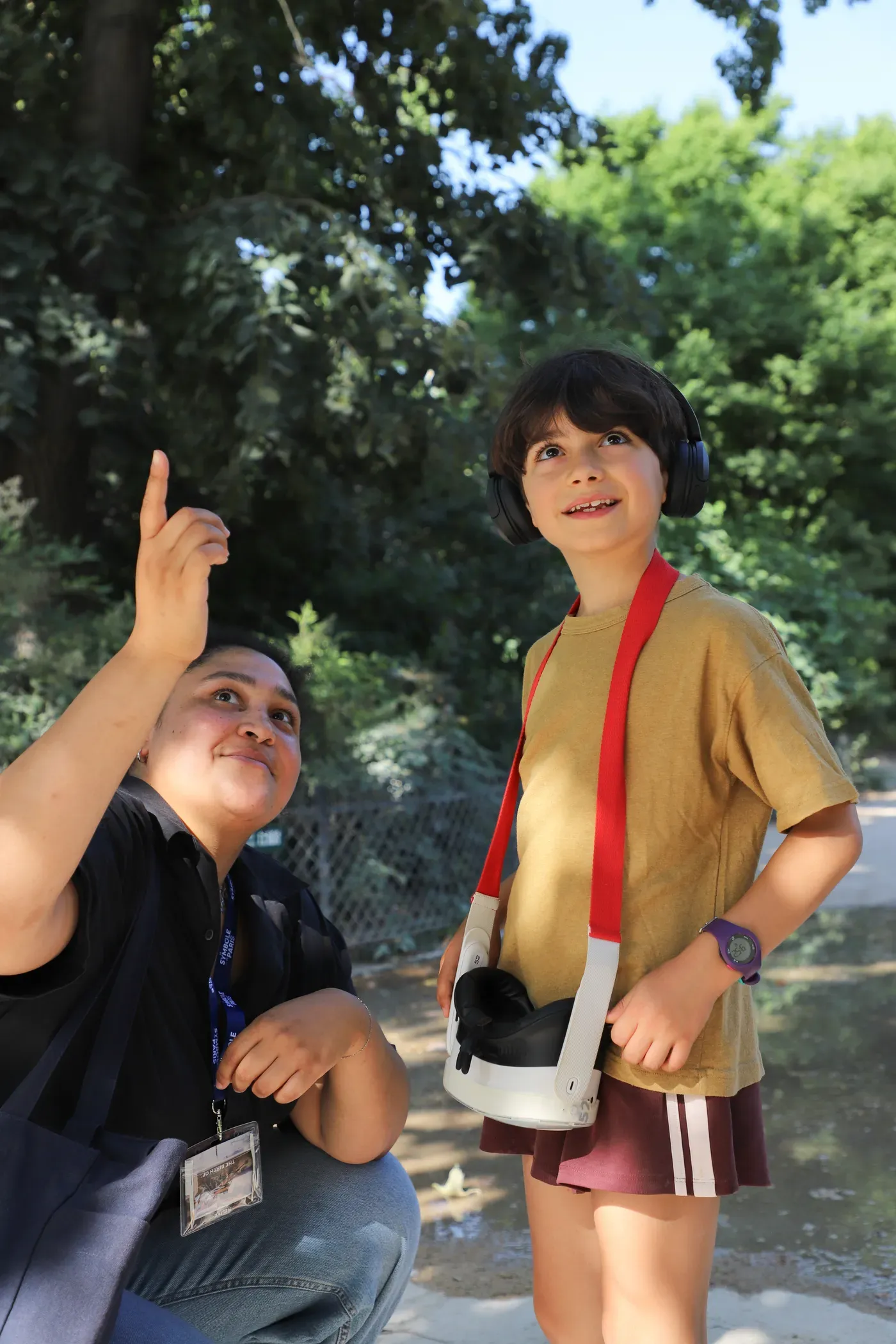
A Timescope guide, crouching, points to a spot in the sky for a child wearing headphones and binoculars

Two experiences, two syllabuses

Each can be visited independently. One sweeps through two thousand years of Paris history, the other focuses on one monument and its century.

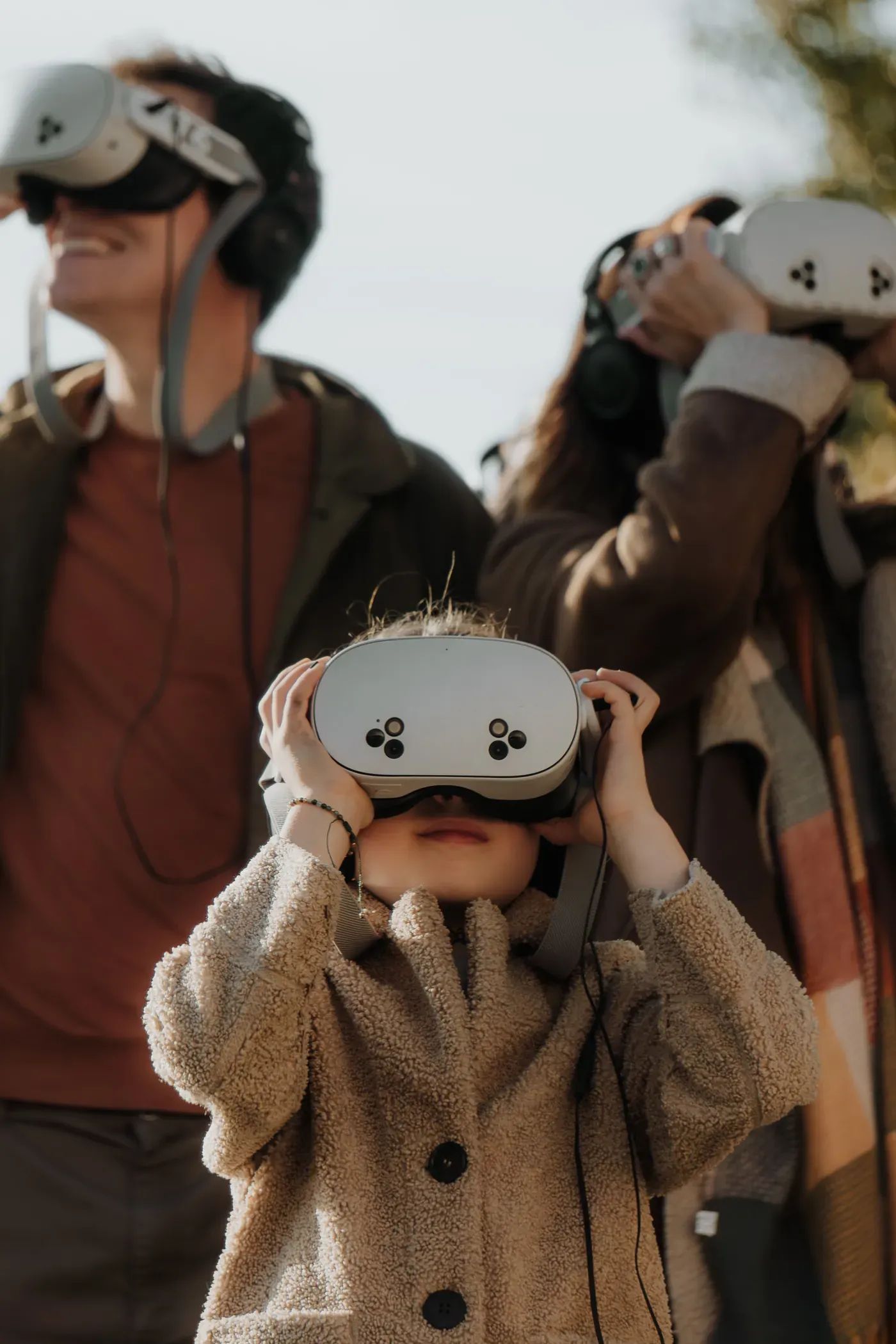
A child raises Timescope virtual-reality binoculars on the banks of the Seine, surrounded by the group

Banks of the Seine, Paris 4th

The Origins of Paris

A 1.2 km walk along the Right Bank, between Pont Louis-Philippe and Île Saint-Louis, listed as UNESCO World Heritage. At each stop, pupils see the same landscape in another era.

More than 15 reconstructed eras: Gallo-Roman Lutetia, the Viking siege of 885, the Place de Grève in the Middle Ages, the building of Notre-Dame, the frozen Seine, the 1910 flood, the 1889 World’s Fair.

  • Antiquity
  • Middle Ages
  • Renaissance
  • 19th century
  • Modern era
Meeting point
Under Pont Louis-Philippe, voie Georges Pompidou (Paris 4th)
Getting there
Métro Pont Marie (line 7) 2 min walk, Hôtel de Ville (lines 1 and 11) 6 min.
See the experience page →

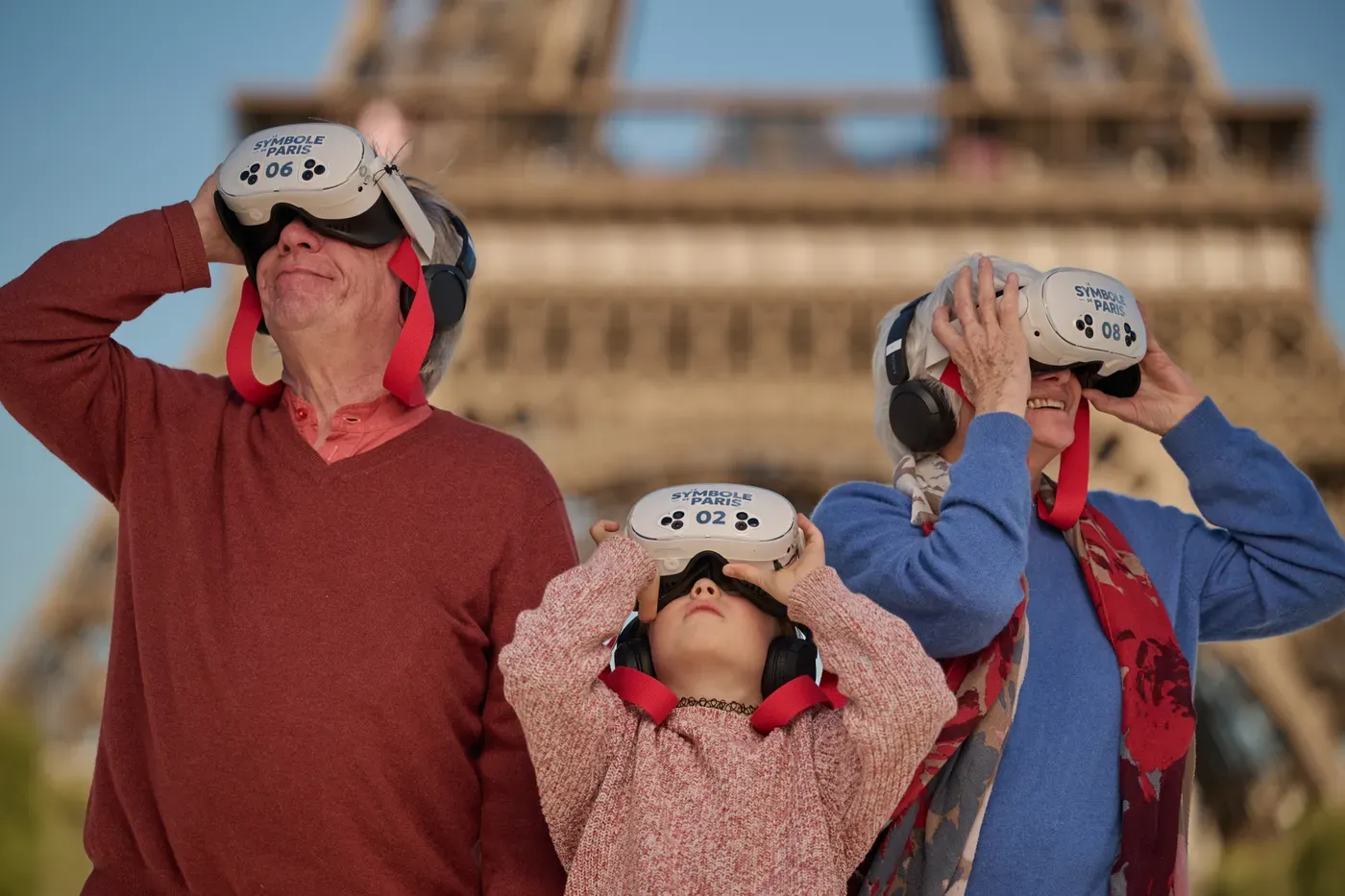
Three generations raise virtual-reality binoculars towards the Eiffel Tower, a child in the middle

Champ-de-Mars, Paris 7th

The Symbol of Paris

An immersive walk on the Champ-de-Mars, in 15 scenes, around a single object: the Eiffel Tower. Pupils follow a construction site, a controversy and a symbol. No tower-ascent ticket needed.

15 immersive scenes: Gustave Eiffel’s workshops, the Tower’s construction, the 1889 World’s Fair and its Machine Gallery, the Roaring Twenties, the Occupation and the Resistance, through to today.

  • Industrial revolution
  • World’s fairs
  • Roaring Twenties
  • Second World War
Meeting point
12 rue Dupont des Loges (Paris 7th), Gros-Caillou
Getting there
Métro Alma-Marceau (line 9) 5-6 min walk, RER C Pont de l’Alma 7-10 min, buses 42, 63, 69, 72, 80, 92.

See the experience page →

The teaching booklets

Free, downloadable, no sign-up. Use them to prepare the trip in class and to revisit it afterwards.

The Origins of Paris

Primary

The companion booklet for the riverbank route, adapted for primary pupils.

Download the PDF

The Origins of Paris

Secondary

The same history, with a reading and analysis level suited to secondary school.

Download the PDF

The Symbol of Paris

Primary & secondary

The history of the Champ-de-Mars, the building of the Eiffel Tower and the 1889 World’s Fair.

Download the PDF

Organising the trip, step by step

  1. You get in touch

    A message with the class level, the number of pupils and two or three possible dates is enough. We come back with a quote and available slots.

  2. We set the format

    Beyond 15 pupils, the class is split into successive departures a few minutes apart, each with its own guide. A whole class fits into a morning or an afternoon.

  3. You prepare in class

    The teaching booklet for your level is free to download on this page. Use it before the visit to set the scene, and after to revisit what was seen.

  4. On the day

    Meet at the departure point. A Timescope guide accompanies the group for the whole hour: telling the story, handing out the binoculars at each stop and setting the pace.

  5. You extend it afterwards

    The “Back to the sources” timeline (Origins, Symbol) covers online, for free, every era visited, along with the archive sources used to reconstruct them.

Practical information

Duration
1-hour guided visit
Age
From age 8
Group size
15 pupils per departure, successive departures for a whole class
Languages
French, English, Spanish
Public slots
Wednesday to Sunday, 10 am – 6:30 pm
Groups
Slots opened on request beyond the dates on sale
Rate
€19 per child (ages 8-15), quote for school groups
Weather
Outdoors, in most weather

Frequently asked questions

What age is the visit suitable for?

From age 8. The teaching booklets come in a primary and a secondary version, with the same historical content at different reading levels.

How many pupils can you take at once?

Departures are in groups of 15 people maximum, with several departures possible per hour and per site. For a whole class we arrange successive departures: write to us and we will build the right format.

Can we come on a weekday, outside public slots?

Public slots run Wednesday to Sunday, 10 am to 6:30 pm. For an organised group, slots can be opened beyond the dates currently on sale: contact us in advance, it is the surest way to get the date you want.

Is virtual reality suitable for children?

Our “binoculars” are not a closed headset: they are held up to the eyes only at observation points, while standing still. Pupils stay outdoors, connected to the group and the teacher, with no dizziness or motion sickness. They work with most prescription glasses.

What happens if it rains?

The visit takes place outdoors and runs in most weather. In exceptional conditions sessions can be rescheduled: let us know and we will find a solution.

Is the content historically reliable?

Yes. Every reconstruction is built from archives and validated with scientific committees, historians and curators. That is the house rule: what your pupils see is sourced.

What are the rates for a class?

The child rate (ages 8-15) is €19, with a preferential rate from 4 people. For organised groups we issue a quote: write to us with your numbers.

Is the visit available in English or Spanish?

Yes, both experiences run in French, English and Spanish — useful for an international section or a school exchange.

Can a pupil with reduced mobility take part?

The Origins of Paris route follows the developed banks of the Seine, flat over 1.2 km. Contact us before the trip so we can prepare the visit with you.

Let’s talk about your trip

Write to us and we’ll set the date

Tell us your class level, the number of pupils and two or three possible dates: we will come back with a quote and available slots.

Request a quote See all group formats

or directly hello@timescope.com