
Question 1 of 5
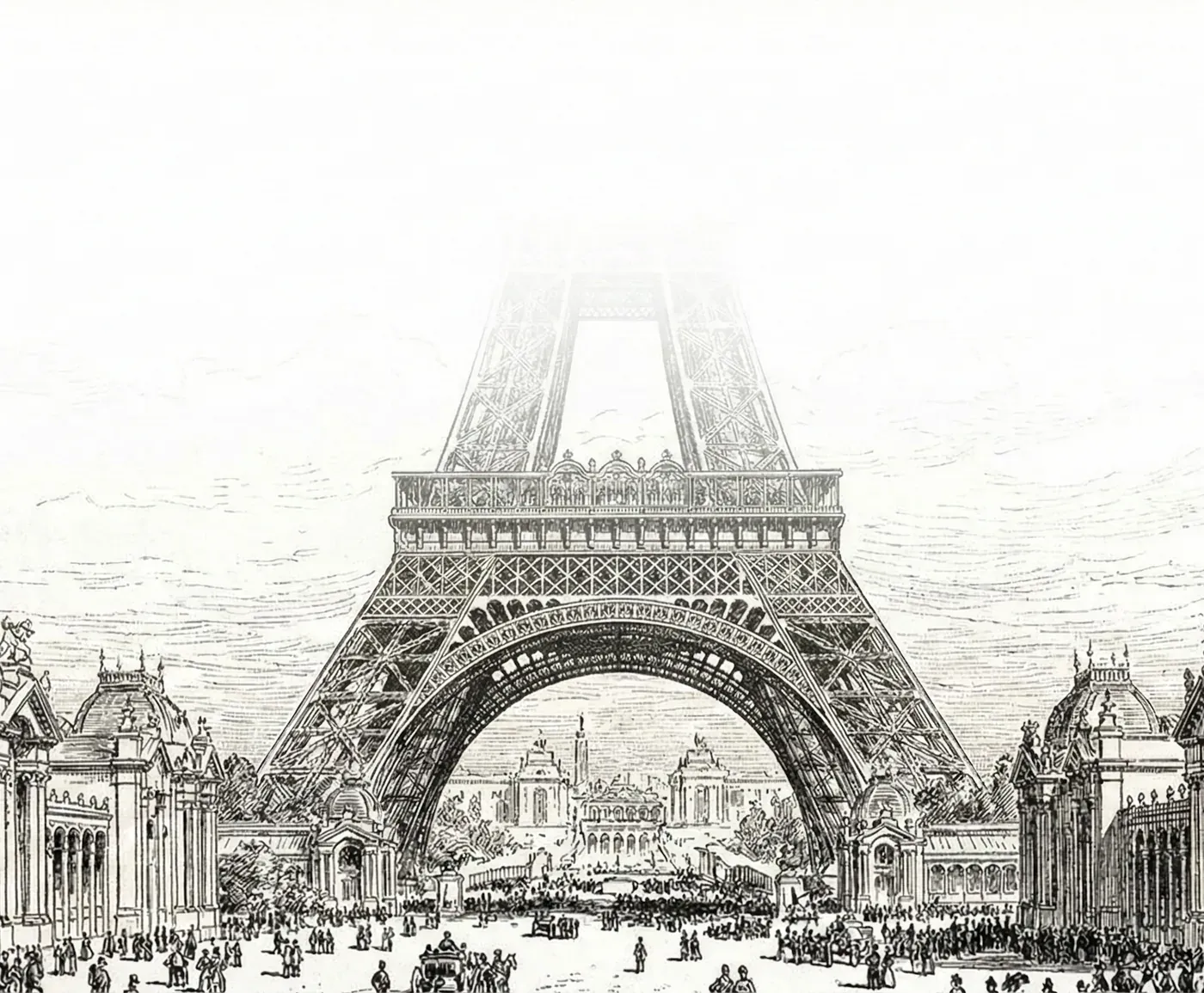
Before the Eiffel Tower, what was the Champ-de-Mars used for?
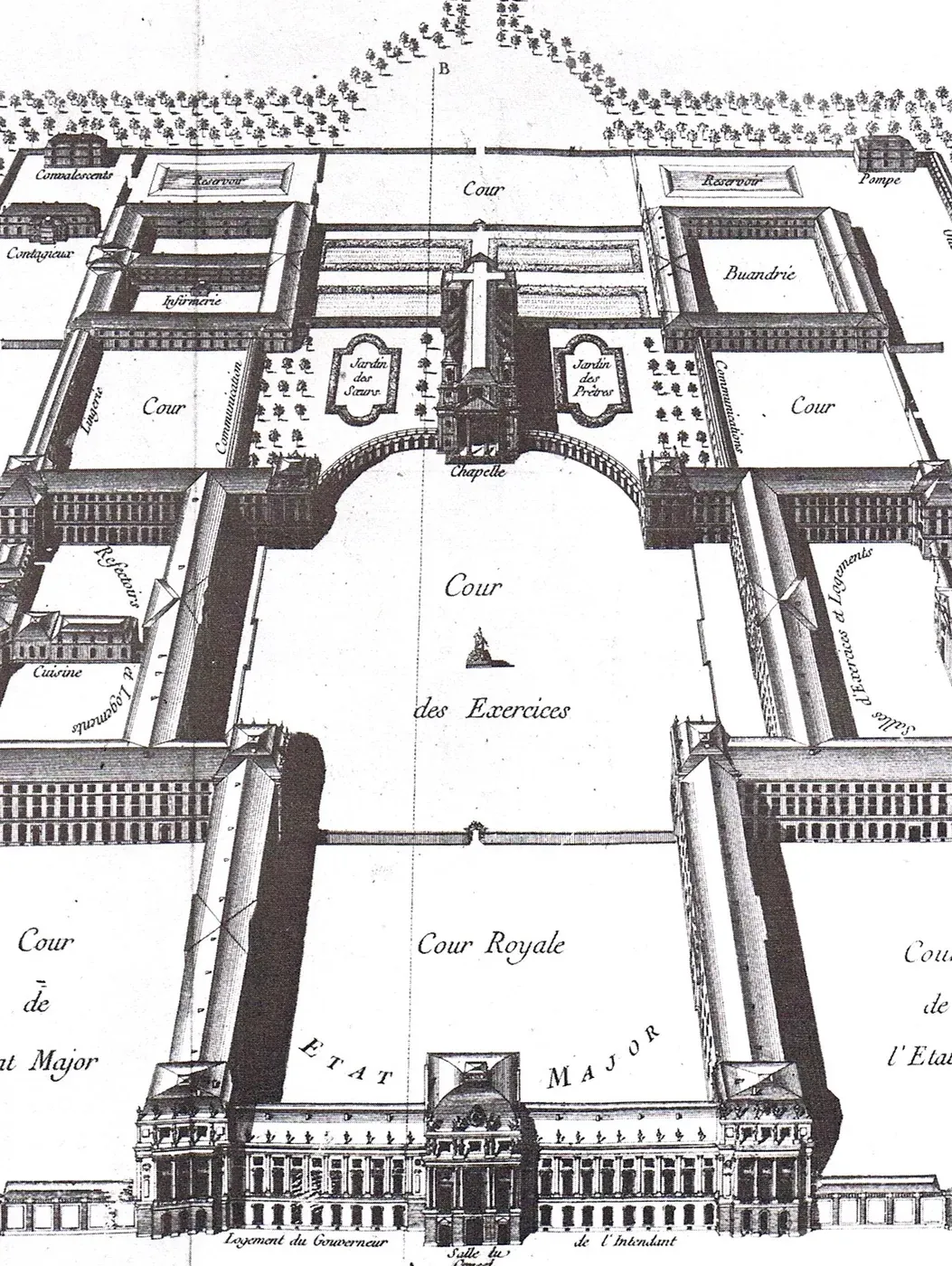
Louis XV had the École militaire built there from 1751, to designs by Ange-Jacques Gabriel - the architect of the Place de la Concorde.
Back to the sources
All the history behind the experience, from the ancient Champ de Mars to the Iron Lady - the birth, the building and the triumph of the Eiffel Tower. Every scene is sourced, cross-checked and validated by historians.
Five questions on what you have just travelled through. Thirty seconds.
Question 1 of 5
Louis XV had the École militaire built there from 1751, to designs by Ange-Jacques Gabriel - the architect of the Place de la Concorde.
Question 2 of 5
The date chosen is that of the vast ceremony of 14 July 1790 on the Champ-de-Mars, before nearly 500,000 people. Parisians had dug the tiers of seating and built the Altar of the Nation themselves.
Question 3 of 5
The one by architect Jules Bourdais, already famous for the Palais du Trocadéro: a stone column crowned with a giant lighthouse. Tradition against industrial daring.
Question 4 of 5
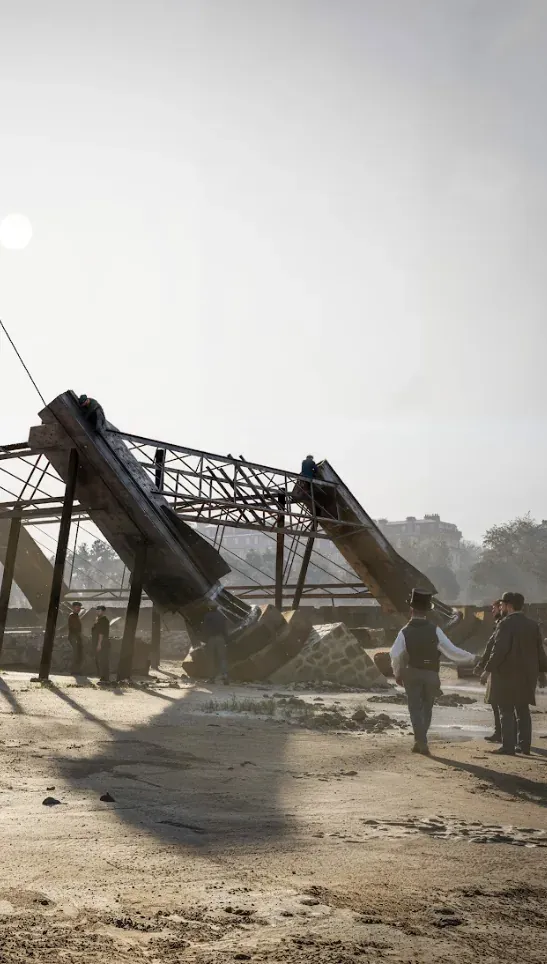
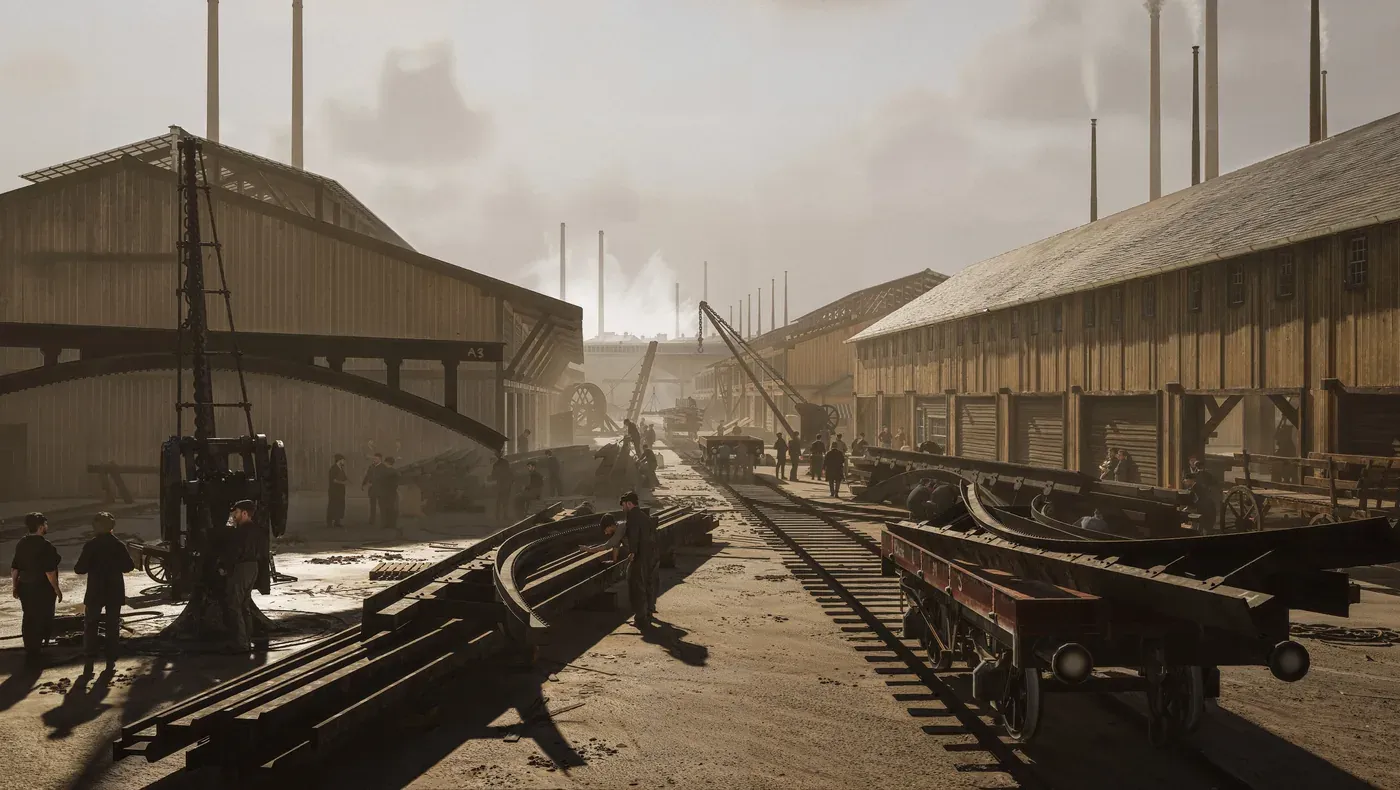
Driven in red-hot: as each rivet cools it contracts and grips the framework. The 18,038 parts had been machined at Levallois-Perret to within a tenth of a millimetre.
Question 5 of 5
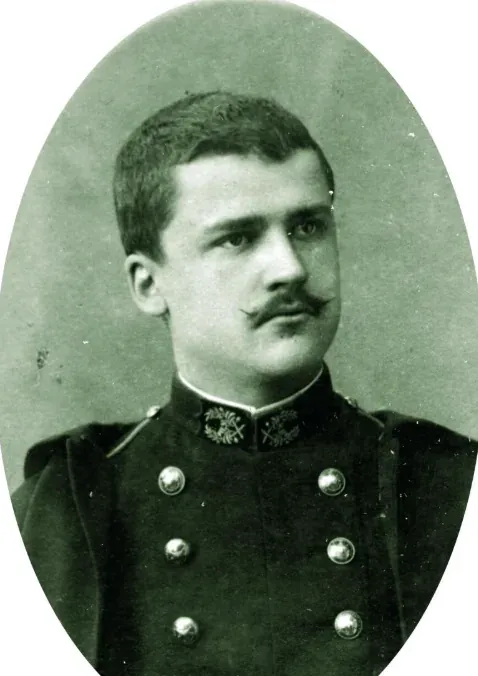
To prove its usefulness, Eiffel encouraged wireless telegraphy trials: 4 km to the Panthéon in 1898, 6,000 km by 1913. On 1 January 1910 the concession was renewed for 70 years.
Go further
Telling the story of how the Symbol of Paris came to be starts with one essential step: setting the scene. All the more so because the Champ de Mars - where this immersive journey through time unfolds - is a place steeped in history. In this companion guide, we retrace each immersive chapter so you can delve deeper into what you discovered during your visit.
Long before the Eiffel Tower rose here, the ground on which it now stands was a vast plain beyond the edge of the city. In antiquity, this land lay within the territory of the Parisii, a Gaulish people settled along the Seine. In the 1st century BC, the region became a strategic prize during the Roman conquest of Gaul. Recounted in The Gallic Wars, a founding battle pitted Camulogenus - a valiant Gaulish chief summoned by the Parisii - against Labienus, one of Julius Caesar's lieutenants. The Roman victory paved the way for the lasting settlement of the Gallo-Roman town of Lutetia, which would in time give rise to Paris.
Statue of Camulogenus by the sculptor Eugène-Louis Lequesne (1815–1887), at the Palais des Beaux-Arts in Lille, France. Photograph © Arnaud Lafournoux.
Detail of one of the carnyces found in pieces in 2004 at the Tintignac site (Corrèze). It depicts a stylised boar's head. In 2012, a team of acousticians analysed and managed to reproduce the deep sound of the carnyx - the Gaulish war horn that struck fear into the enemy. © INRAP
Gaulish coinage - a stater of the Parisii, 1st century BC. Musée Carnavalet.
Did you know? Before it took this name, the Champ de Mars was called the 'plaine de Grenelle' or the 'marais de la Grenouillère' (the frog-pond marsh), on account of how waterlogged it was. The name 'Grenelle' is thought to derive from the Latin garanella, meaning 'sandy ground'. The area was regularly flooded by the Seine.
An immense military complex.
In the 18th century, the plain's purpose changed completely. King Louis XV decided to create a great academy to train the officers of the royal army: the École Militaire. Work began in 1751 under the architect Ange-Jacques Gabriel, who also designed the Place de la Concorde. Since the 17th century, the Hôtel des Invalides had already taken in soldiers who were wounded or too old to keep serving. With the École Militaire, Louis XV envisaged completing this system: on one side, the veteran soldiers, keepers of military experience and memory; on the other, the young cadets, come to learn the profession of arms.
The original plan called for these two institutions to be symbolically linked by a vast urban axis crossing the plaine de Grenelle. Plan of the École Militaire by Georges Louis Le Rouge, 1752, Musée Carnavalet.
The original architectural programme was greatly scaled back. In the end, only the main building of the École Militaire was built. Ange-Jacques Gabriel, 'Veüe de l'École royale militaire dédiée à Monsieur le marquis de Marigny', 1751. © BNF
French army uniforms from 1700 to 1785.
This ambitious scheme soon ran up against a more prosaic reality: a lack of funds. The Seven Years' War (1756–1763) weighed heavily on the monarchy's finances, and the works had to be drastically cut back. 'Departure of the military troops', Jean-Louis Prieur. © Musée Carnavalet
When the École Militaire opened its doors in 1756, it took in mainly young noblemen of little means, whom the monarchy wished to train as officers in the royal army. Among its most famous pupils was Napoleon Bonaparte, admitted in 1784 at the age of 15. 'Bonaparte, lieutenant-colonel of the 1st Corsican battalion in 1792' by Henri Félix Emmanuel Philippoteaux. © Arnaudet; J. Schormans; Réunion des musées nationaux
It's often thought that France's national day comes from the storming of the Bastille… but more precisely, the choice of this date comes from an immense ceremony held a year after 14 July 1789: the Festival of the Federation. Its purpose was to celebrate the first anniversary of the French Revolution. For several weeks, thousands of Parisians came to prepare the ground themselves, digging out tiers of seating and building an enormous Altar of the Nation. On the day of the festival, nearly 500,000 people attended the ceremony. The scene was spectacular: King Louis XVI swore an oath to the Constitution before the crowd, alongside the representatives of the people and Lafayette, Mirabeau and Robespierre. Watch an excerpt from the film 'La Révolution - Les Années Lumière' by Roberto Enrico.
In the 19th century, the great industrial powers entered a new kind of contest: that of technical and scientific progress. To showcase their lead, they staged spectacular events - the world's fairs, true shop windows of the modern world. The first was held in London in 1851, in an extraordinary building: the Crystal Palace, an immense structure of glass and iron built especially for the occasion, yet designed to be temporary.
Centennial Tower by Clarke and Reeves, 1876, Philadelphia. This was the most fully developed design for a 300-metre tower. It was meant to celebrate American independence, but was never built for lack of funds.
Design for the Glass Tower by Charles Burton, 1851, reusing the glass and metal structure of London's Crystal Palace. Many designs for thousand-foot towers were drawn up, yet none was ever built.
In 1884, the state launched a competition for the 1889 World's Fair, intended to mark the centenary of the French Revolution: it called for a thousand-foot (300 m) tower that would astonish the entire world! This gave rise to an emblematic rivalry between two opposing visions. On one side, the engineer Gustave Eiffel and his iron tower, built on the innovations of his teams; on the other, the architect Jules Bourdais, who proposed a monumental stone 'Sun Column' crowned with a giant lighthouse. The duel set tradition against modernity, classical aesthetics against industrial daring. Both men were already renowned: Eiffel for his revolutionary use of iron in bridges and dizzyingly vast railway stations; Bourdais, much admired for the Palais du Trocadéro, built for the 1878 World's Fair.
The Statue of Liberty, in the heart of Paris. In the early 1880s, the statue on the Rue de Chazelles was the greatest attraction in the very quiet Plaine-Monceau district. Rising some fifty metres above the rooftops, it became, in the process, the tallest monument in Paris.
The source that inspired our 3D model. © Musée Carnavalet, Histoire de Paris
Building the Eiffel Tower: 2 years, 2 months and 5 days.
The Eiffel Tower's construction was a genuine feat of prefabrication: its 18,038 metal parts were machined at Levallois-Perret to within a tenth of a millimetre, making any on-site adjustment unnecessary. To lay the foundations on the Seine side, workers had to labour underwater inside watertight, compressed-air caissons. The whole structure was assembled with 2.5 million rivets driven in red-hot, their contraction on cooling guaranteeing an immensely tight grip on the framework. Finally, the components were hoisted by ingenious creeper cranes that ran directly along the rails of the future lifts, allowing this giant puzzle to be completed in the record time of a little over two years.
A scene from the experience during the Tower's construction. The joining of the pillars was a crucial moment - one where everyone held their breath.
The early days of the Eiffel Tower building site.
On 31 March 1889, the inauguration of the Eiffel Tower was marked by a rather strenuous climb: with the lifts not yet working, Gustave Eiffel and the officials had to climb the 1,710 steps to the top on foot. After nearly an hour of effort, at 1:30 pm, the engineer raised a great tricolour flag more than 300 metres up - a feat immediately saluted by a 21-gun salute fired from the structure and a champagne toast. This symbolic triumph, crowning the completion of what was then the tallest monument in the world, silenced the critics for good.
In the Symbol of Paris experience, we go beyond the World's Fair to tell of the moment when the Eiffel Tower fell out of fashion. Only a few hundred thousand visitors in the early 20th century, against the 2 million during the fair's six months. The Tower, slated for demolition, had to be saved.
A scene from the experience, as the Tower falls into disuse.
A scene from the experience. Gustave Eiffel had an apartment built for himself on the top floor and began conducting scientific experiments.
Slated for demolition in 1909, at the end of its original 20-year concession, the Eiffel Tower was saved at the last moment by wireless telegraphy. To prove his structure's lasting usefulness, Gustave Eiffel encouraged scientific experiments, which led as early as 1898 to a first successful radio link of 4 kilometres with the Panthéon. In 1903, he gave financial backing to Captain Gustave Ferrié to set up a military station there, turning the Tower into a strategic giant antenna. Its role quickly became indispensable to national defence: by 1913, its radio signals carried as far as 6,000 kilometres, allowing communication with America and with ships at sea. Faced with this major technological success, the authorities decided, on 1 January 1910, to renew the monument's concession for 70 years - saving it from destruction for good.
Captain Gustave (yes, another one!) Ferrié, without whom the Eiffel Tower might no longer exist today.
From the Ernest Roger collection (1864–1943). Photograph taken at the top of the Eiffel Tower during the first radio link, made on 5 November 1898; 18 × 23.5 cm (detail).
The Eiffel Tower wins the hearts of the French.
During the Roaring Twenties, the Eiffel Tower regained its lustre and became an icon, pictured time and again. Visible from everywhere, talked about by everyone, its instantly recognisable silhouette was seized upon by advertisers.
From 1925 to 1934, the Eiffel Tower was turned into a gigantic illuminated billboard for the car maker Citroën - a feat recorded in the Guinness Book of Records. This monumental installation required 250,000 light bulbs and 600 kilometres of electrical cable to spell out the seven letters of the name, each nearly 30 metres tall. Visible from 40 kilometres away, this extraordinary display lit up the Paris sky for almost a decade before being dismantled because of its exorbitant cost.
During the Second World War, the lift cables were deliberately cut by the French to force Hitler to climb on foot, and the structure narrowly escaped destruction in 1944 thanks to the German general von Choltitz's refusal to obey orders. Having survived these upheavals, the 'Iron Lady' has become the most visited paid monument in the world, drawing nearly 7 million visitors a year today - around 75% of them from abroad. Raised to the rank of an indispensable national symbol, its survival demands painstaking upkeep, including 60 tonnes of paint applied every seven years to protect it from corrosion.
To prepare for and extend the visit in class - sourced and adapted by school level.
The teaser, the making-of and the experience's sound world.
The reconstructions in The Symbol of Paris draw on archives, period plans and the work of historians. The full bibliography is set out in our teaching booklets.
What if you were there?
The Symbol of Paris - a journey through time in the open air, where history was written.