
Louvre Too Crowded? The Best Alternatives in Paris
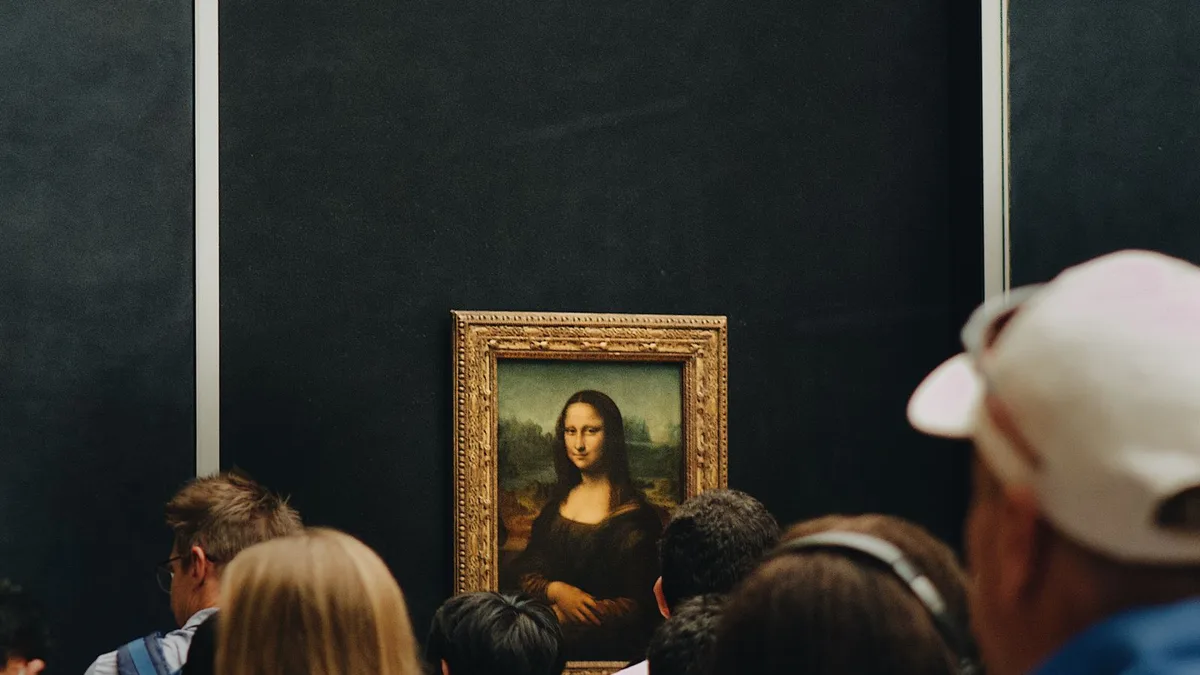
You know the scene, or you soon will: the Mona Lisa fifteen metres away, a wall of backs and raised phones, and thirty seconds of contemplation before the current sweeps you on. The Louvre is the most visited museum in the world, and it feels like it. The good news: in Paris, almost every masterpiece in the Louvre has an admirable cousin in a museum where you can still hear your own footsteps.
The best alternatives to the Louvre when the crowds put you off: the Petit Palais (fine arts, free permanent collections, a garden café), the musée Carnavalet (the history of Paris, also free), the musée de Cluny (the Middle Ages built over Roman baths), the Orangerie (Monet’s Water Lilies in one peaceful hour), and the city’s greatest history museum, which has no walls at all: the banks of the Seine. And if you are set on the Louvre, two tricks make it liveable.
1. The Petit Palais: the Parisians’ reflex
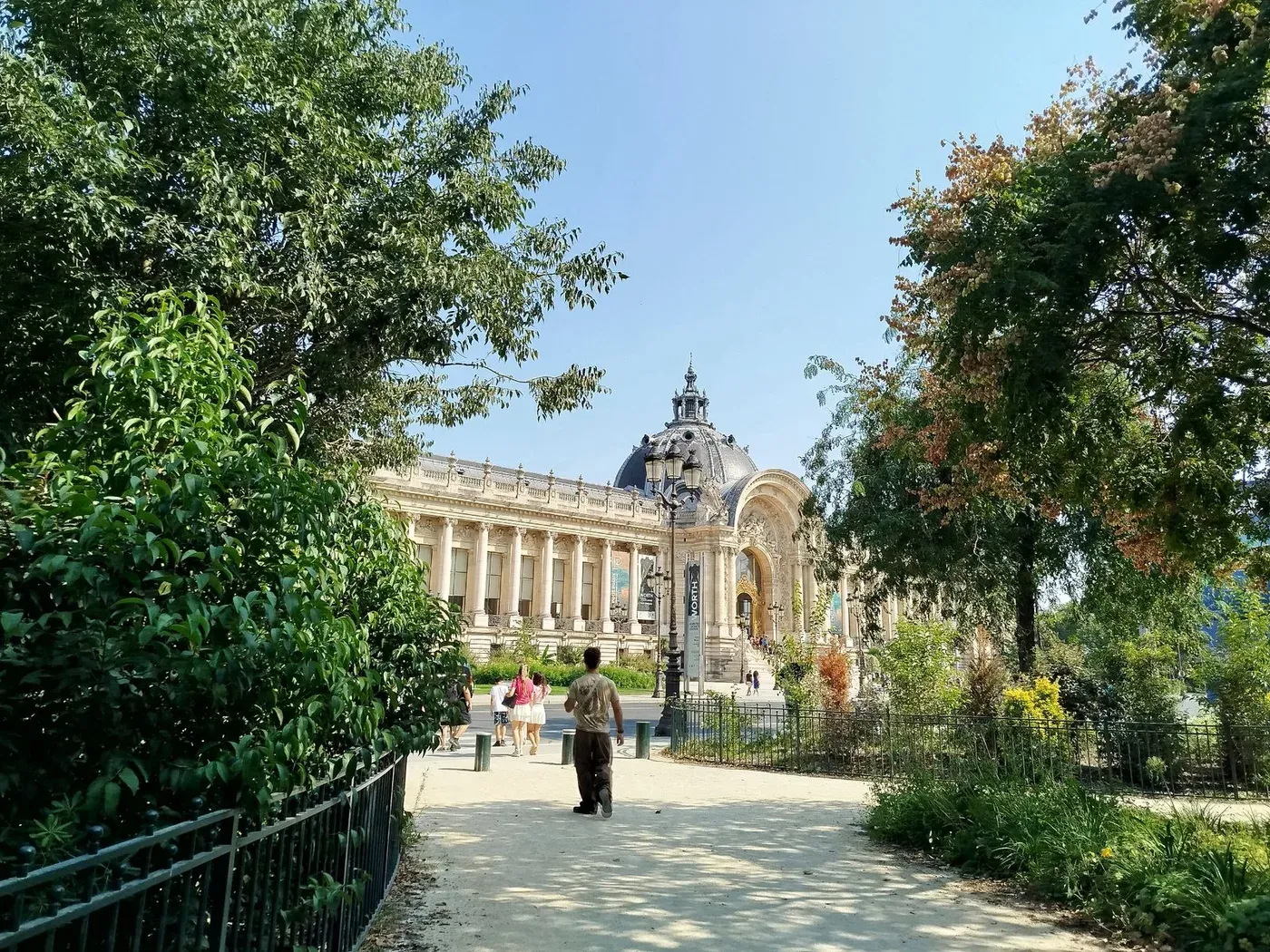
The Petit Palais from the gardens: masterpieces, no queue, and a café in the inner garden.
Ten minutes from the Louvre, the Petit Palais is the worst-kept secret in Paris: a sumptuous palace built for 1900, collections running from Rembrandt to Monet, a colonnaded inner garden for coffee, and the essential part is free, since the City’s permanent collections cost nothing. Two golden hours, and never a queue.
2. The musée Carnavalet: Paris told by itself
In the Marais, the Carnavalet is the museum of the history of Paris, renovated top to bottom, with free permanent collections. It is our favourite, for an obvious reason: everything we tell on this blog exists there as objects, the signs of vanished streets, Hubert Robert’s paintings made during the demolition of the houses on the bridges, the old views of the place de Grève. If one museum could extend our walks, it would be this one.
3. The musée de Cluny: the Middle Ages over Roman baths
In the heart of the Latin Quarter, the musée de Cluny stacks two worlds: a medieval mansion set on Gallo-Roman baths, the Lady and the Unicorn upstairs and the ancient frigidarium below. It is one of the rare places where you can lay eyes on the Lutetia we describe in our article on underground Paris, and it is rarely crowded.
4. The Orangerie: the Water Lilies in one hour
In the Tuileries, a fifteen-minute walk from the Louvre, the Orangerie offers exactly what the Louvre no longer can: a peaceful hour. The two oval rooms of Monet’s Water Lilies, designed for contemplation, remain one of the finest museum experiences in Paris, and the whole visit fits into an easy morning with a booked slot.
5. If you are set on the Louvre: two tricks
The Louvre is still the Louvre, and it rewards a smart approach. First trick: a timed ticket early in the morning, a one-wing plan, and the Richelieu wing, the least visited, where the Napoleon III apartments and the sculpture courtyards can be seen almost in peace. Second trick: go down to the medieval Louvre, the moats of Philippe Auguste’s fortress under the Cour Carrée, where the crowds never go. Our first-trip itinerary shows how to fit it all into one morning.
6. The open-air museum: the banks of the Seine

On the quays, the greatest history museum in Paris has no walls and no queue.
The most radical alternative to the Louvre has no ticket desk and no galleries: it is the city itself. The banks of the Seine, a World Heritage site, line up two thousand years of history between the two islands, and that is where we set up The Origins of Paris: a one-hour guided walk where, through virtual-reality binoculars, ancient Lutetia, the medieval place de Grève and the flood of 1910 replay at the exact spots where they happened, based on archives and validated by our scientific committee. Full disclosure, it is our experience - and it is the densest hour of history you can live in Paris without passing a single door.
The questions we get asked
Should you still do the Louvre? Yes, once, well prepared: a timed ticket, one chosen wing, and the exit while you still love it. That is the “one museum a day” rule of our itinerary, and it changes everything.
Which Paris museums are free? The permanent collections of the City of Paris museums, including the Petit Palais and the Carnavalet, two of the finest. Add the churches, the gardens and the riverbanks, which cost nothing either.
And with children or teenagers? Short formats always win: the Orangerie over the marathon, the Carnavalet for its spectacular objects, and our selection for teens for the rest of the day.
In short
When the Louvre overflows, Paris is full of alternatives worthy of it: the Petit Palais and the Carnavalet, sumptuous and free, Cluny for the Middle Ages, the Orangerie for an hour of Water Lilies, the Richelieu and medieval-Louvre tricks for the faithful, and the banks of the Seine as an open-air museum. The crowd is a choice; the art and history of Paris do not depend on it.
Sources and practical links
- Petit Palais, the City of Paris fine arts museum (in French).
- Musée Carnavalet, the history of Paris, Paris Musées (in French).
- Musée de Cluny, the national museum of the Middle Ages.
- Musée de l’Orangerie, Claude Monet’s Water Lilies.
- The Louvre, timed tickets and visitor information.
- The Origins of Paris, the open-air museum of the riverbanks, dates and booking.