
Your First Trip to Paris: An Authentic 3-Day Itinerary

Paris on a first visit is a paradox: everything is famous, so nothing is obvious. And the fear every first-timer confesses is the same: spending three days in lines with other tourists and coming home without having touched the real city. The fix is not skipping the icons; it is pacing them like a Parisian would.
An authentic first itinerary for Paris follows four rules: see the icons in the morning and live in the neighbourhoods at night; walk everywhere you can; one museum a day, never more; and at each famous place, take the time to learn what actually happened there. In practice: day one for the historic heart (Île de la Cité, the Latin Quarter, the Marais), day two for the Eiffel Tower and the Champ-de-Mars with its story told on the spot by The Symbol of Paris, day three for the Louvre and Montmartre.
The four rules that make it authentic
- Icons at opening time, neighbourhoods after dark. Crowds are a schedule, not a fate: Notre-Dame at 9am and Montmartre at 9pm are different cities.
- Walk. Central Paris is small; almost everything in this itinerary is under thirty minutes on foot from the last stop, and the walk is where Paris actually happens.
- One museum a day. The Louvre deserves a fresh brain, and so do you.
- At each landmark, get the story, not just the photo. What separates a postcard stop from a memory is knowing what the ground under your feet has lived. It is the rule this itinerary cares about most, and the one tourists skip.
Day 1 - The historic heart

A terrace and a croissant: the ritual to adopt from your very first morning.
Morning. Café and croissant at a terrace, then start where Paris started: the Île de la Cité. Notre-Dame, restored and reopened, is free to enter with a booked slot; the Sainte-Chapelle next door, with its walls of 13th-century stained glass, is the most underrated fifteen minutes in the city.
Afternoon. Lunch in the Latin Quarter, away from the menus with photos, then cross to the right bank and walk the Seine quays: the bouquinistes’ green boxes, the view over the two islands, the barges. This waterfront is the oldest street in Paris, and it is free.
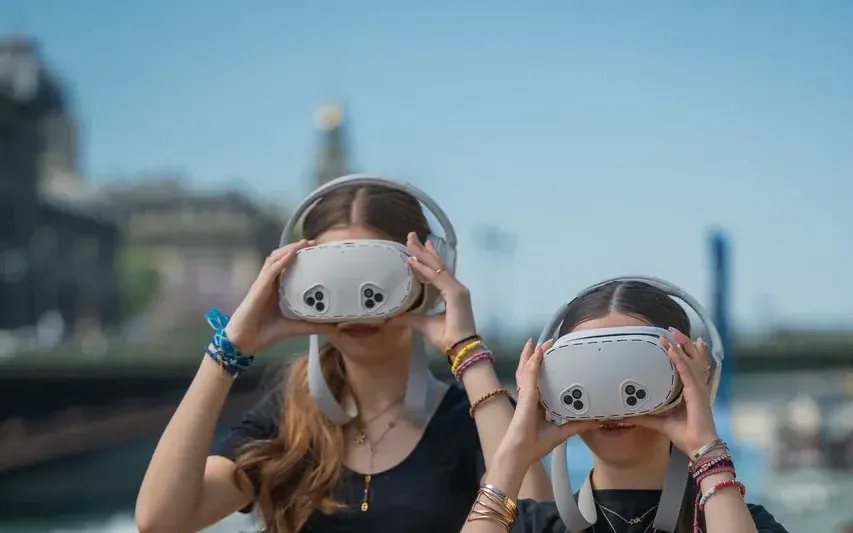
On the right-bank quays you will cross walkers wearing strange binoculars: time travellers, on our first walk, The Origins of Paris.
Evening. The Marais: medieval street plan, small squares, dinner in a side street. Order the plat du jour; it is the most Parisian sentence you can say.
Day 2 - The Eiffel Tower, and what its lawn has lived
Morning. Go up with your pre-booked ticket, when the light is clean and the lines are short. Come down, buy a picnic, and claim a patch of grass on the Champ-de-Mars.
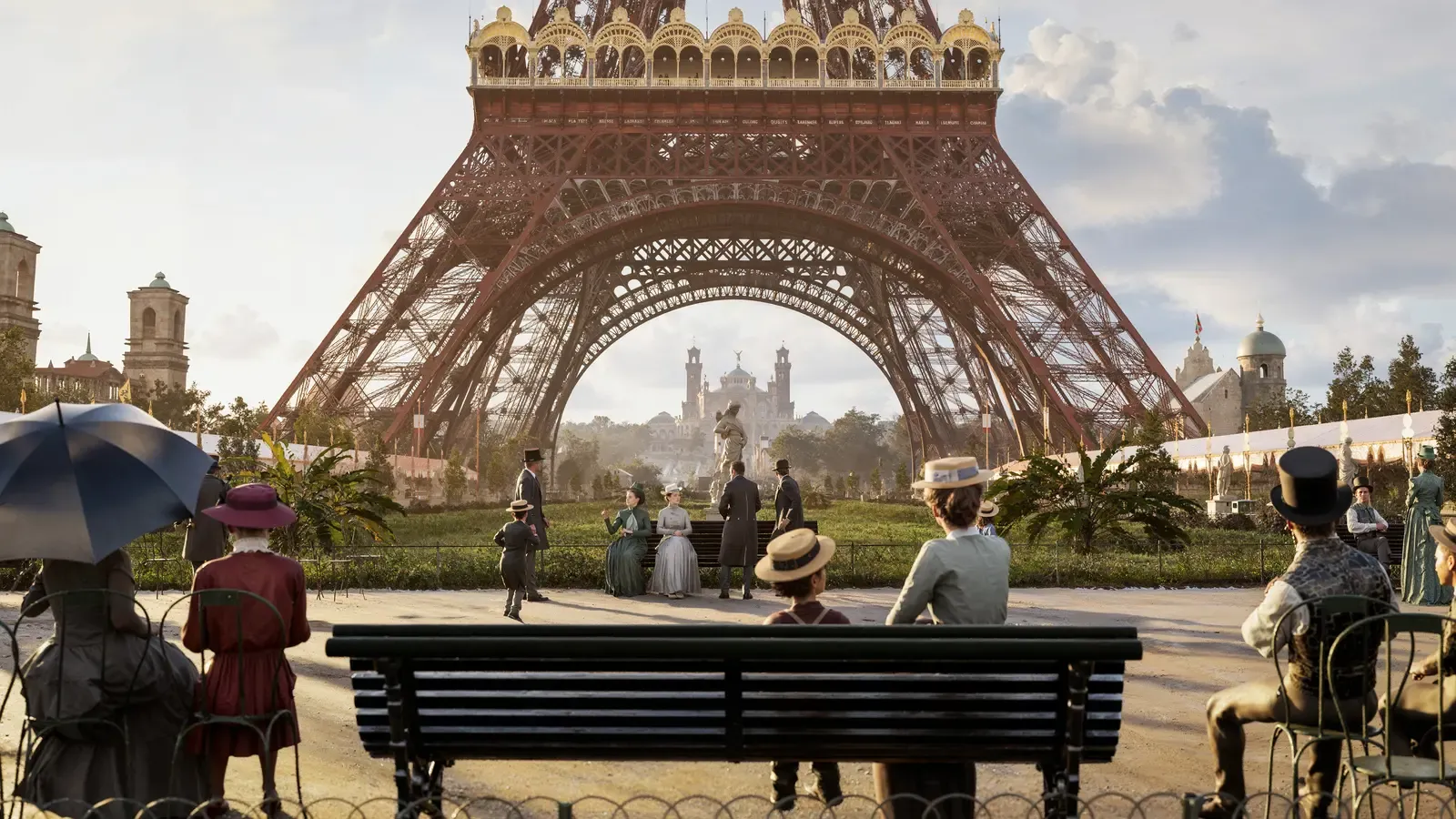
The 1889 World’s Fair, reconstructed for The Symbol of Paris: this is what the lawn you are picnicking on looked like.
Afternoon. Here is the most authentic hour you can spend at the most touristic spot in the world: The Symbol of Paris, a one-hour guided walk on the Champ-de-Mars where, through virtual-reality binoculars, the ground you stand on replays its own history: Gustave Eiffel’s workshops, the construction of a tower that was never meant to last, the 1889 World’s Fair and its Galerie des Machines, the Roaring Twenties, the Occupation and the Liberation. Every scene is rebuilt from archives and validated by historians, at the exact spots where it happened. It runs in English, and it turns the world’s most photographed lawn back into a place. Book it before you fly.
Evening. The Trocadéro for golden hour facing the tower, then dinner in the village streets of the 7th; our guide to the area around the Eiffel Tower has the addresses and the timing.
Day 3 - Art in the morning, villages at night
Morning. The Louvre with your timed ticket, and a plan: pick one wing, see it well, and walk out while you still love it. Decompress in the Tuileries.
Afternoon. Choose one: the Musée d’Orsay for the Impressionists, the Orangerie for Monet’s Water Lilies in a quiet hour, or, if you would rather trade paintings for panoramas, the rooftop of the Arc de Triomphe, where the twelve avenues and the tower line up at your feet.
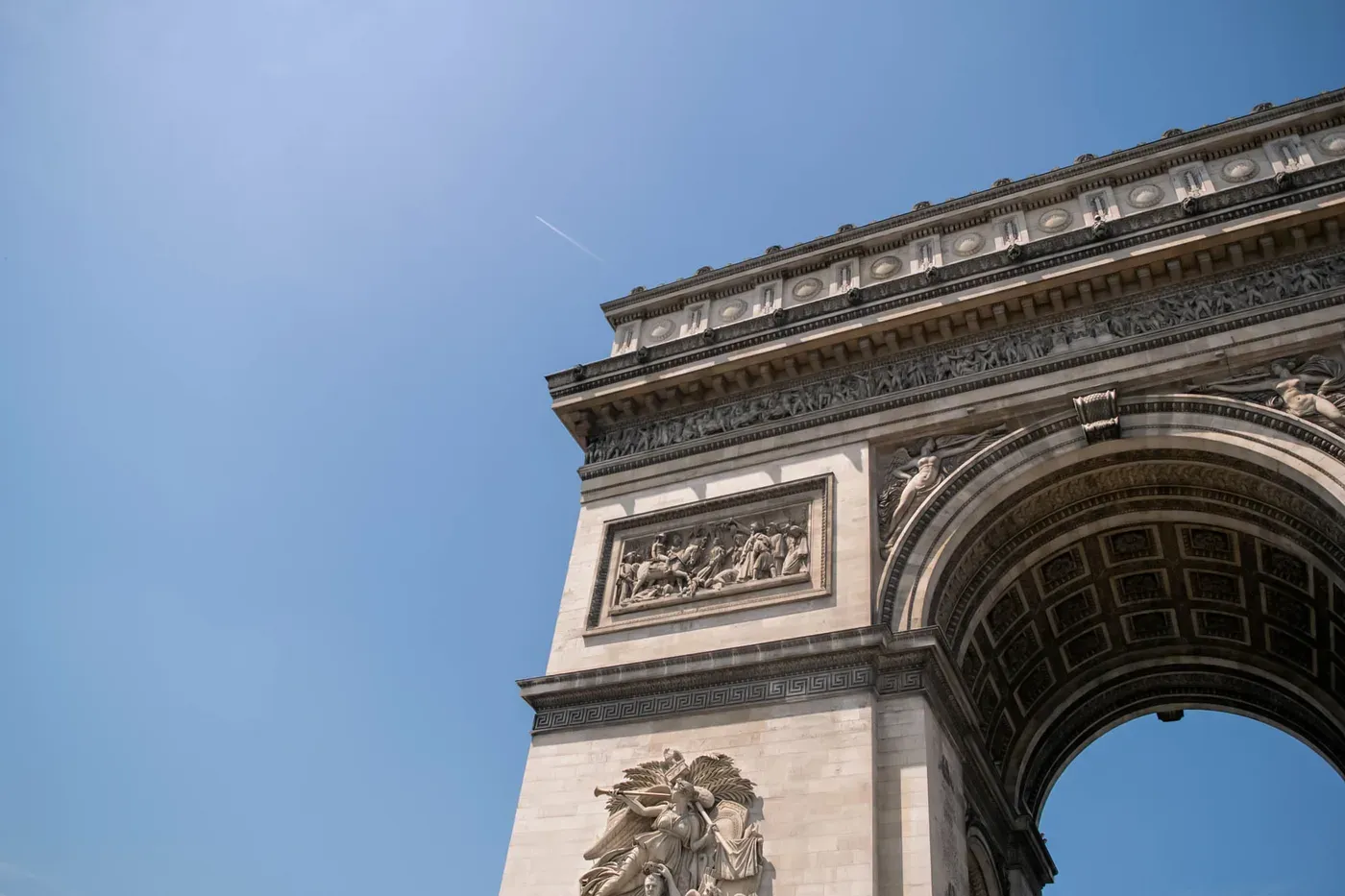
The Arc de Triomphe: book the rooftop for one of the finest views over the axis of Paris.
Evening. Climb to Montmartre: the village streets behind the Sacré-Cœur, dinner off the main squares, and the city at your feet for your last night.
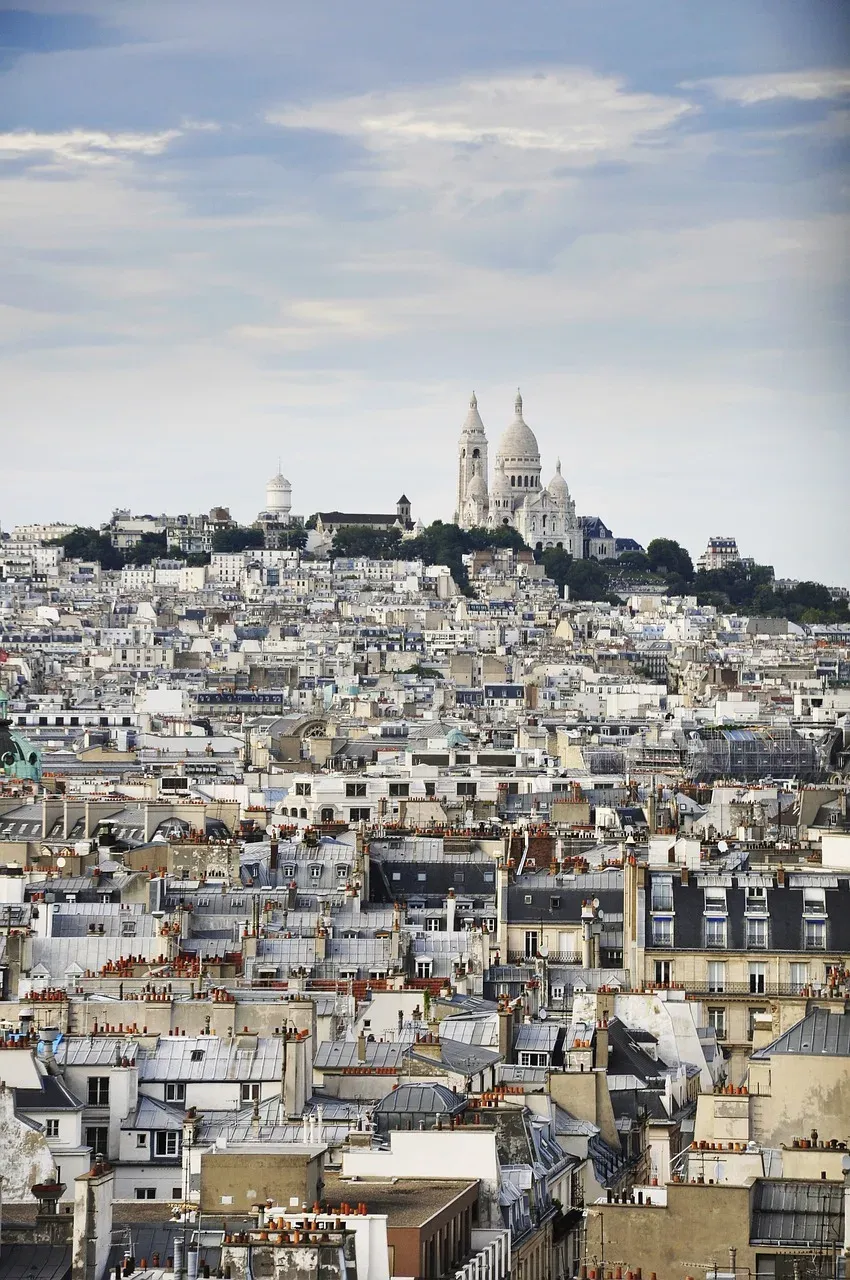
Montmartre and the Sacré-Cœur above the rooftops: keep them for your last evening.
First-timer questions, answered
Is three days enough for Paris? For a first trip, yes, if each day has one theme instead of a checklist. You will leave with the essentials seen properly and a reason to come back.
What should I book before flying? Four things, all online: the Eiffel Tower summit (weeks ahead in high season), a timed entry for the Louvre, a free slot for Notre-Dame, and The Symbol of Paris. Also check museum closing days: most close on Monday or Tuesday.
How do I avoid the worst crowds? Do icons at opening time, book everything with a time slot, and give your evenings to neighbourhoods instead of monuments. The itinerary above is built on exactly that rhythm.
What do most first-timers miss? The stories. Paris shows its stones but not its past, and the Champ-de-Mars is the best example: a lawn to most visitors, and one of the most eventful places in France to anyone who knows what happened on it. That is the gap The Symbol of Paris exists to close, and yes, full disclosure: it is ours. Timescope is the Paris studio behind it, along with its elder sibling on the Seine quays, The Origins of Paris; here is how we work.
In short
An authentic three days in Paris: the historic heart on foot, the Eiffel Tower in the morning and its lawn’s true story in the afternoon with The Symbol of Paris, the Louvre while your eyes are fresh, and every evening in a neighbourhood. Icons in the morning, villages at night, one museum a day, and at each stop, the story of the ground you stand on. Paris does the rest.
Sources and practical links
- Official Eiffel Tower ticketing, SETE.
- The Louvre, visitor information, official site.
- Notre-Dame de Paris, free timed entry, official site.
- The Symbol of Paris, practical details, dates and booking.