
Why Were There Houses on the Bridges of Paris?
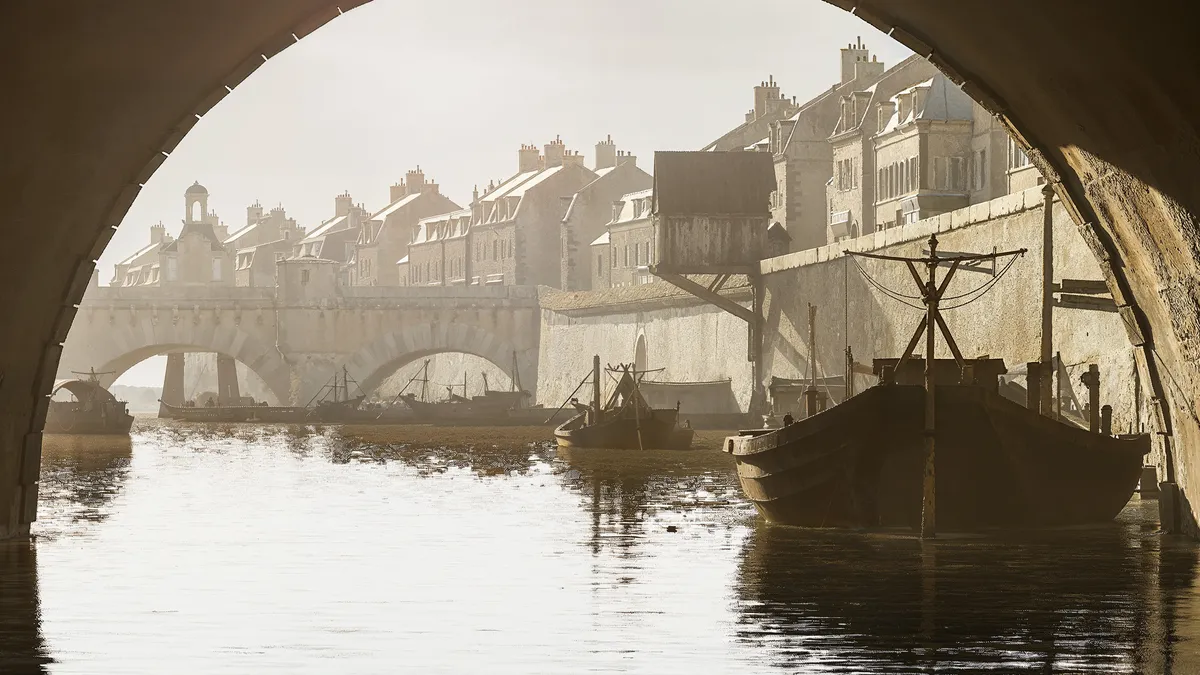
On the Pont Notre-Dame of the 16th century, a shopkeeper could live an entire life without ever seeing the Seine from home: the façades blocked the view of the river entirely. For centuries, the bridges of Paris were not viewpoints. They were streets.
From the 12th century to the end of the 18th, almost every bridge in Paris carried houses, shops and mills. People built on bridges because the rents paid for the structure’s construction and upkeep, and because a bridge, the obligatory crossing between the two banks, was the best commercial location in the city. Deemed dangerous and unsanitary, the houses were demolished from 1786 onwards.
Wooden bridges since Roman Lutetia
As early as the Gallo-Roman era, two wooden bridges linked the Île de la Cité to both banks, extending the great road that ran through Lutetia (the ancient city that became Paris): the Grand Pont over the main arm of the Seine, and the Petit Pont over the smaller one. For centuries, they were the only ways onto the island. Built on wooden piles, they burned, gave way under floods, were cut during the Viking siege of 885, and were rebuilt every time, in almost exactly the same place.
Why build houses on a bridge?
First, to pay for the bridge. A structure thrown across the Seine was hugely expensive to build and even more so to maintain; by lining the deck with houses, the city or the king secured an income, with the rents funding repairs. Building houses on bridges was a way of financing them.
Second, because the location was unbeatable. All of Paris funnelled through those few metres of roadway. In 1141, King Louis VII ordered the city’s money changers to set up on the Grand Pont, which thus earned its present name of Pont au Change, the “Exchange Bridge”. Each bridge had its speciality, like a shopping street: apothecaries on the Petit Pont, booksellers and later art dealers on the Pont Notre-Dame. And beneath the arches, the river itself was put to work: the neighbouring Pont aux Meuniers, the “Millers’ Bridge”, carried up to thirteen mills grinding the city’s grain.
What did a street above the Seine look like?
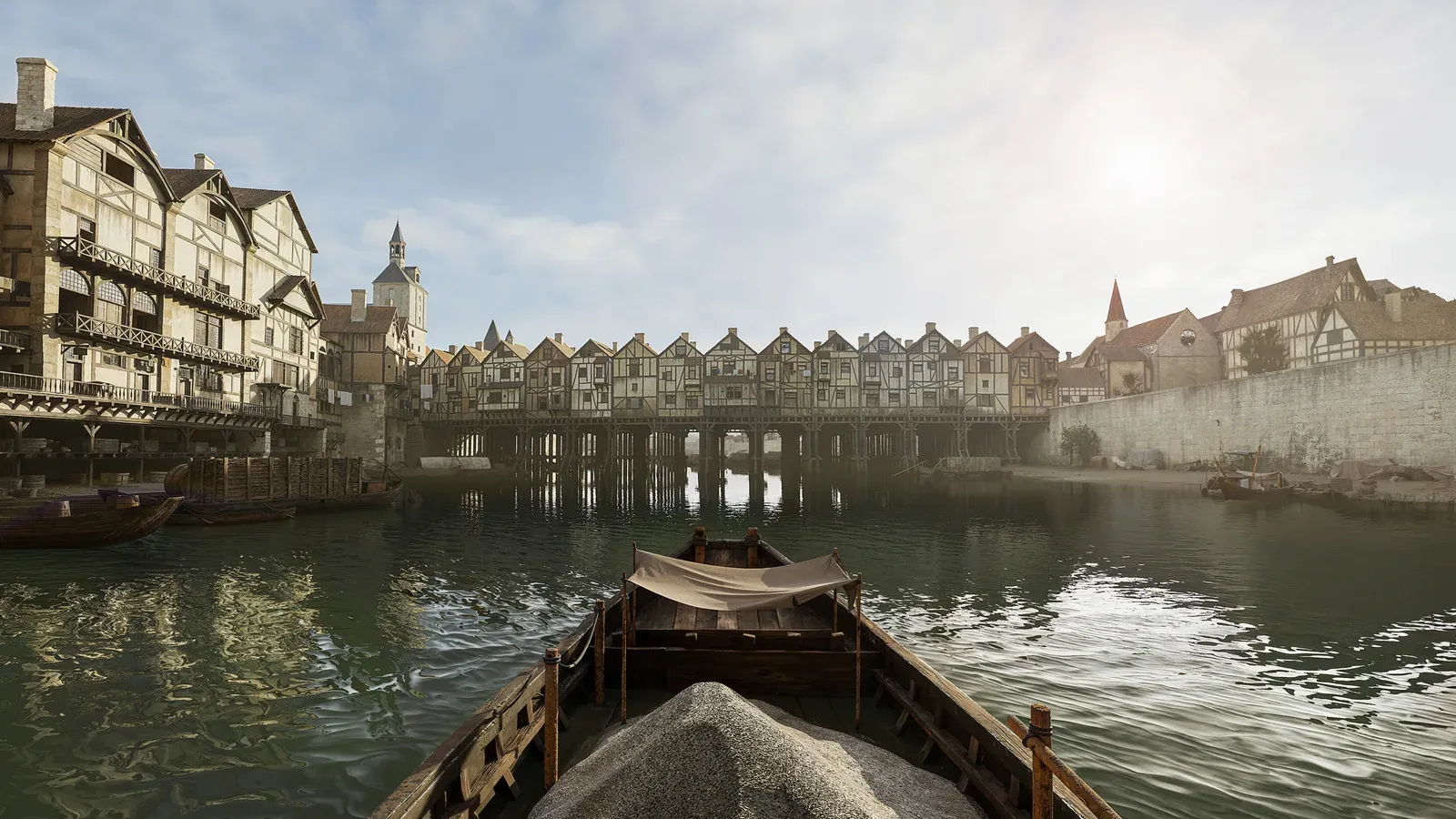
The Pont au Change and its houses, before it was rebuilt in stone. A Timescope reconstruction, based on archival records and validated by our scientific committee.
Like a narrow, dark street suspended above the current. Half-timbered houses lined both sides of the deck, overhanging the water, packed so tightly that you could cross the river without seeing it. Shops on the ground floor, lodgings above, and under the floorboards, the constant rumble of the Seine between the piers.
The Pont Notre-Dame, rebuilt in stone in the very early 16th century under the Italian architect Fra Giocondo, refined the model to an extreme: 68 identical brick-and-stone houses, numbered in gold figures. It was the first house numbering in the history of Paris.
A series of disasters
Living above the river came at a price. On 25 October 1499, the poorly maintained Pont Notre-Dame collapsed into the Seine with all its houses. On 22 December 1596, a flood swept away the Pont aux Meuniers and its residents, with reports of around 150 victims. On the night of 23–24 October 1621, a fire that broke out on the neighbouring Pont Marchand ravaged the Pont au Change, which was rebuilt in stone from 1639 at the money changers’ expense. On 1 March 1658, an exceptional flood tore away two arches of the Pont Marie, taking some twenty houses and dozens of their inhabitants with them. And on 27 April 1718, a fire started by a single candle devoured the houses of the Petit Pont in a few hours; the bridge was rebuilt without them.
The Pont-Neuf, the first bridge without houses
When King Henri III laid its first stone in 1578, the plans for the future Pont-Neuf (literally the “New Bridge”) still included houses, like every bridge in Paris. It was Henri IV who, reviving the project after the Wars of Religion, ruled in 1601 against the city council’s wishes: no houses on this bridge, so as to preserve the view from the newly built Grande Galerie of the Louvre. The bridge, inaugurated in 1607, was also given raised pavements to protect pedestrians from mud and carriages.
It was an immediate success: Parisians rediscovered their river, and the bridge became the city’s permanent theatre, with its street performers and onlookers. History’s little irony: the “New Bridge” is now the oldest bridge in Paris.
Why did the houses disappear?
Because the danger had finally sunk in. On 7 September 1786, a royal declaration by Louis XVI ordered the demolition of every house built on the bridges of Paris, in the name of residents’ safety, public health and the embellishment of the city. Demolition sites followed one another from 1786 to 1788 on the Pont Notre-Dame, the Pont au Change and the Pont Marie. The last houses, on the Pont Saint-Michel, only came down in 1808.
The painter Hubert Robert followed the demolitions from site to site; his canvases, kept at the musée Carnavalet, are among the rare colour records of that vanishing Paris.
Where can you find the inhabited bridges today?
- In the names. The Pont au Change, rebuilt under Napoleon III between 1858 and 1860, still carries the memory of the money changers of 1141 in its name.
- At the musée Carnavalet, in front of Hubert Robert’s paintings and old views of the built-up bridges.
- On the Pont-Neuf, the oldest of the 37 bridges and footbridges that cross the Seine in Paris today.
- On the riverbanks, through our binoculars. With The Origins of Paris, you walk along the Seine between the Pont Louis-Philippe and the Île Saint-Louis and, through our virtual-reality binoculars, watch the Pont au Change of centuries past rise over the river again, houses included. Every reconstruction is based on archival records and validated by our scientific committee.
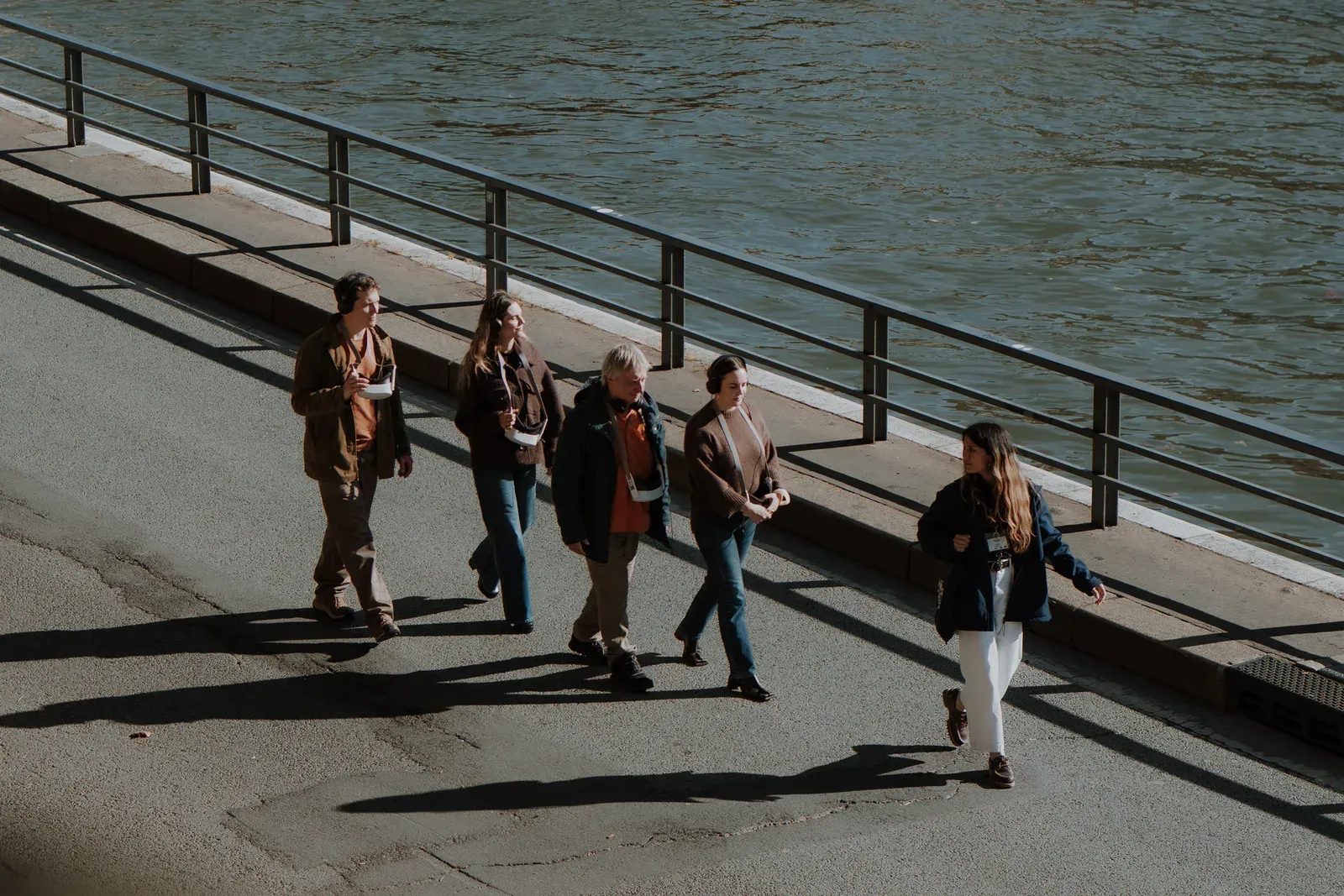
The Origins of Paris immersive walk, on the right-bank quays of the Seine.
In short
For six centuries, the bridges of Paris were inhabited streets: people lived and kept shop on them, because the rents paid for the structures and all of Paris passed across them. Collapses and fires ended them in people’s minds; the royal declaration of 1786 ended them in fact. What remains today are names and a few paintings. And a Seine at last visible from every bridge.
Sources
- “Les ponts habités”, Gallica, Bibliothèque nationale de France (in French).
- “Recherches historiques sur la chute et la reconstruction du pont Notre-Dame (1499-1510)”, Bibliothèque de l’École des chartes, on Persée (in French).
- “À quoi servent les ponts ? L’exemple des ponts de Paris aux XVIIᵉ et XVIIIᵉ siècles”, La Pierre d’Angle, Association nationale des architectes des bâtiments de France (in French).
- “Le Pont au Change”, L’Histoire par l’image, Réunion des musées nationaux (in French).
- “Le Petit-Pont après l’incendie de 1718”, musée Carnavalet collections, Paris Musées (in French).
- “L’achèvement du Pont-Neuf, 8 juillet 1606”, FranceArchives, French Ministry of Culture (in French).
- “Pont Neuf à Paris” and “Pont au Change à Paris”, Association française de génie civil (in French).
- “Paris, la Seine, ses ponts et passerelles”, Paris tourist office (in French).