
What Did Paris Look Like in the Belle Époque? From the Eiffel Tower to the Métro, 1889-1914
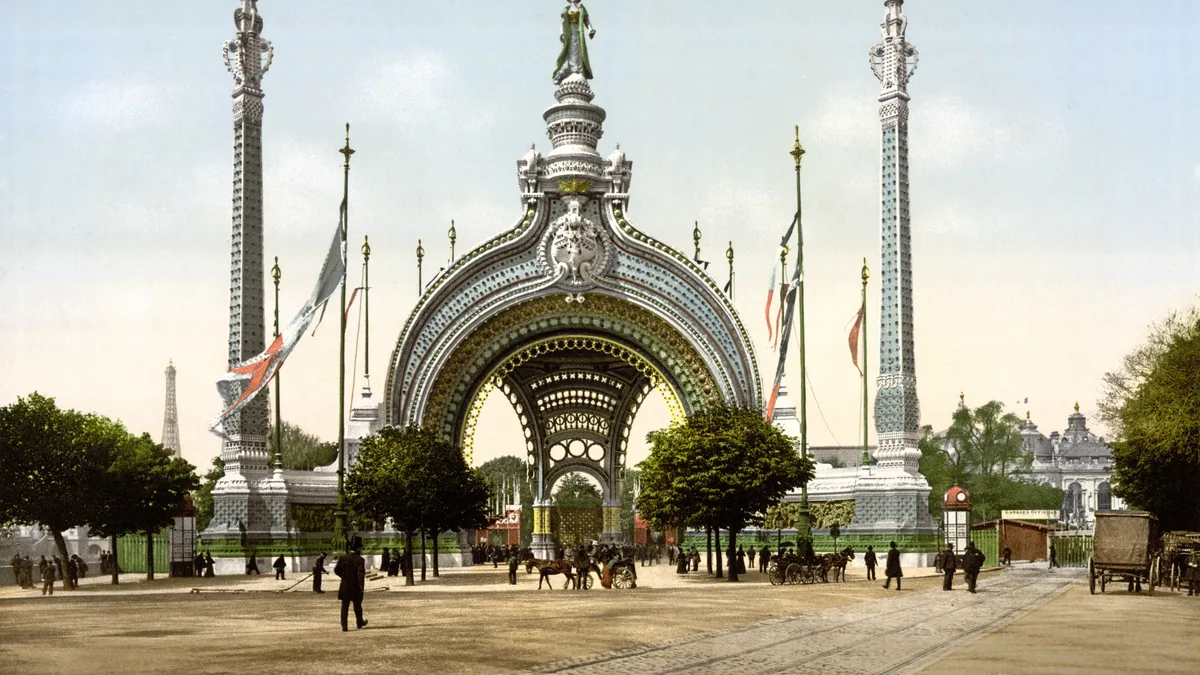
Ask a Parisian what the Belle Époque is and they will describe a poster: boulevards under electric light, café-concerts, bustled dresses, a brand-new métro and the Eiffel Tower in the background. The picture is accurate, but it was made after the event, by people who had lived through the war and missed the world before it. Here is what the sources show of Paris between 1889 and 1914, and why it was at the foot of the Eiffel Tower that the era began.
The Belle Époque is the twenty-five years between the 1889 World’s Fair and the summer of 1914, but the phrase did not exist at the time: the historian Dominique Kalifa dates its first certain use to 1940, in a radio programme. Paris grew from 2.4 to 2.9 million inhabitants, switched to electric light, discovered the cinema on 28 December 1895 and the métro on 19 July 1900, welcomed close to fifty million visitors to the 1900 World’s Fair and nearly demolished the Eiffel Tower in 1909. It is that city, the one of Gustave Eiffel’s workshops, the 1889 fair and the illuminated Tower, that The Symbol of Paris brings back to life on the Champ-de-Mars.
When does the Belle Époque begin, and who named it?
Nobody lived through it under that name. Historians start the period at the end of the nineteenth century, in 1896 for Dominique Lejeune, the year the economy picked up, in 1900 for Michel Winock, and everyone ends it in the summer of 1914. The phrase itself was born of nostalgia. It was long believed to date from the 1920s; Dominique Kalifa showed in 2016 that no trace of it can be found at the time, and that its first unambiguous use is a Radio-Paris programme of 1940, “Ah ! la Belle Époque”, later taken up in the music halls, including the Moulin Rouge in 1943, and then by Nicole Vedrès’s film Paris 1900 in 1946. In other words, the Belle Époque was invented during the Occupation, by a country that needed to remember a happy Paris.
For this article we take the widest and most Parisian bounds: from the Eiffel Tower, completed in March 1889, to the mobilisation of August 1914. In between, the city grew from 2,447,957 inhabitants at the 1891 census to 2,888,110 in 1911, and changed its face.
1889: the year it all begins on the Champ-de-Mars
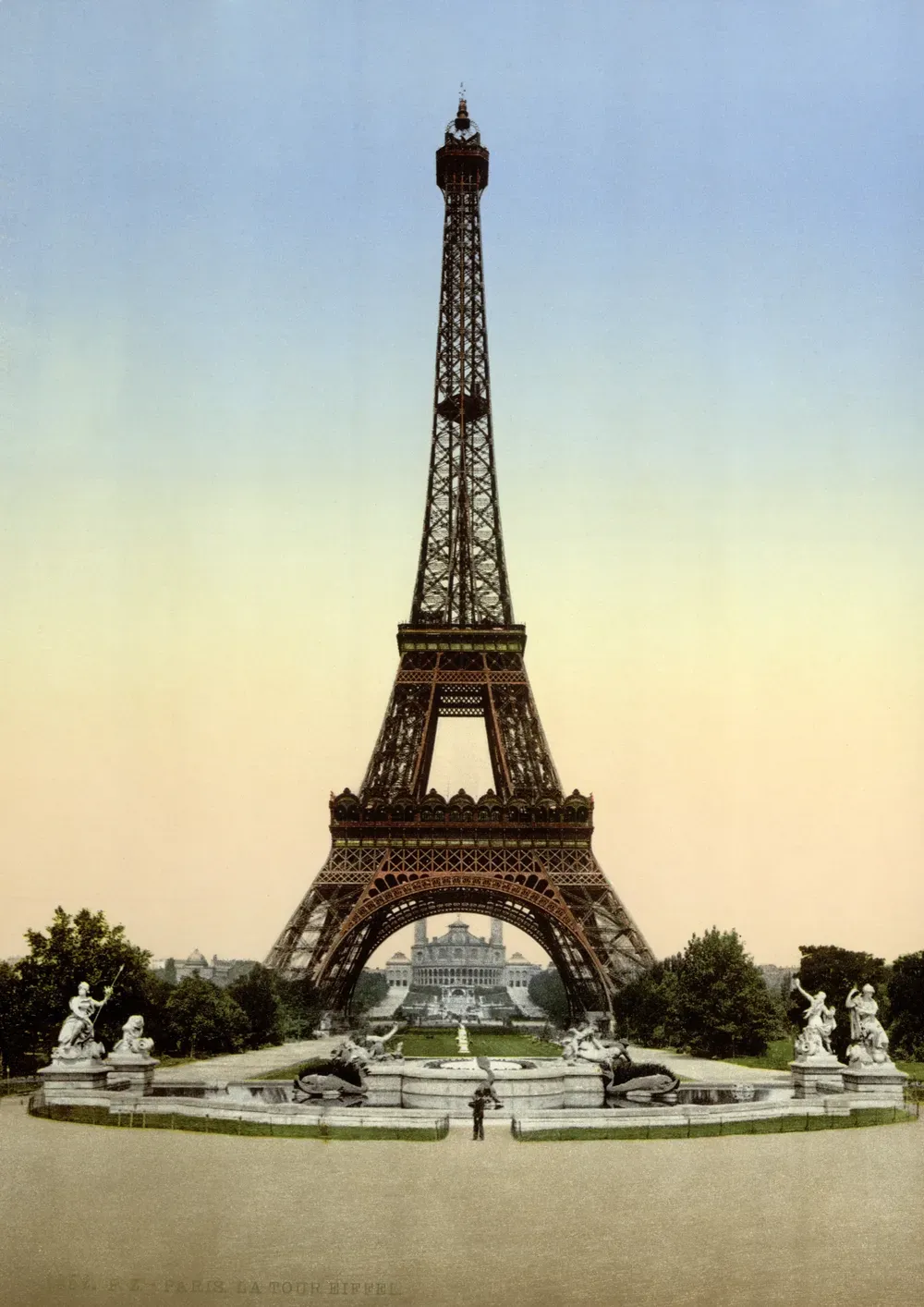
The Eiffel Tower looking towards the Trocadéro during the 1900 fair, eleven years after it was built. Photochrome, Detroit Publishing Company, Library of Congress, public domain.
The 1889 World’s Fair recorded thirty-two million entries, and two million visitors went up the Tower, which was still lit by gas: ten thousand burners, and a beacon at the top. Why and how it was built, we have told elsewhere; what matters here is that Paris discovered that year the pleasure of the modern crowd, of iron-and-glass galleries, of the night-time fête. On 6 October 1889, at the foot of the Montmartre hill, Joseph Oller and Charles Zidler opened the Moulin Rouge on the site of the old Bal de la Reine Blanche; La Goulue danced the quadrille there, soon to be called the French cancan, and Toulouse-Lautrec devoted his first poster to her in 1891.
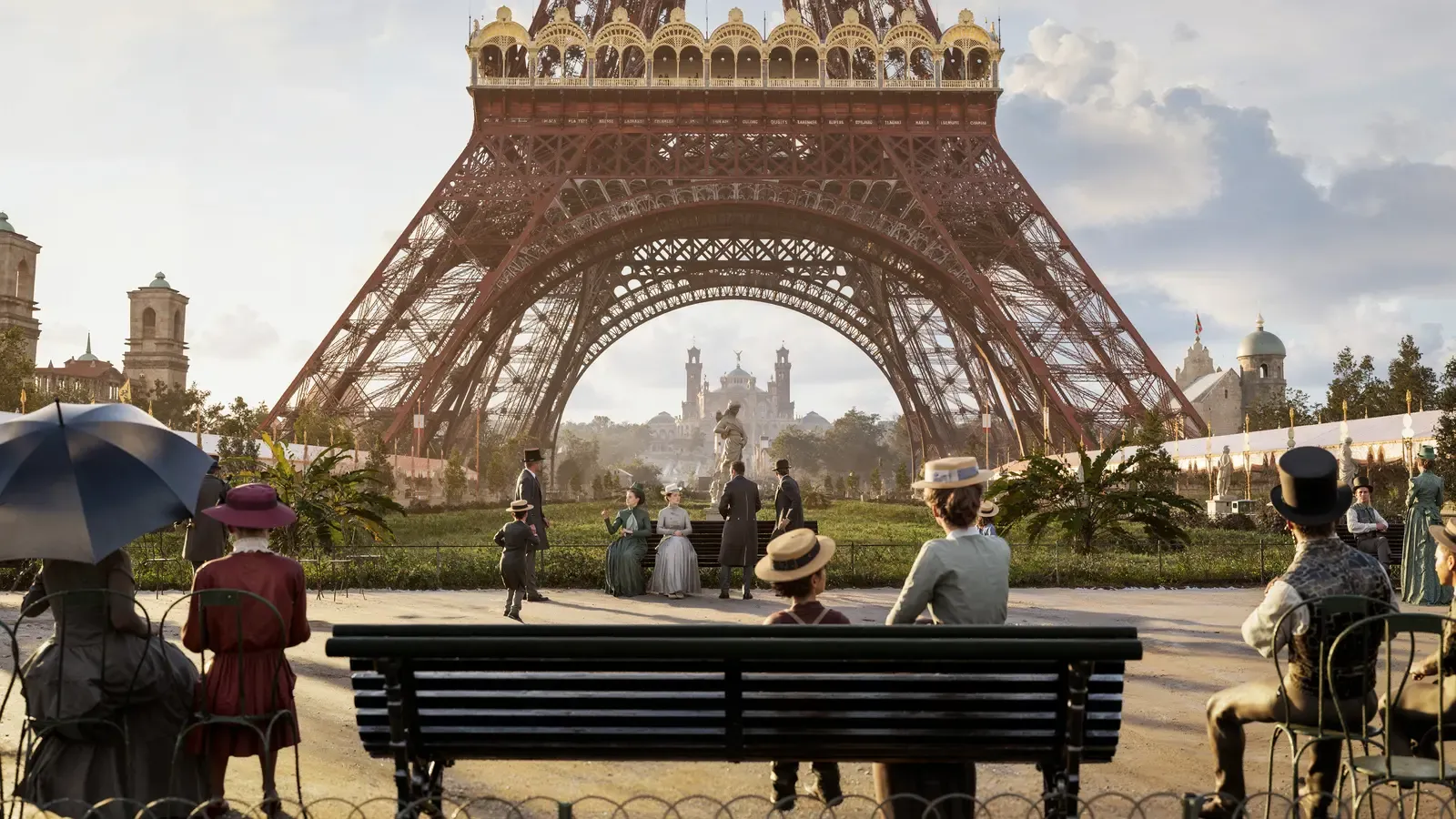
The 1889 World’s Fair reconstructed for The Symbol of Paris: the palaces of the Champ-de-Mars and the crowd, seen from where you stand today.
The city goes electric: light, cinema, métro
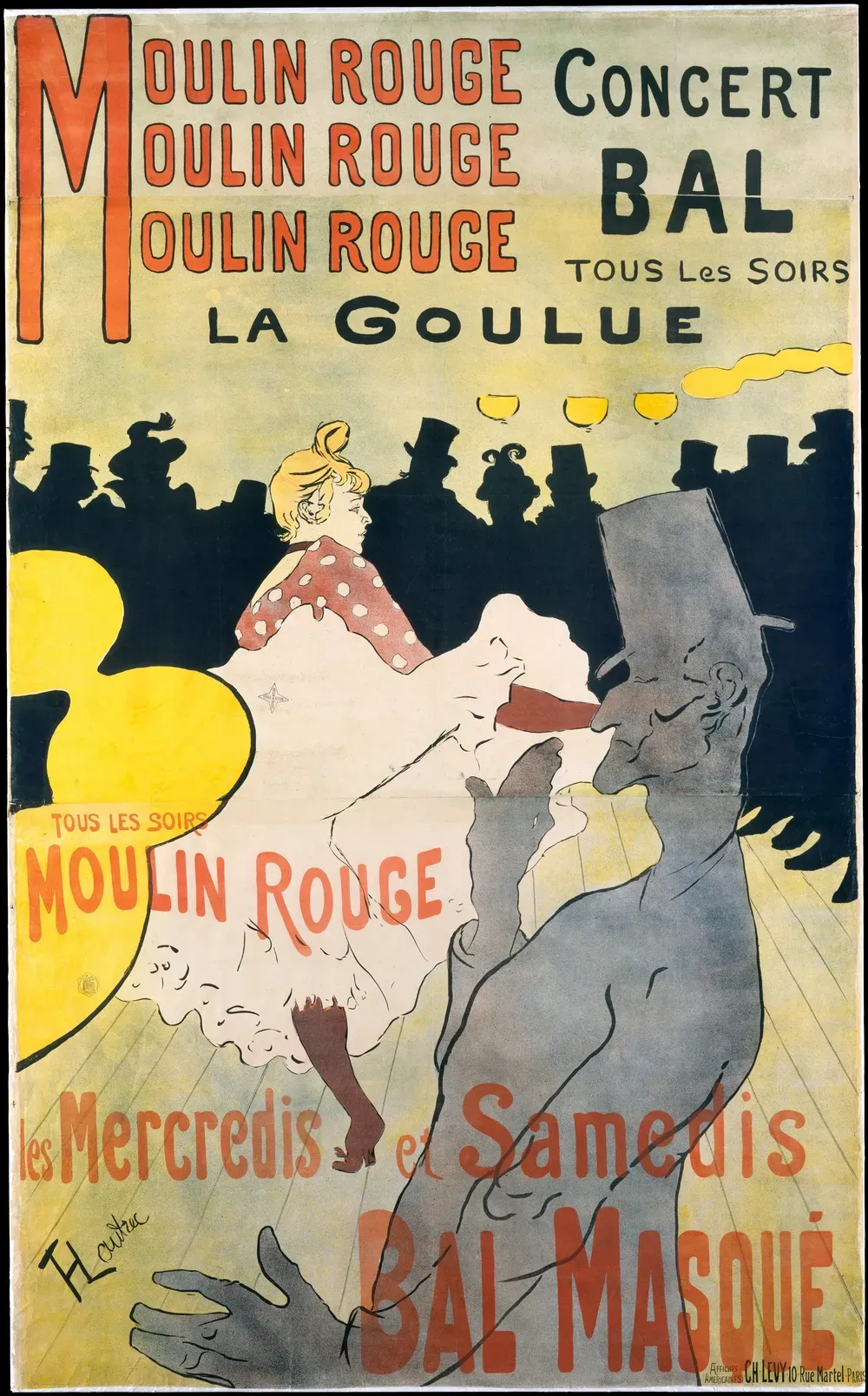
“Moulin Rouge: La Goulue”, poster by Henri de Toulouse-Lautrec, 1891. Metropolitan Museum of Art, CC0.
Three inventions make the Parisian Belle Époque, and all three have an address. Electric light, first, which replaced gas on the boulevards and, in 1900, on the Tower itself. The cinema, next: on Saturday 28 December 1895, in the Salon indien of the Grand Café, 14 boulevard des Capucines, thirty-three spectators paid one franc to watch ten films by the Lumière brothers, including L’Arroseur arrosé; the address is today that of the Hôtel Scribe. The métro, finally: line 1, built in twenty months under Fulgence Bienvenüe to serve the fair, opened on 19 July 1900 between the porte Maillot and the porte de Vincennes, with Hector Guimard’s cast-iron entrances. By December it had already carried four million passengers.
Progress had its immediate downside. On 4 May 1897, on rue Jean-Goujon, the ether lamp of a cinematograph projector set fire to the Bazar de la Charité: a hundred and twenty-five dead, mostly women of the aristocracy, among them the duchesse d’Alençon, sister of Empress Sisi. Film screenings were banned for a time, safety rules for public venues tightened; the chapel of Notre-Dame-de-Consolation marks the spot.
1900: the fair of all records
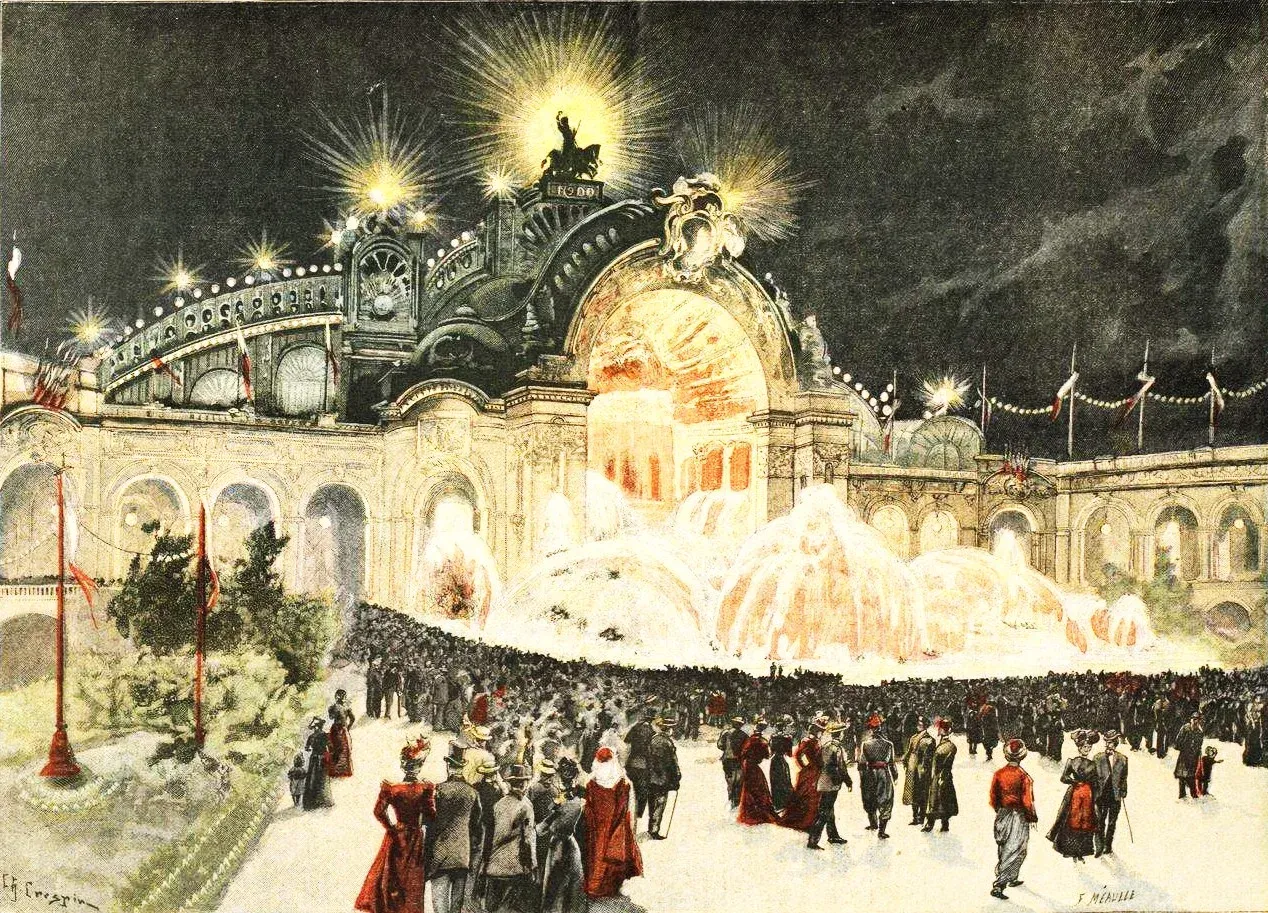
“Night festivities at the Exposition: the Palais de l’Électricité and the Château d’eau”, engraving by Fortuné Méaulle for the illustrated supplement of Le Petit Parisien, 6 May 1900. Public domain.
From 14 April to 12 November 1900, over 212 days, the World’s Fair welcomed between forty-eight and fifty-one million visitors depending on the count, more than any fair before it. It left Paris the Grand Palais, the Petit Palais, the pont Alexandre-III and the gare d’Orsay. On the Champ-de-Mars, facing the Tower, Eugène Hénard’s Palais de l’Électricité lit up every evening; on avenue de Suffren turned a seventy-metre Ferris wheel, demolished in 1920-1922; and a three-kilometre moving walkway, on a viaduct seven metres above the ground, carried visitors at two speeds, 4.2 and 8.5 kilometres an hour. The sporting competitions held during the fair were later recognised as the second Olympic Games of the modern era.
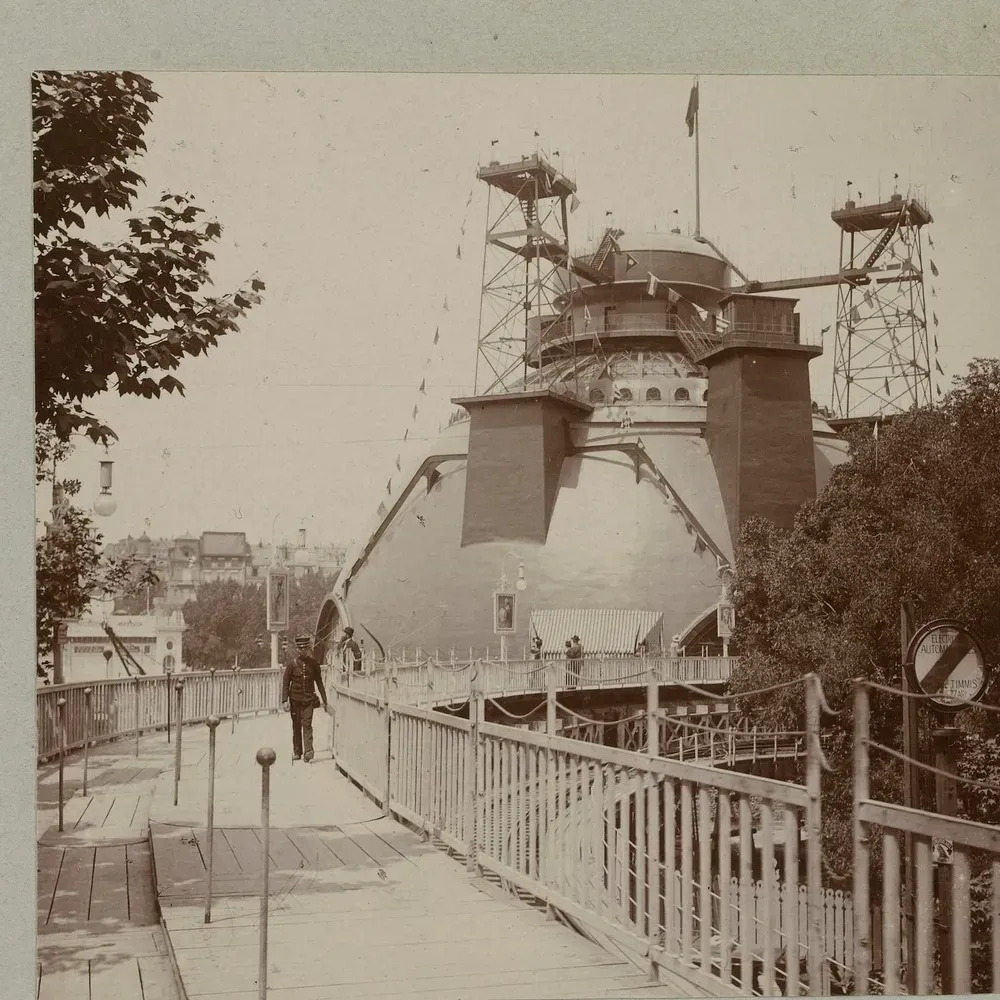
The moving walkway of the 1900 fair, near the Creusot pavilion. Anonymous photograph, musée Carnavalet, CC0.
Montmartre and the boulevards: the Belle Époque that made the myth
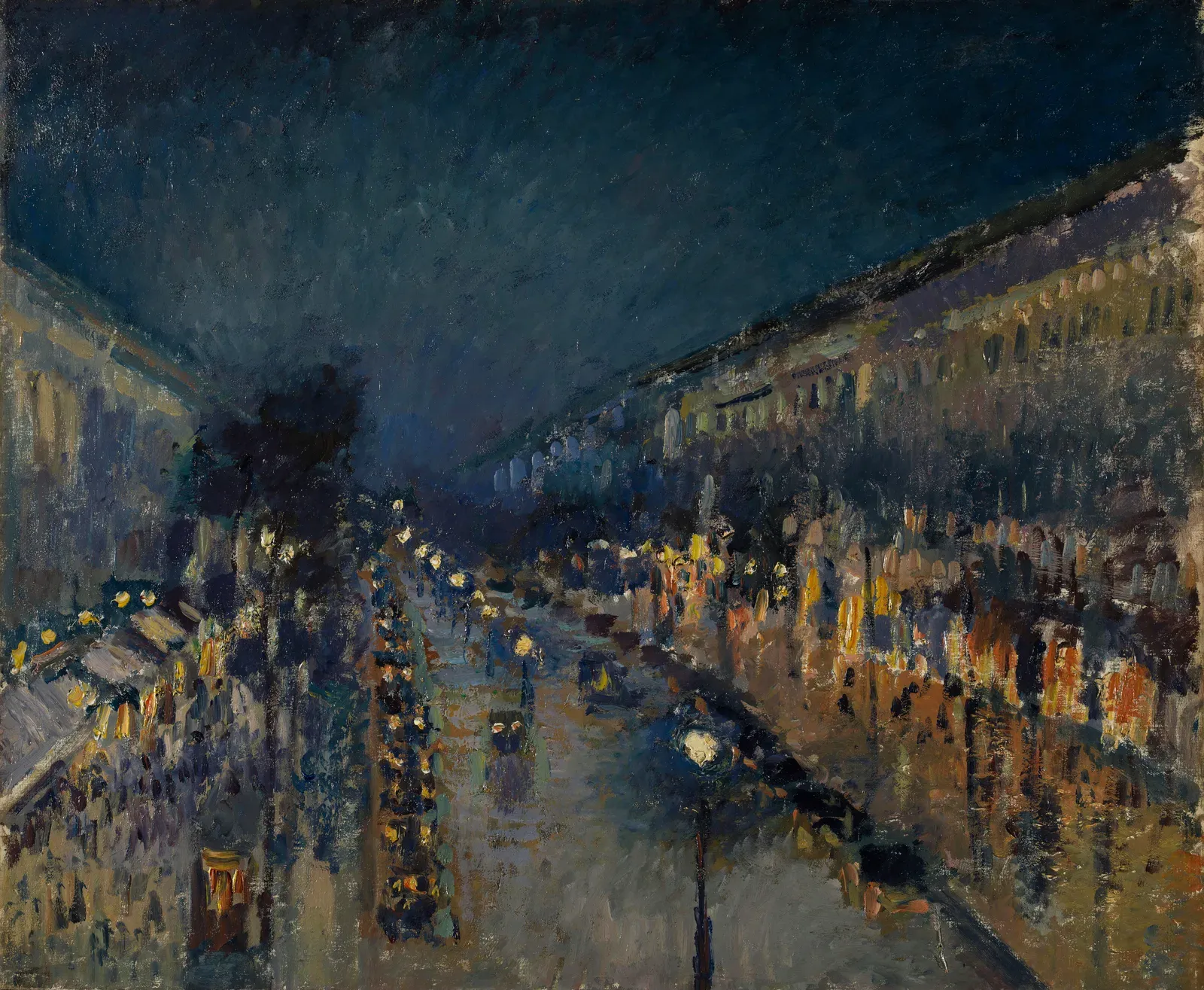
“The Boulevard Montmartre at Night”, Camille Pissarro, 1897. National Gallery, London, public domain. The only night scene in the series, painted from a window of the Grand Hôtel de Russie.
What stays in the imagination is the boulevards in the evening. In 1897 Camille Pissarro rented a room at the Grand Hôtel de Russie and painted, from his window, the boulevard Montmartre at every hour; only one canvas of the series is a night scene, and it is the one everybody knows: the café lights in the rain. Higher up, Montmartre remained a village of studios and cabarets. And in the street, Art Nouveau gave the city the shapes still associated with it: Guimard’s métro entrances, in green cast iron and glass, of which those at porte Dauphine and Abbesses survive with their glass canopy.
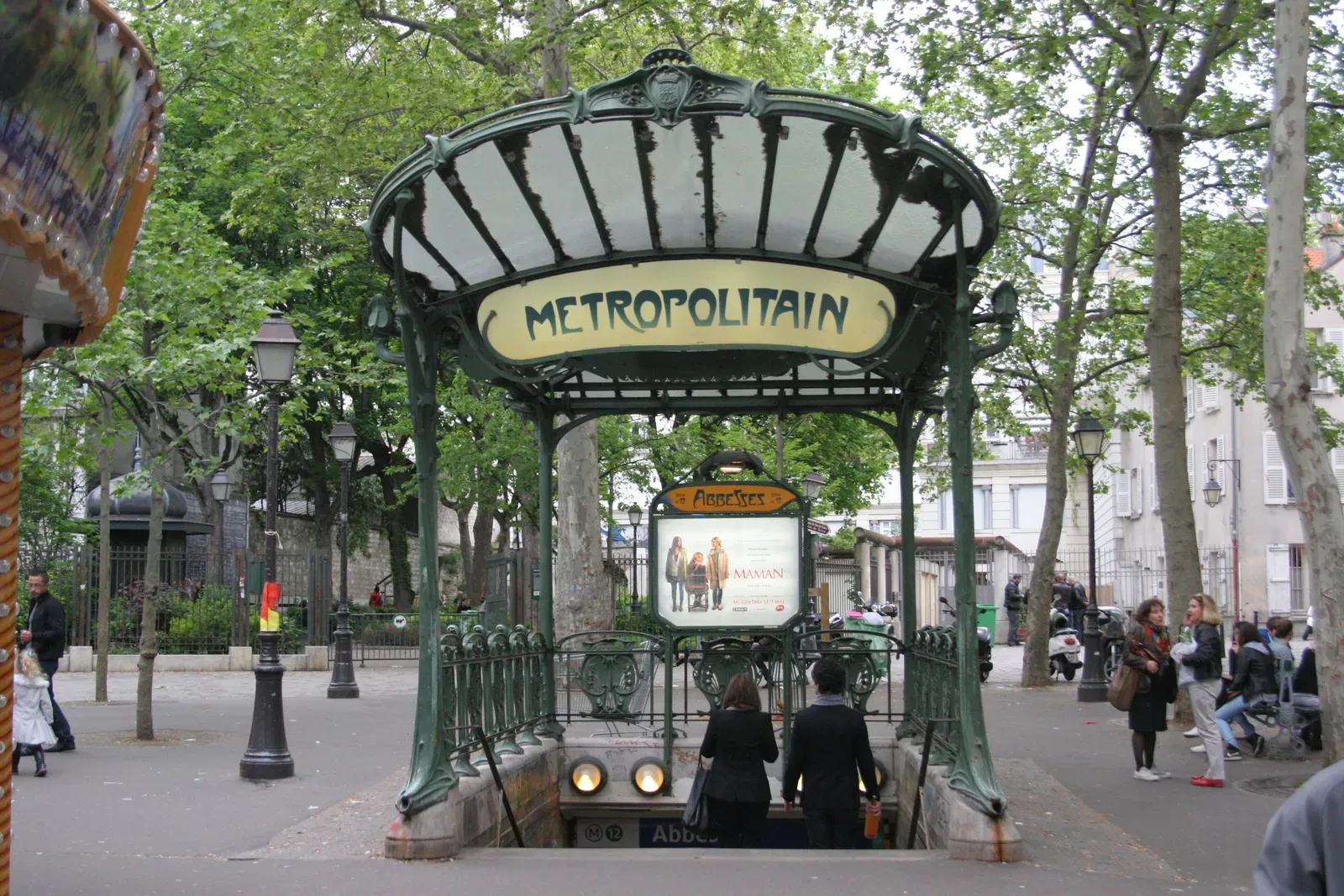
The Guimard entrance at Abbesses station, one of the two still covered by a canopy. Photo Alexander Baranov, CC BY 2.0.
The Tower that nearly disappeared
It is easy to forget: the Eiffel Tower was not built to last. The agreement of 8 January 1887 left Gustave Eiffel the running of it for twenty years, until 31 December 1909, after which the City of Paris could take it down. And fashions pass quickly: in 1899 the Tower sold only 149,580 tickets, against two million ten years earlier; the 1900 fair brought it back to a million, half the 1889 figure, and the decline resumed in 1901.
What saved it was science. As early as 1898, Eugène Ducretet set up a radio link between the top and the Panthéon, four kilometres away. In 1903 Eiffel paid out of his own pocket for Captain Gustave Ferrié’s wireless telegraphy trials, which the army had refused to fund, and installed an antenna at the summit. The experiment succeeded, the army took an interest, and on 1 January 1910 the concession was extended by seventy years. In the meantime, on 19 October 1901, Alberto Santos-Dumont had flown round the Tower in an airship from Saint-Cloud, in 30 minutes and 42 seconds, to win the 100,000 francs of the Deutsch de la Meurthe prize. The Tower became the symbol of Paris by ceasing to be an attraction.
The other side of the picture
The Belle Époque was beautiful for those with the time to enjoy it. Historians point out that working-class families then spent more than 60% of their budget on food, that many Paris homes had neither running water nor mains drainage, and that social mobility remained low. The Dreyfus affair, from 1894 to 1906, split the country in two. And the era ended in a few days, in August 1914, when mobilisation posters replaced those of the cabarets. That contrast is precisely what made the myth: seen from 1940, the Paris of 1900 looked like paradise.
Reliving the Belle Époque at the foot of the Tower
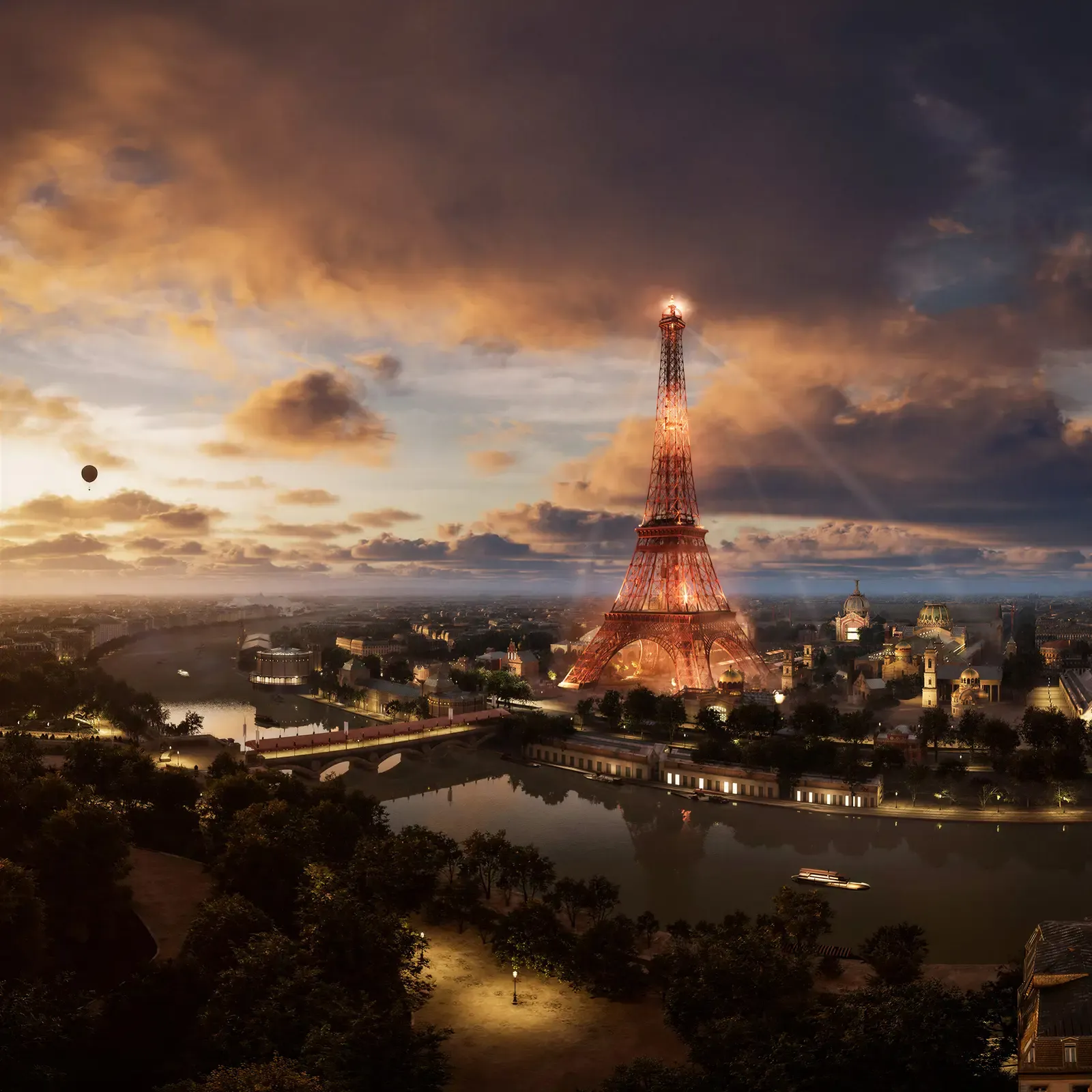
The Tower lit up in 1889, “a veritable blaze”, reconstructed for The Symbol of Paris.
The Champ-de-Mars is where the Belle Époque began, and it is there that The Symbol of Paris brings it back. For one hour, with a guide, you walk across today’s Champ-de-Mars and, at each stop, the virtual-reality binoculars bring up what the Parisians of 1889 had before their eyes: Gustave Eiffel’s workshops in Levallois, where the Tower’s pieces were forged, the construction rising level by level, the World’s Fair and its Galerie des machines, the crowd in hats on the lawns, then the illuminated Tower, the “veritable blaze” the newspapers wrote about. The walk goes on through the Roaring Twenties and the Occupation, up to the present day. Fifteen scenes, from age 8, in French, English and Spanish, Wednesday to Sunday from 10 am to 6:30 pm. When you come out, the real Tower is there, lit by electricity since 1900: you will know why it is still standing.
Five things to remember
- The name was born in 1940, not in 1900: the Belle Époque is a memory manufactured during the Occupation, according to Dominique Kalifa.
- 1889 opens the period: the Tower, thirty-two million entries at the fair, the Moulin Rouge on 6 October.
- Three inventions, three addresses: the cinema at 14 boulevard des Capucines on 28 December 1895; the métro between porte Maillot and porte de Vincennes on 19 July 1900; electricity on the Tower in 1900.
- 1900, the fair of all records: close to fifty million visitors, the Grand Palais, the pont Alexandre-III, the moving walkway.
- The Tower nearly came down in 1909; Ferrié’s wireless telegraphy saved it.
Questions we are asked
What are the dates of the Belle Époque? Historians run it from the end of the nineteenth century, 1896 or 1900 depending on the author, to August 1914. In Paris, it is convenient to start it in 1889, with the Eiffel Tower and the World’s Fair.
Why is it called the Belle Époque? Out of nostalgia. The phrase appeared after the fact; its first certain use is a Radio-Paris programme of 1940, and it took hold with the film Paris 1900 in 1946, to describe the world before the two wars.
What can you still see of the Belle Époque in Paris? The Eiffel Tower, the Grand Palais, the Petit Palais, the pont Alexandre-III, the gare d’Orsay turned museum, Guimard’s métro entrances, the Moulin Rouge rebuilt after the fire of 1915, and, in virtual reality, the Champ-de-Mars of 1889 with The Symbol of Paris.
In short
From 1889 to 1914, Paris gained half a million inhabitants, electric light, the cinema, the métro, two World’s Fairs and a tower it nearly took down. The Belle Époque was not lived under that name: it is the gaze of 1940 on 1900. It began on the Champ-de-Mars, with the Tower and the 1889 fair, and it is there, in the binoculars of The Symbol of Paris, that it is best found again: Eiffel’s workshops, the palaces of the fair, and the Tower ablaze in the night.
Sources and practical links
- Dominique Kalifa, La Véritable Histoire de la « Belle Époque », Paris, Fayard, 2017, and Belle Époque, Wikipédia, drawing on Michel Winock, La Belle Époque (2022), and Dominique Lejeune.
- Exposition universelle de 1900, Wikipédia, drawing on the Bureau international des expositions and the Archives nationales.
- Tour Eiffel, Wikipédia, 1889-1914 section, and the agreement of 8 January 1887.
- Salon indien du Grand Café, Wikipédia, drawing on the Institut Lumière and Georges Sadoul.
- Ligne 1 du métro de Paris and Moulin Rouge, Wikipédia.
- Incendie du Bazar de la Charité, Wikipédia, drawing on the Mémorial du Bazar de la Charité.
- Démographie de Paris, Wikipédia, censuses of 1891 and 1911.
- Why was the Eiffel Tower built? and The Champ-de-Mars before the Eiffel Tower, on our blog.
- The Symbol of Paris, opening times and booking.
- Images: photochromes of the 1900 fair (monumental gate, Eiffel Tower), Detroit Publishing Company, Library of Congress, public domain; Toulouse-Lautrec, “Moulin Rouge: La Goulue”, 1891, Metropolitan Museum of Art, CC0; Fortuné Méaulle, “Les fêtes de nuit à l’Exposition”, Le Petit Parisien, 1900, public domain; the moving walkway, 1900, musée Carnavalet, CC0; Camille Pissarro, “The Boulevard Montmartre at Night”, 1897, National Gallery, public domain; Abbesses station, photo Alexander Baranov, CC BY 2.0; all via Wikimedia Commons. The 1889 fair and the illuminated Tower are Timescope reconstructions.