Museums & cultural venues
The Musée d’Orsay
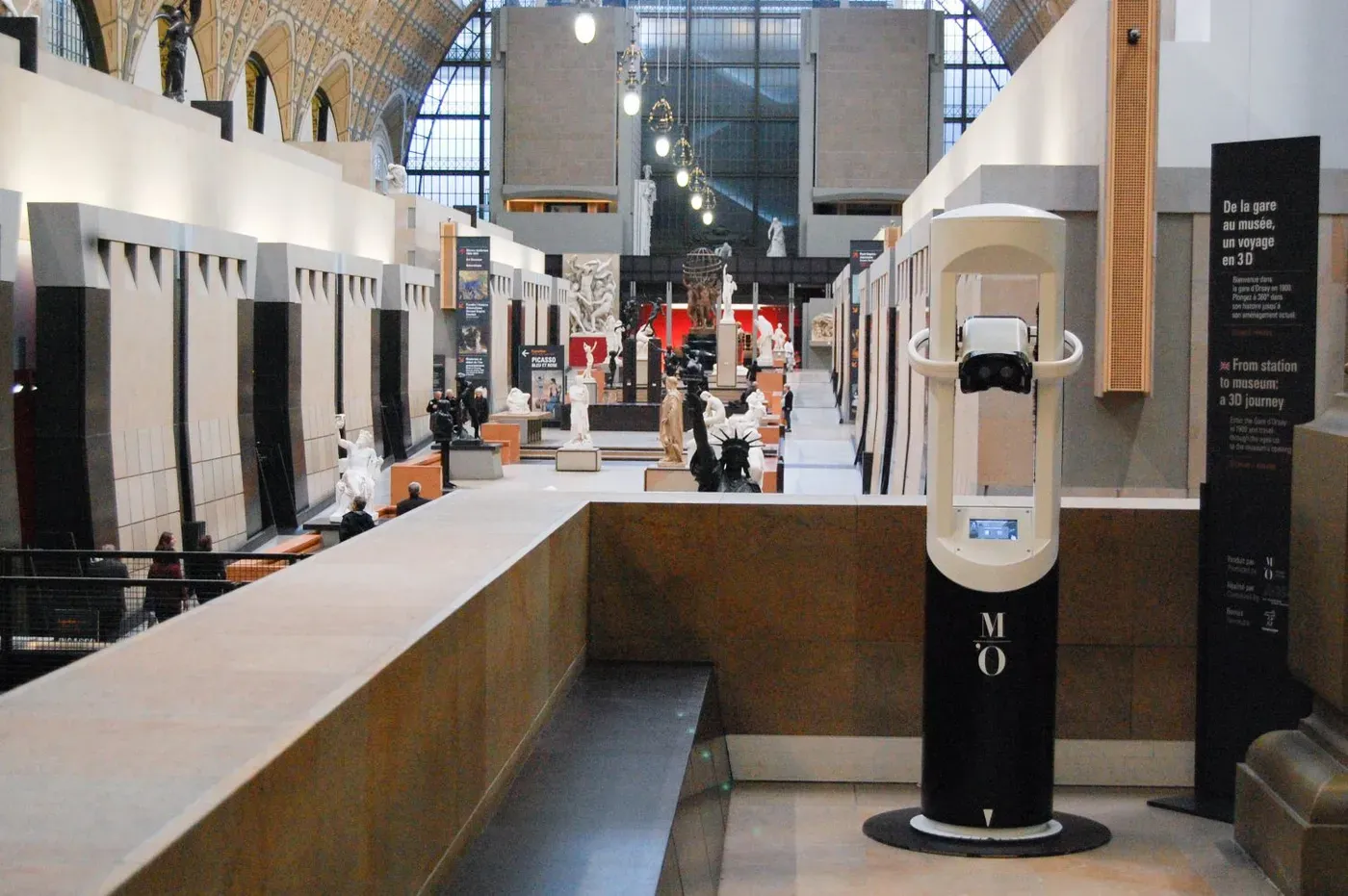
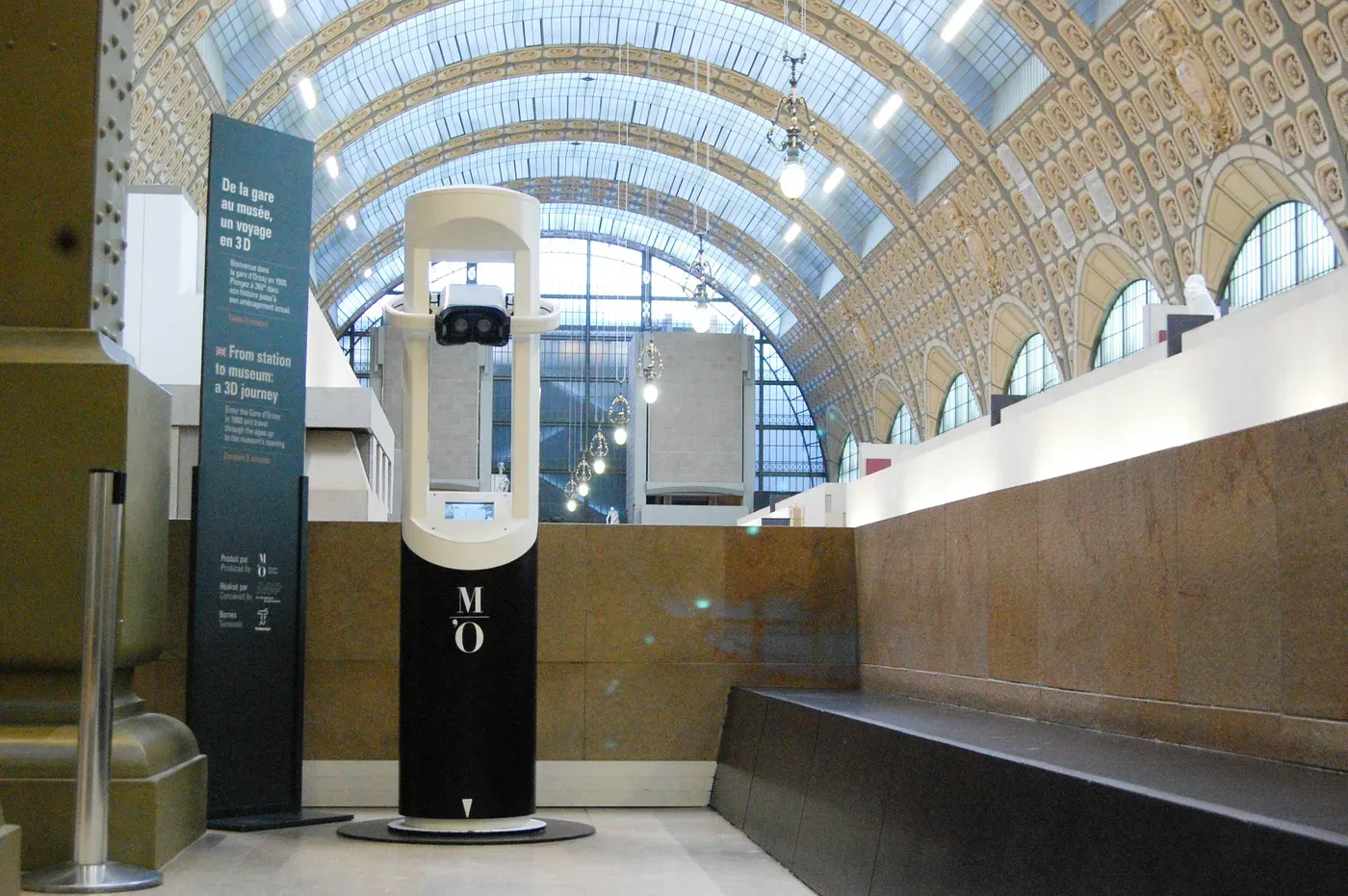
2permanent kiosks under the nave
100 ansof the building’s evolution reconstructed
1900the Gare d’Orsay restored in 3D
Before it became a museum world-renowned for its Impressionist collections, from 1986 onwards, the Musée d’Orsay was a railway station, built for the 1900 World’s Fair. Yet no space in the museum is devoted to that history: visitors risk missing the institution’s identity, even though its architecture is central to it. How do you connect the collections with the story of the building?
A century of metamorphosis in one timelapse
An immersive film reveals the museum’s history in virtual reality. Visitors are plunged into a 360-degree timelapse tracing the building’s evolution over nearly a century: from station to abandonment, through to its restoration and conversion into a museum in 1986.
The panel beside the kiosk sums up the promise: “Welcome to the Gare d’Orsay in 1900. Dive at 360° into its history, up to its present-day layout.”
Under the nave, at the start of the visit
The experience is shown under the nave, at the very start of the visit. It brings a waiting area to life and, above all, sets the context: visitors understand where they are before discovering the collections.
The museum’s first permanent VR kiosks
Two virtual-reality kiosks show the historical reconstruction film. They are the first virtual-reality devices permanently installed at the Musée d’Orsay. Free and self-service, they address every audience: international visitors, young people, people with reduced mobility.
In pictures