
Guide
Proposing at the Eiffel Tower: where, when, and what is allowed
It happens every day, and most of them look alike: same esplanade, same hour, same four hundred people around you. The hard part is not finding the Eiffel Tower, you can see it from a mile away. It is finding the place and the moment where you will be nearly alone, in good light. We work on the Champ-de-Mars all year round - here is what we have learned.
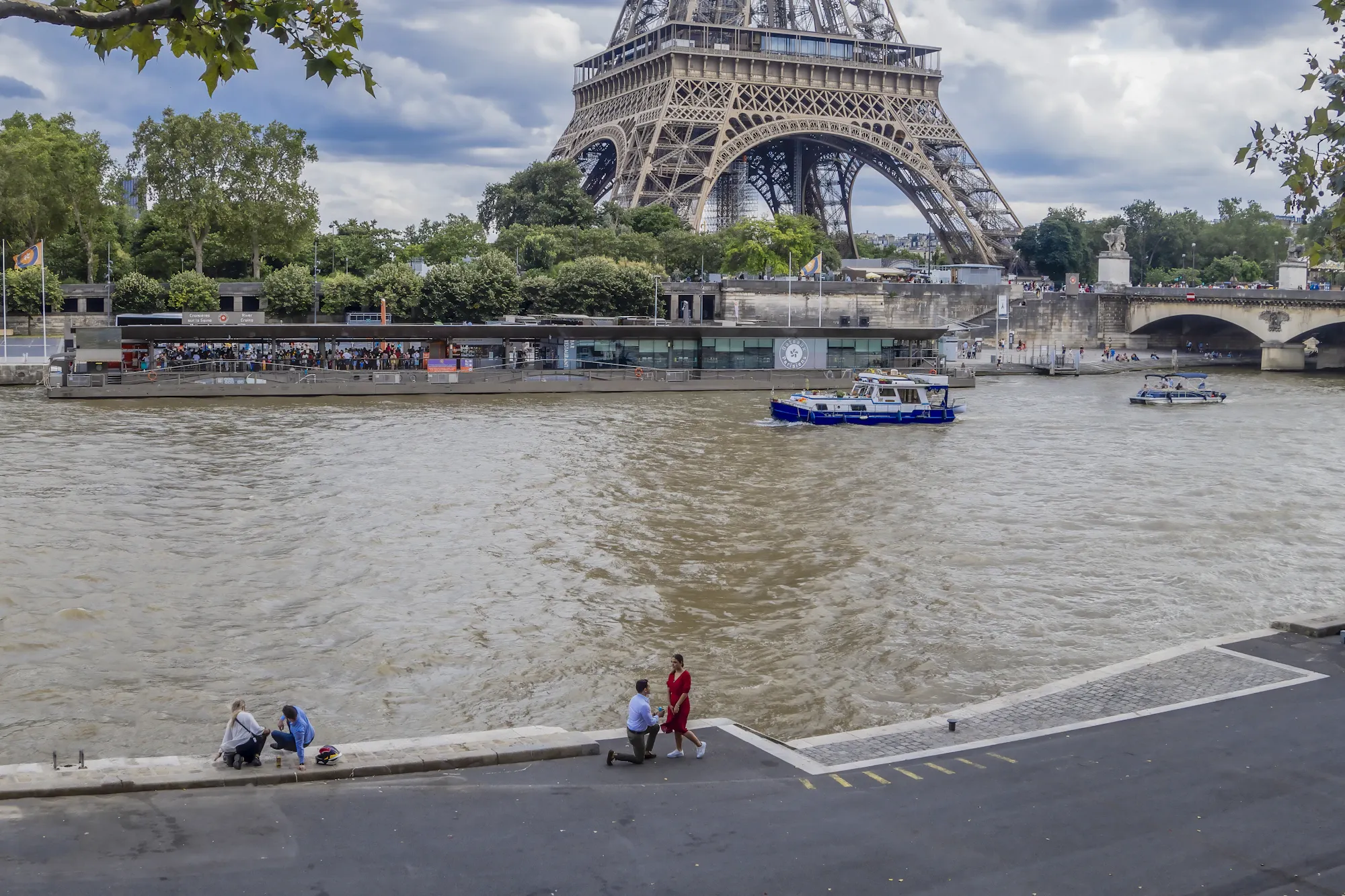
Six places that actually deliver
Listed from the most discreet to the most spectacular. None needs booking, all are free, and all are within a twenty-minute walk of each other.
Avenue de Camoëns
Our first choice, and the least known. A short stepped avenue in the 16th arrondissement, closed off by a balustrade, framing the tower like a painting. It is tiny, which works in your favour: a few photographers at sunrise, almost nobody the rest of the time. Métro Passy or Trocadéro, five minutes on foot.
Allée des Cygnes
A tree-lined walkway on an 850-metre island in the middle of the Seine, ending at the replica of the Statue of Liberty given to Paris in 1889 - the tower's own year. You get both in one frame, and it is one of the very few places in the area where you can walk for ten minutes without meeting a tour group. Access from the pont de Bir-Hakeim or the pont de Grenelle.
Passerelle Debilly
A 1900 footbridge between the pont de l'Alma and the pont d'Iéna, built for a World's Fair like the tower itself. A three-quarter view, a narrow deck, and best of all: the coaches stop two bridges away.
Pont de Bir-Hakeim
The steel arches that cinema made famous. The pedestrian level, under the métro viaduct, gives a receding perspective that photographs remarkably well. The catch is well known: it has become an Instagram spot, and there is a queue at the best hours. Come early.
The Champ-de-Mars, École militaire side
The classic mistake is standing at the foot of the tower, where all you see is girders. You need distance to fit it in: the upper lawns, on the École militaire side, are at the right remove and far less crowded than the lower half. It is also a place with a past - the Fête de la Fédération of 1790, five World's Fairs - and it is where our own walk takes place.
The Trocadéro gardens
The absolute postcard, and the absolute trap. During the day the esplanade is saturated. At sunrise it is yours, with raking light on the east face of the tower. If you are set on this spot, it is that hour or none.
Once the question is asked, there is a whole day to fill within the same few streets: museums, addresses, riverbanks and photo spots are gathered in our guide to the area around the Eiffel Tower.
The hour matters more than the place
Three windows work, and only one is genuinely bad.
- Golden hour, the hour before sunset. In Paris that means around 5 pm in December and around 10 pm in June: the gap is enormous, so check the date before you fix a time.
- Nightfall, when the golden lighting comes on all at once. It is the most photogenic moment of the day, and it lasts about twenty minutes.
- The sparkle, five minutes at the top of every hour after dark, until 1 am. If you want the tower to do something at the exact moment you ask, that is the only reliable appointment of the evening.
- Mid-afternoon in summer is the one to avoid: hard light, vertical shadows, and the peak crowds of the day.
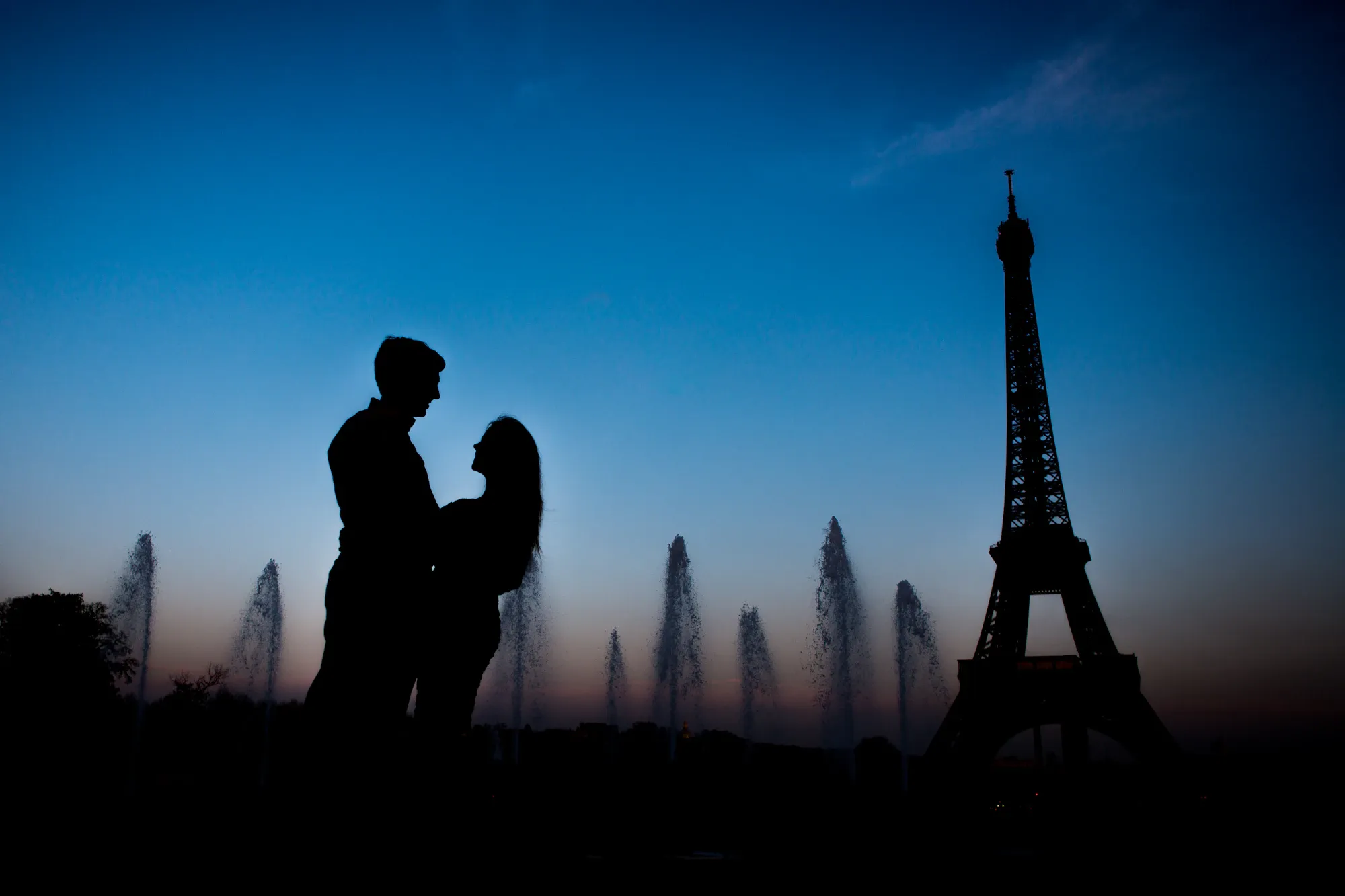
What you are allowed to do
A proposal between two people in a public space needs no permission. Three things are worth knowing before you plan anything more elaborate.
You cannot reserve public space. Not a bench, not a lawn, not a span of bridge. No provider can guarantee you will be alone: what they can do is pick an hour and a place where the odds are on your side.
Drones are banned over Paris. The whole city is a no-fly zone. The aerial footage you have seen was either authorised or illegal.
Champagne depends on a local order. Several streets in the 7th arrondissement fall under a prefectural order banning alcohol on public streets in the evening. The perimeter changes; check with the mairie of the 7th for your date, or plan to open the bottle indoors. We do it at our own premises, 12 rue Dupont des Loges, five minutes from the Champ-de-Mars.
Your photos are yours; the lighting is not. The tower by day is in the public domain: photograph and publish freely. The night-time lighting and the sparkle are protected creative works. That does not affect personal use - your engagement photos, your feed, your album. It affects commercial use of an image of the lit tower, which needs the monument operator's agreement.
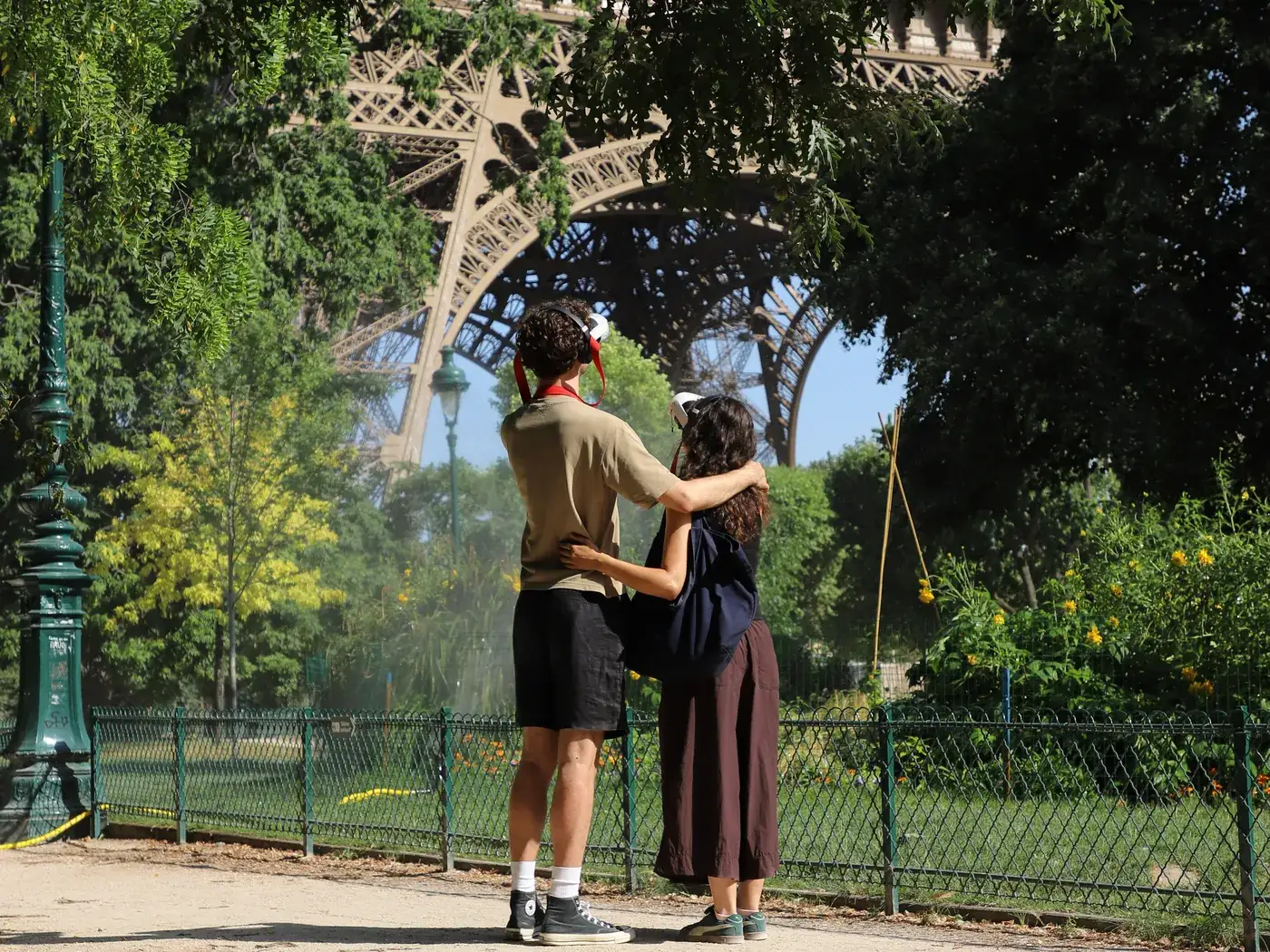
Our private option: the proposal at the final stop
We run guided virtual-reality walks on the Champ-de-Mars all year round. The Symbol of Paris is a one-hour walk: at each stop, the binoculars bring back what stood there - Gustave Eiffel's workshops, the 1889 World's Fair, the Roaring Twenties, the Occupation.
We have made a private version of it, for two, on an agreed script:
- A walk for the two of you only, with a guide who knows the running order and the exact minute of the scene.
- At the final stop, the person you are proposing to looks at the Eiffel Tower of 1889 through the binoculars. You have a minute to get into position. They take the headset off, and you are already on one knee.
- Photographs of the moment, taken by your guide and sent the same evening.
- A bottle of champagne, opened quietly at our premises, five minutes away.
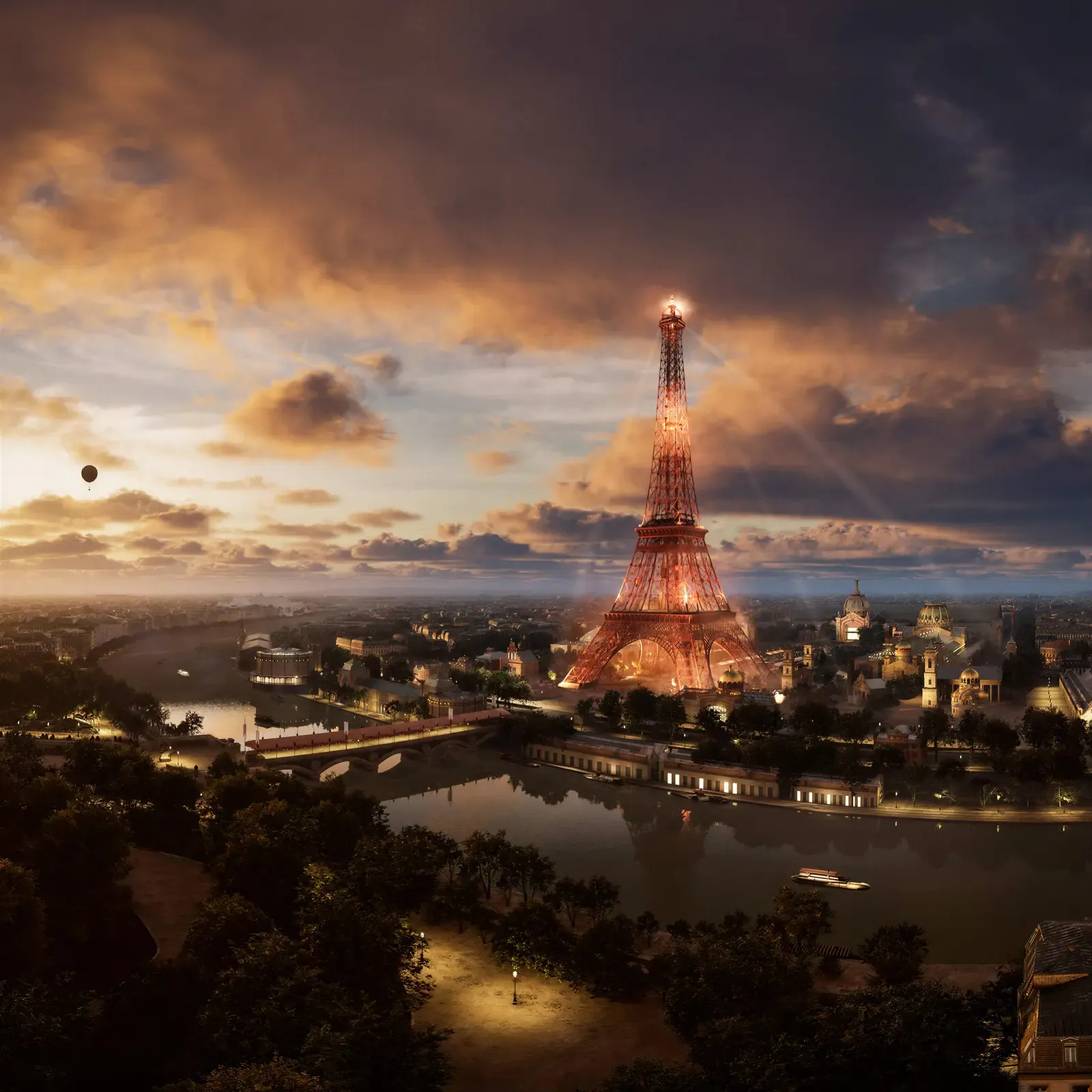
We quote it case by case, because the date, the hour and whatever you want to add change everything. Write to us and we will come back with a firm proposal and the slots we can hold.
Frequently asked questions
Where is the best place to propose at the Eiffel Tower?
Six spots actually deliver: avenue de Camoëns (a small stepped esplanade that frames the tower, almost never busy), the allée des Cygnes (the tower and Paris's own Statue of Liberty in one frame, the quietest place in the area), the passerelle Debilly (a three-quarter view without the crowds of the pont d'Iéna), the pont de Bir-Hakeim (the iron arches, superb from below), the Champ-de-Mars on the École militaire side (far enough back to see the whole tower), and the Trocadéro gardens - but only at sunrise.
What time of day should you propose at the Eiffel Tower?
Three windows work. The hour before sunset, for the light: around 5 pm in December, around 10 pm in June. Nightfall, when the golden lighting comes on. And the first five minutes of every hour after dark, when the tower sparkles, until 1 am. The one time to avoid is mid-afternoon in summer: hard light, and the largest crowds of the day.
Do you need permission to propose at the Eiffel Tower?
No, not for a proposal between two people in a public space. But you cannot reserve or close off a piece of pavement, lawn or bridge: nobody can guarantee you will be alone. Drones are banned over Paris, and any commercial set-up on site - a professional photographer, an installation, a musician - needs authorisation from the City of Paris or the site operator.
Can you publish photos of the Eiffel Tower lit up at night?
For personal use, yes, without reservation: your engagement photos are yours to share. The tower's lighting design and its sparkle are protected creative works, however, so commercial use of a night-time image - advertising, selling the picture - requires the monument operator's agreement. The tower itself, by day, is in the public domain.
How much does an organised proposal at the Eiffel Tower cost?
It depends entirely on what you add: nothing at all if the right spot at the right hour is enough, several hundred euros as soon as a photographer or a private booking is involved. Our private option - a guided walk for two on the Champ-de-Mars with the proposal staged at the final stop - is quoted case by case. Write to us and we come back with a firm price.