
Generations of Vision: The Durand-Ruel Impressionist Adventure in Virtual Reality at Christie's
From 16 to 22 October 2026, Christie’s Paris presented an exceptional sale: a selection of paintings from the Durand-Ruel family collection, never offered for sale before.
Beyond its novelty, why was this sale an event? Because Durand-Ruel is one of the names that changed the course of art history. It was precisely to explain this to the public that Christie’s asked Timescope to create a virtual-reality time-travel experience to accompany the exhibition of the works.
“Generations of Vision” is an immersive film of about five minutes, made by Timescope for Christie’s, in computer-generated images reconstructed from archives. It retraces the story of the Durand-Ruels, the dealers who introduced Impressionism to the world, across three eras and three places: the gallery at 16 rue Laffitte in the 1870s, New York in 1886, and the apartment on rue de Rome in 1922. Launched in New York on 11 September 2026, it travelled with the collection to Hong Kong, Brussels, London and Paris, up to the sale on 22 October 2026 at Christie’s, 9 avenue Matignon.
The Durand-Ruels were a family of dealers who introduced Impressionism to the world. It is thanks to their visionary genius that the masterpieces of Monet, Degas, Pissarro and Renoir reached our greatest museums.
“Generations of Vision” is an immersive film of about five minutes, in computer-generated images reconstructed from archives, retracing the artistic and entrepreneurial epic of the Durand-Ruels. The viewer follows the key chapters of this success story across three eras and three places: the Paris of the 1870s, when the Impressionists were the laughing stock of the critics; the New York of the 1890s, which adopted them within weeks; and the Paris of the Roaring Twenties, when their reputation was secured.
Launched in New York on 11 September 2026, it travelled with the collection through Christie’s showrooms in Hong Kong, Brussels, London and Paris.
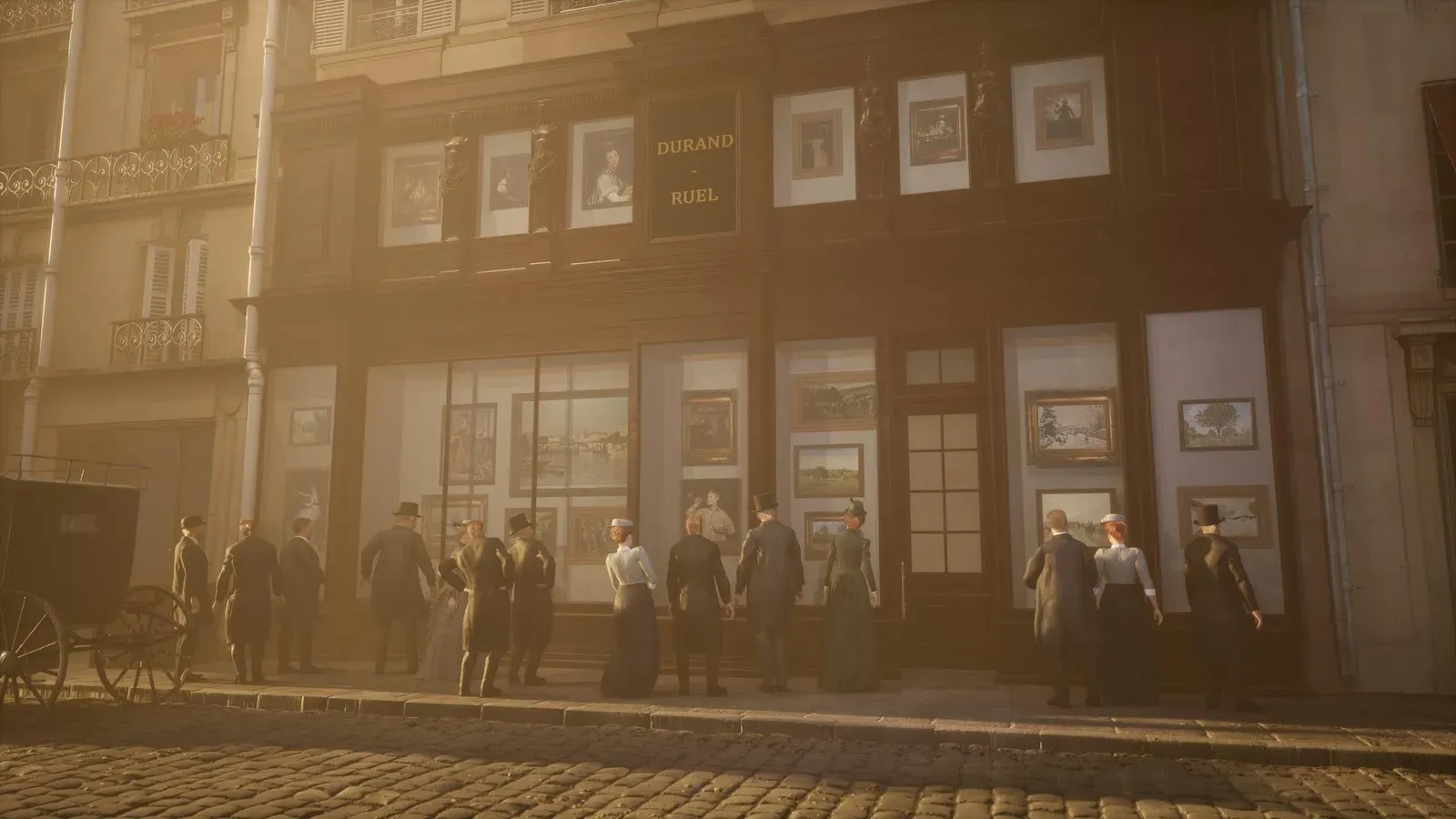
16 rue Laffitte around 1875: the Durand-Ruel gallery, a stone’s throw from the Grands Boulevards, where critics and passers-by came to mock the Impressionists.
What the film shows
The film starts from a paradox: the paintings that now set records in the saleroom were first judged unsellable. To understand why, we had to go back to where it all nearly ended.
It begins on the Pont-Neuf, in a reconstructed Paris of the 1870s. Then the image dives into a Camille Pissarro canvas offered in the sale, “Le Louvre, soleil d’hiver, matin”, and we begin to see the city the way this new generation of painters saw it.
At 16 rue Laffitte, in front of the Durand-Ruel gallery window, passers-by stop and snigger. The painters were said to be mad, and madder still the dealer who bought them.
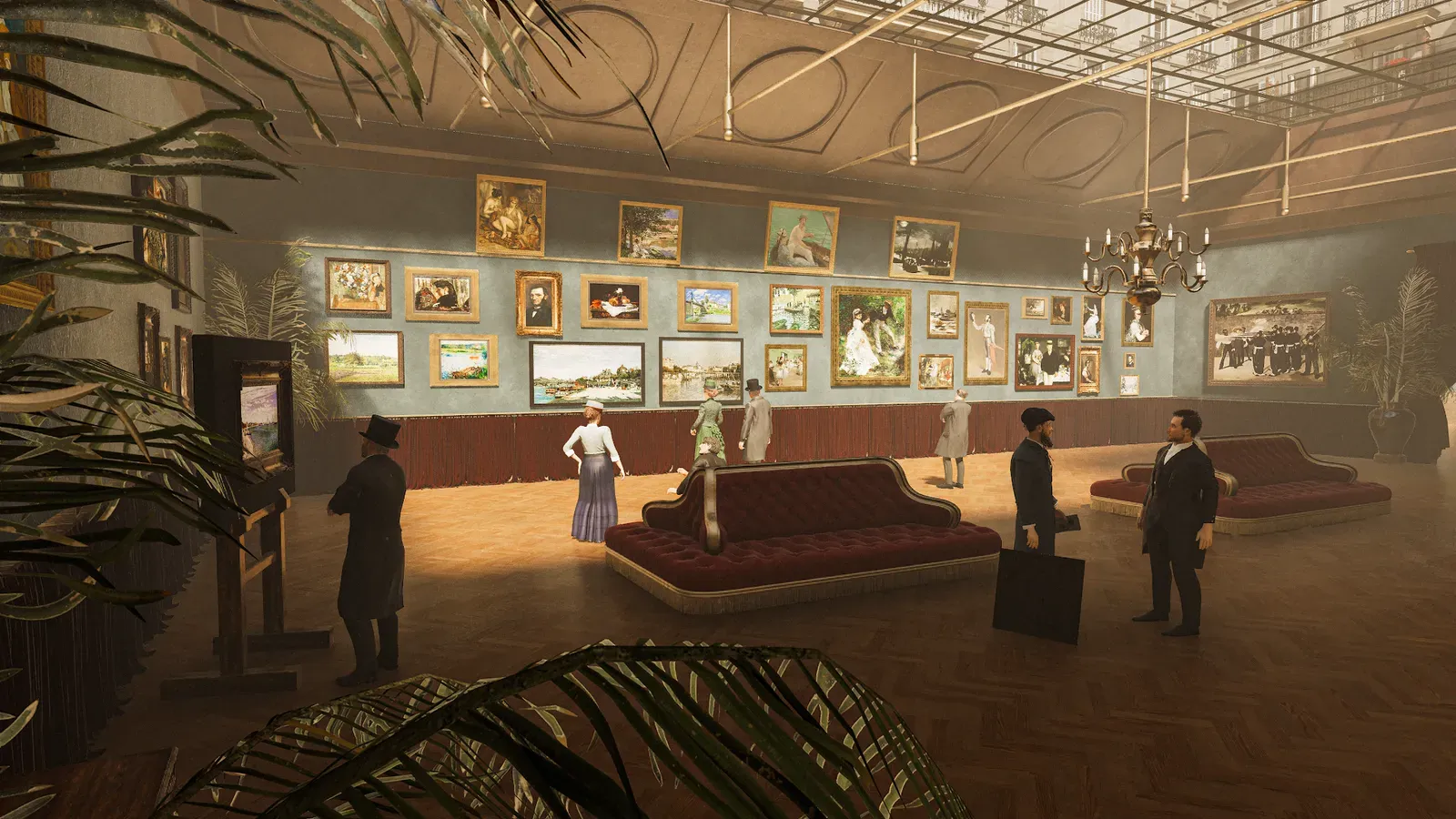
Inside the Durand-Ruel gallery around 1875, hardly drawing a crowd. In the foreground, Paul Durand-Ruel and Claude Monet deep in conversation.
But Paul Durand-Ruel was more than a dealer to the Impressionists: he paid these painters a regular income in exchange for exclusive rights to their output. That money allowed them to keep painting. Monet would later acknowledge it: without him, the Impressionists would have starved.
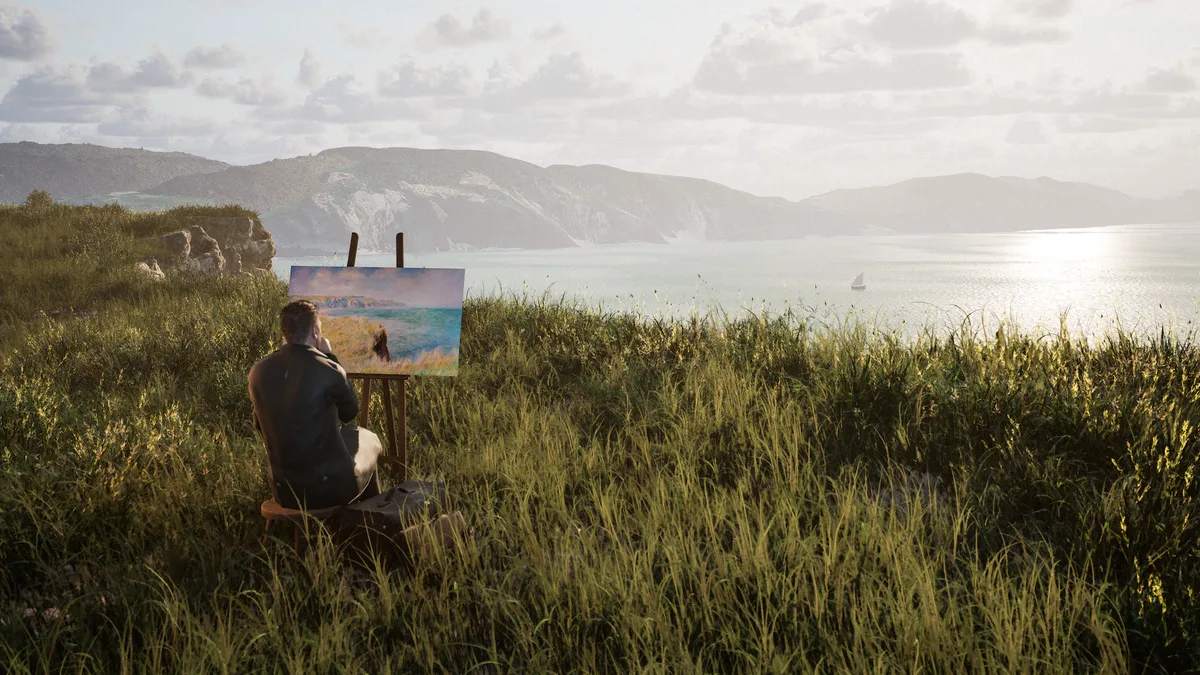
The film then opens onto the cliffs of Normandy, where Monet paints “Bord des falaises à Pourville” from life. The paint tube and the railway had taken painters out of the studio; they seize the changing light with a visible stroke and pure colours.
The cliff gives way to the ocean and opens a new horizon. Nearly ruined, Durand-Ruel tries London, then sails for New York in 1886 with his canvases and his hopes.
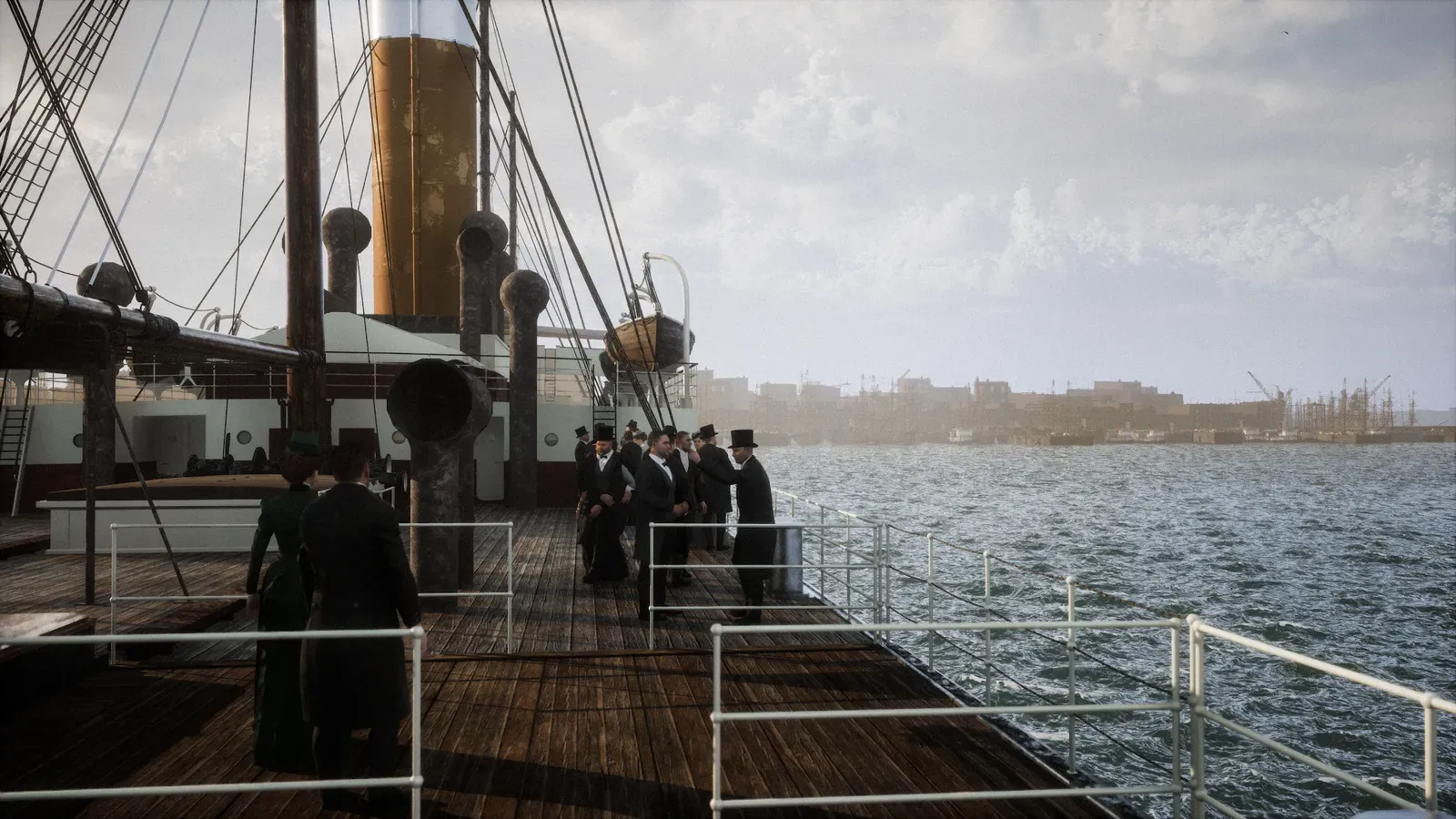
Paul Durand-Ruel and his sons arriving in America in 1886. On the horizon, the island of Manhattan.
At Madison Square, where Fifth Avenue crosses Broadway, a booming city takes shape. New Yorkers immediately take to these rejected painters. Outside the gallery at 389 Fifth Avenue, opened by Durand-Ruel and his sons, the crowd presses in to see Renoir, Monet, Pissarro and Boudin.
Back to Paris, 35 rue de Rome, in 1922. In Paul Durand-Ruel’s apartment, every wall is covered with paintings; an innovator, he opened it free of charge to anyone who wished to see them. In thirty years he assembled close to twelve thousand works, today in the greatest museums in the world.
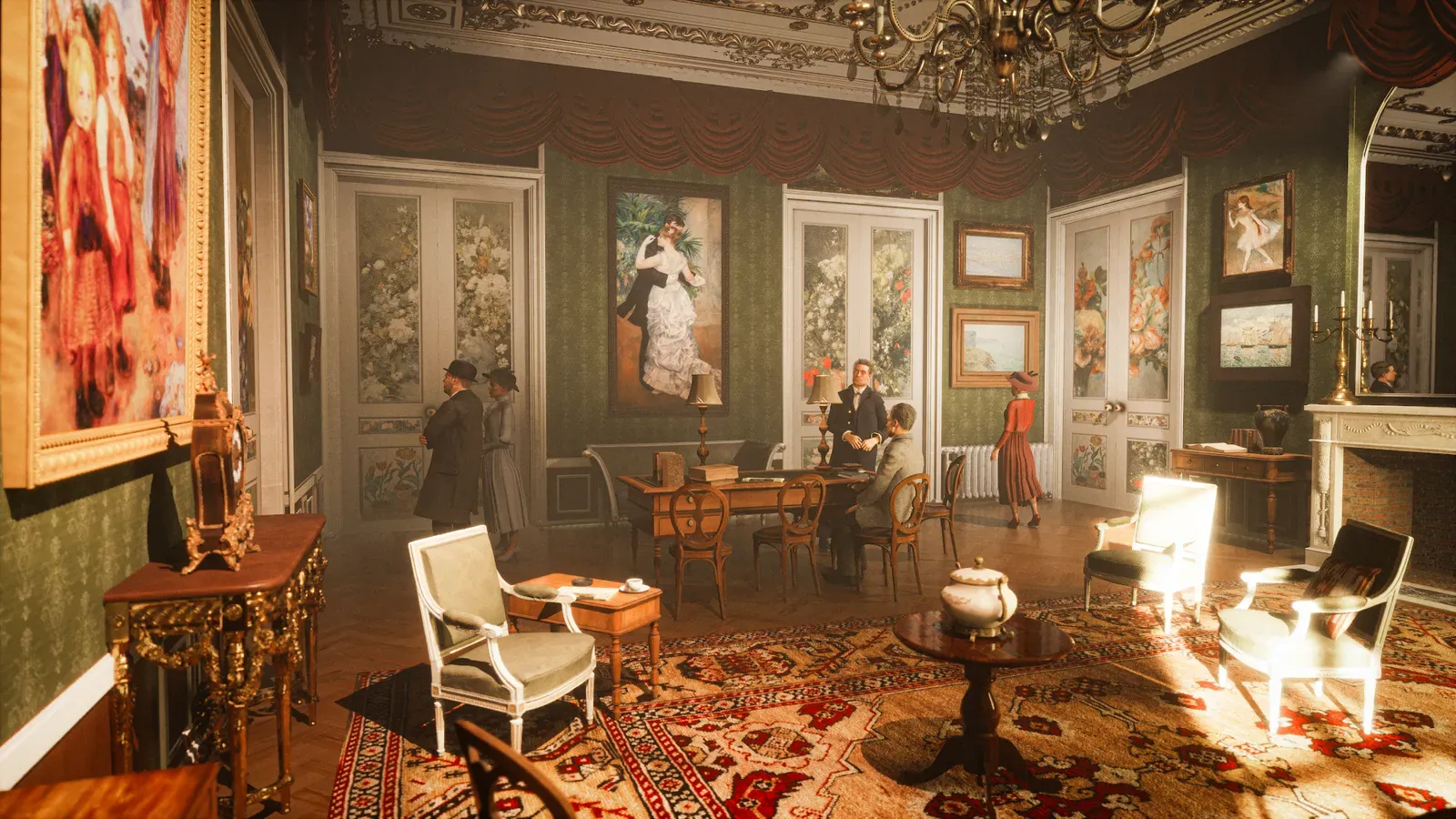
Paul Durand-Ruel’s apartment at 35 rue de Rome: a private museum, open to all, where Impressionist canvases covered every wall.
The film closes on rue Laffitte in 1925, in the same perspective as at the start, but with the Sacré-Cœur as the vanishing point, a sign of time moving on. A new avant-garde already hangs in the window, spotted by Paul Durand-Ruel’s sons, Joseph and Georges. The camera rises towards Montmartre to evoke the painters of the Bateau-Lavoir and the Fauve and Cubist movements, talents that the next Durand-Ruel generations would go on to discover and support.
The approach: seeing through the painters’ eyes
The film’s creative principle comes down to one idea: to show the landscapes as the Impressionists saw them, by placing the viewer in the painter’s gaze. The Seine in front of the Louvre and the cliffs of Pourville first appear as we reconstructed them, faithful to the topography and architecture of the period. Then the light begins to vibrate, the outlines dissolve, the brushstroke appears: the painting emerges from the landscape itself. This shift from the reconstructed image to the canvas makes you understand what the painters saw and what the critics of the day did not: Impressionist painting is a new way of looking at the world, as close as possible to sensation.
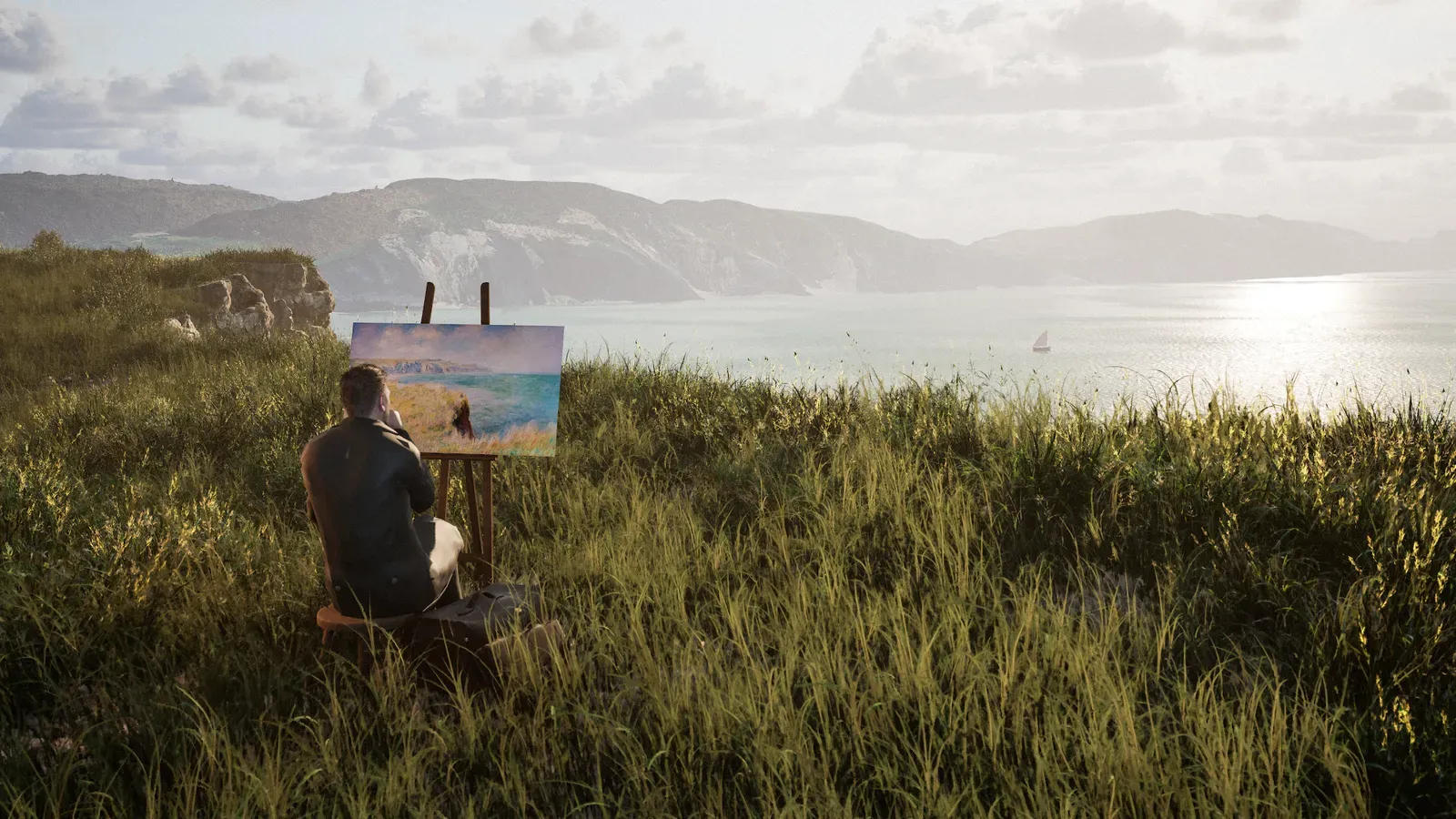
Claude Monet painting “Bord des falaises à Pourville”. The canvas melts into the landscape.
The soundtrack extends this approach with music from the painters’ own time. Claude Debussy and Maurice Ravel, figures of musical Impressionism, sit alongside Camille Saint-Saëns: you hear Debussy’s “Deux Arabesques”, “Une barque sur l’océan” from Ravel’s “Miroirs”, and “Le Cygne” from Saint-Saëns’s “Carnival of the Animals”. Like the paintings, these pieces work by touches and reflections: they let you hear what the canvases let you see.
Behind the scenes: putting a sale inside a film
What sets “Generations of Vision” apart is its paintings. The ones you see in the experience were chosen with Christie’s from the lots of the Durand-Ruel collection. You come across Sisley, Lépine, Boudin, Renoir and Loiseau, hung where they might have hung.
We took care to show in the galleries only works that actually passed through the hands of the Durand-Ruel family. With Christie’s help, we therefore studied the provenance of many Impressionist canvases in detail.
For the settings, each scene started from a question: what do we have? We sometimes rely on archives directly linked to the Durand-Ruels, such as those of the New York gallery, but also on more general historical sources: gallery windows in 1870, Paris cadastral plans, period engravings showing the interiors of art galleries. When the archives are silent on the precise subject to be reconstructed, we proceed by analogy: we select a corpus of images from the same geographical and historical context as our subject.
So the views of the rue Laffitte gallery, inside and out, draw on archives of Parisian galleries of the 1870s in the Grands Boulevards district, similar to Durand-Ruel’s, while the views of the rue de Rome apartment are based on precise archive photographs from the Durand-Ruel collection.
And there is what we chose not to show, for lack of sources or for the sake of variety. The interior of the London gallery, for instance, is only evoked through archive images. It is the rule we apply everywhere, and which we set out in our piece on reconstructing lost heritage: we reconstruct what the sources allow, and we own up to what we do not know.
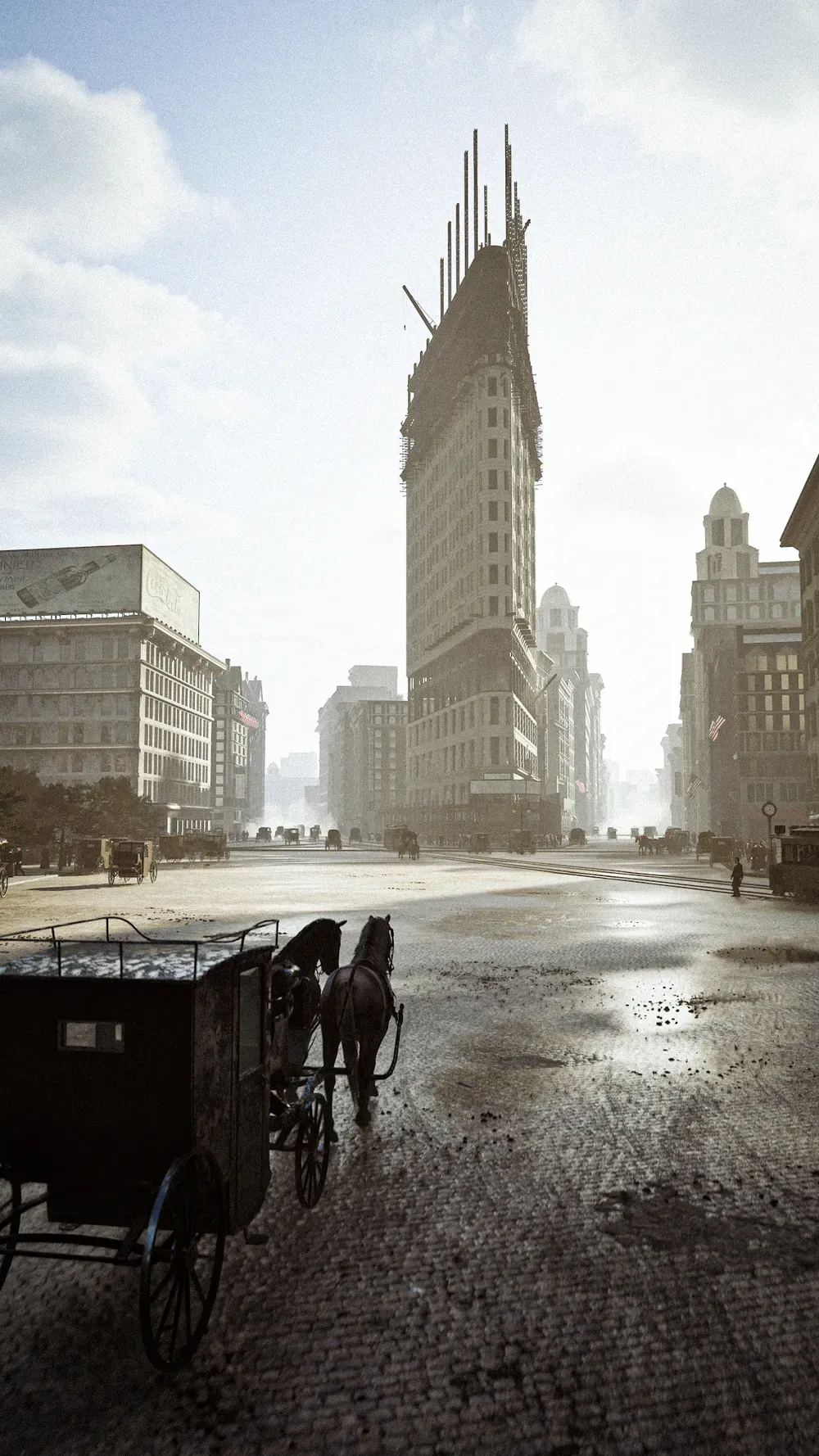
Madison Square, New York. How do you evoke the New York of the period? With a landmark building, of course. Here, the Flatiron Building under construction.
How the film was shown at Christie’s Paris
During the exhibition of the Durand-Ruel collection, from 16 to 22 October 2026, the film was offered at Christie’s Paris, 9 avenue Matignon (8th arrondissement), in French and in English.
It was a first for Timescope: the experience was designed for the Apple Vision Pro, one of the most advanced virtual-reality headsets on the market in terms of resolution. In a film devoted to the painters’ gaze, image quality is no longer a technical detail.
Film and exhibition answer each other. The VR experience gives the works back their context; in return, the presence of the originals gives the film its full force and invites the visitor to find, in the rooms, the canvases glimpsed in the headset. You never look at them quite the same way again.
The irony of history: paintings judged unsellable a hundred and fifty years ago are today among the most sought-after on the market.
And next? The Paris of the Impressionists, on the banks of the Seine and the Champ-de-Mars
If you liked the principle, it does not stop at avenue Matignon. All year round, The Origins of Paris and The Symbol of Paris offer the same concept of scientifically validated time travel, but experienced in situ, where history happened. It is a one-hour guided walk along the quays or across the Champ-de-Mars, where our virtual-reality binoculars bring back Lutetia, medieval Paris or the Paris of the World’s Fairs, the one the Impressionists knew. It is open from age 8, in French, English and Spanish.
Questions we are asked
Did you have to take part in the sale to see the film? No. The film was open to every visitor to the exhibition, with no registration for the sale.
Are the paintings in the film the ones in the sale? Yes, for the most part. The canvases you see in the window or on the walls were chosen from the lots of the Durand-Ruel collection, or from works that actually passed through the family’s hands. You will recognise masterpieces such as Manet’s “The Fifer” or Renoir’s “Dance in the City”.
Is everything reconstructed from archives? Yes. The streets, the gallery and the apartment are computer-generated, modelled on period sources. The press quotations are authentic.
Can the film be seen outside Paris? It was presented in New York from 11 September 2026, then in Hong Kong, Brussels and London, following the collection’s tour, up to the sale held in Paris on 22 October 2026. The experience remains available to Christie’s clients on their dedicated Apple Vision Pro app.
In short
“Generations of Vision” tells how a family of dealers bet on painters that all Paris thought mad, and won. Shown at Christie’s Paris from 16 to 22 October 2026, the film brings back rue Laffitte, Madison Square and rue de Rome at the turn of the last century, with the paintings of the collection on sale hanging on the walls. Five minutes to understand why the Durand-Ruel family made the Impressionist movement possible, and so changed the history of art.
Sources and practical links
- Albert Wolff, review of the second Impressionist exhibition, Le Figaro, 3 April 1876.
- Marc Elder, À Giverny, chez Claude Monet, 1924 (Monet’s remarks on Durand-Ruel).
- Paul Durand-Ruel, Mémoires du marchand des impressionnistes, edited by Paul-Louis and Flavie Durand-Ruel, Paris, Flammarion, 2014.
- Pierre Assouline, Grâces lui soient rendues. Paul Durand-Ruel, le marchand des impressionnistes, Paris, Gallimard, “Folio”, 2004 (1st ed. Paris, Plon, 2002).
- Christie’s Paris, “Durand-Ruel. Generations of Vision”, exhibition 16 to 22 October and sale on 22 October 2026, 9 avenue Matignon; coverage in The Art Newspaper and Barnebys.
- How to reconstruct lost heritage, our piece on the method.
- The Origins of Paris and The Symbol of Paris, opening times and booking.
- Images: all views are computer-generated stills from “Generations of Vision”, Timescope reconstructions for Christie’s.