
Can You Trust AI With History?
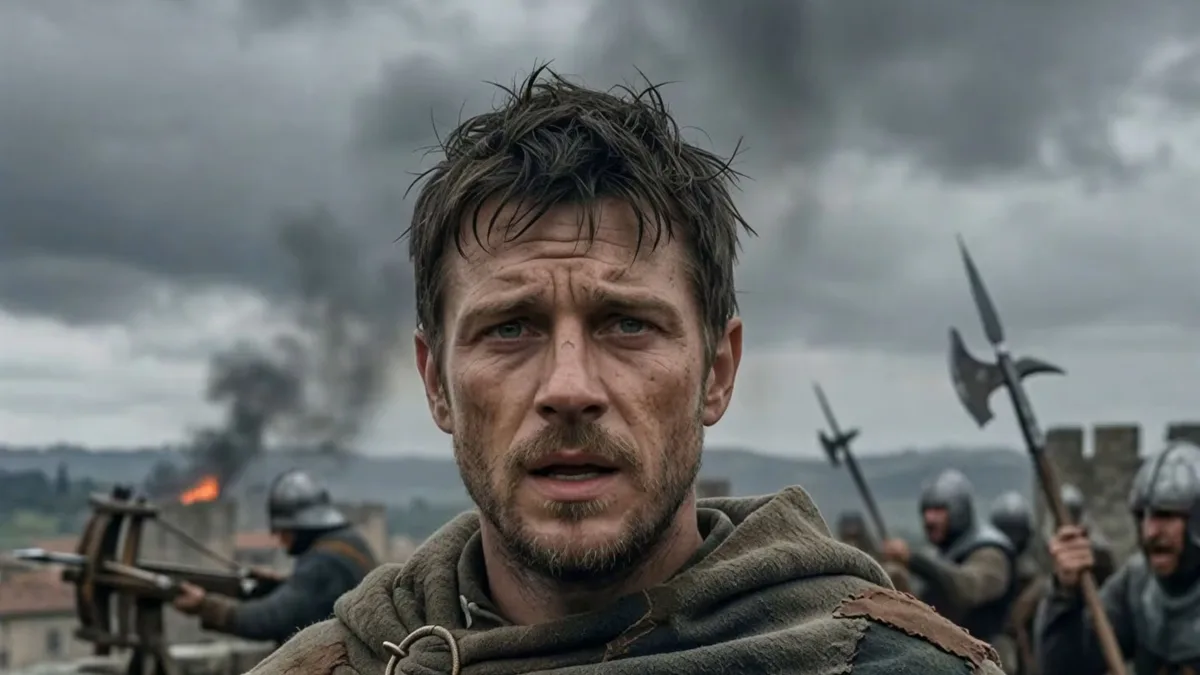
A few days ago, a video came up in our feeds: a “POV” immersion in the Paris of the Black Death, 1348. Eye-level camera, muddy alleys, bells, stretchers. You are there. And everywhere, those unsettling figures in bird-beak masks, the very image of the plague. The edit is striking, and thousands of people shared it. It has only one flaw: in 1348, that mask did not exist, and it would not exist for nearly three more centuries.
AI-generated “historical” videos are often wrong, and it is no accident: these models are trained to produce plausible images, not true ones. They compress the internet’s dominant imagery onto any period, with no chronology and no sources. The problem is not artificial intelligence itself, it is the absence of method: without sources or a historian’s eye, the error goes viral, and it sticks in people’s memories. A deep dive.
The mask that travels through time
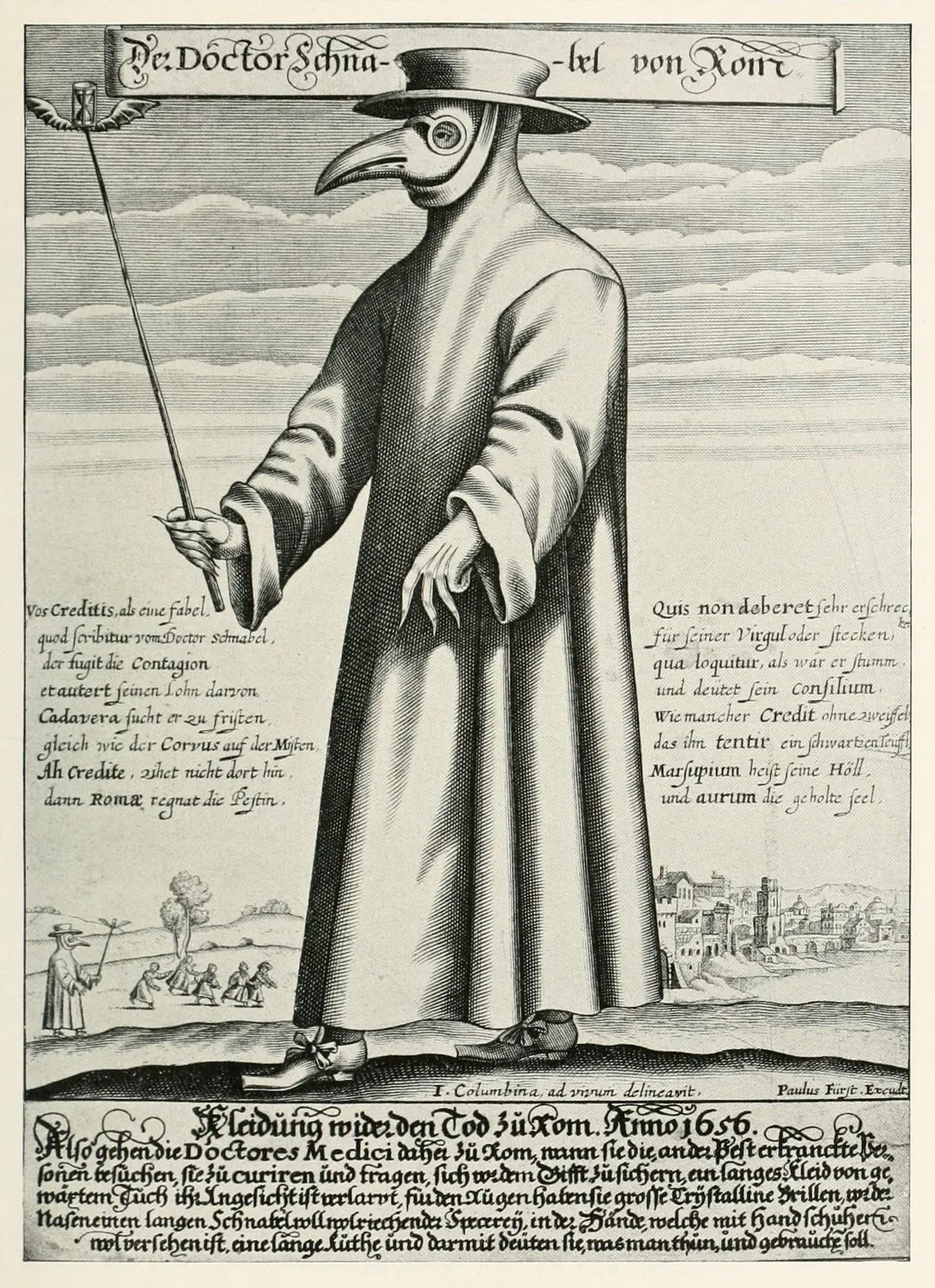
“Der Doctor Schnabel von Rom”, engraving by Paul Fürst, 1656. The beaked costume enters the iconography in the 17th century, three centuries after the Black Death.
Take the beak mask. That costume, leather, glass goggles and a beak stuffed with aromatic herbs, was devised around 1619 by Charles de Lorme, physician to King Louis XIII, and spread during the great plagues of the 17th century, as the famous engraving above records. The Black Death that struck Paris in 1348 belongs to another world, 270 years earlier: its physicians faced the scourge in ordinary clothes. The image is iconic; applied to the Middle Ages, it is simply false.
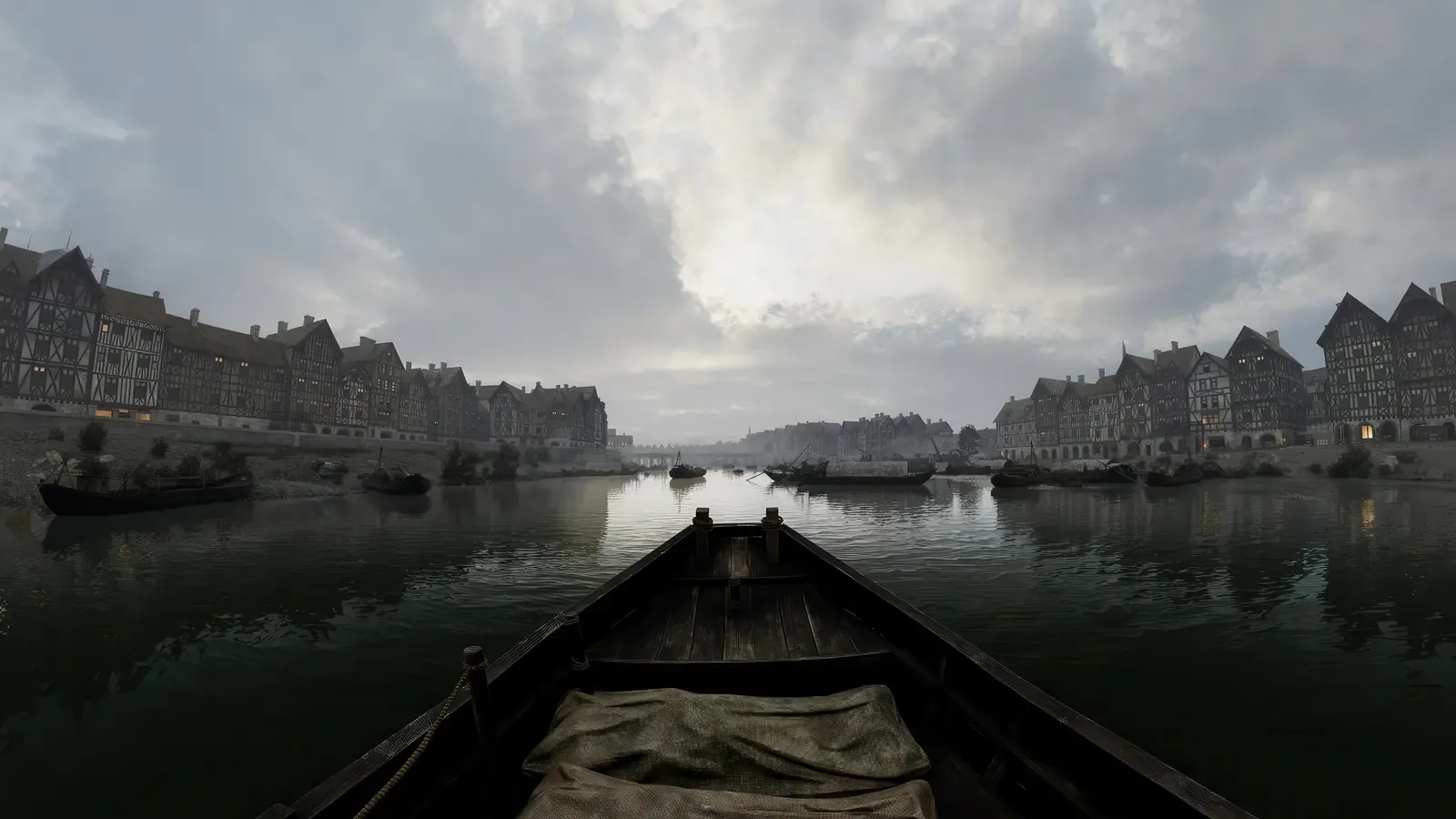
The Black Death of 1348 reconstructed for The Origins of Paris. Not a beak mask in sight: they would only appear three centuries later.
We know the temptation well: while preparing the Black Death scene of The Origins of Paris, we considered that mask. Visually, it is irresistible, and everyone recognises it. We ruled it out, precisely because it is anachronistic. That is the whole difference between an image that impresses and an image that tells the truth: sometimes, rigour costs you a beautiful shot.
”POV” videos rewriting the past
The plague video is not an isolated case. Since early 2025, immersive AI-generated “POV” videos have been exploding on TikTok and Instagram, as documented by an investigation by the French magazine L’ADN: accounts let you live “24 hours in the shoes” of a 19th-century miner, of Louis XVI, of a First World War soldier. Success is instant, tens of thousands of followers within weeks, for videos produced in a few hours. And the errors pile up: a Prehistory where humans and dinosaurs coexist, a peaceful Hiroshima where people stroll through gardens on the morning of 6 August 1945. Under one of these videos, a schoolgirl says thank you: it is helping her revise for her exams. That is where the line between fiction and knowledge gives way.
Why these errors stick
One could find comfort in the idea that “people can tell the difference”. Research says otherwise, and has for a long time.
As early as 2009, a study published in Psychological Science by Andrew Butler and Henry Roediger’s team measured what happens when people learn history from inaccurate films: viewers remember the film’s errors even when they have read an accurate text, and even when they were warned, before the screening, that the film contained inaccuracies. Only a specific warning, error by error, protects memory. A thirty-second video carries neither credits nor warnings.
As for the idea that you can “just tell” when an image is generated: a study published in PNAS in 2022 by Sophie Nightingale and Hany Farid showed that synthetic faces have become indistinguishable from real ones, and are even judged more trustworthy than real faces. The immersive format makes everything worse: in the first person, an image is no longer watched, it is lived.
Plausible is not true

The memory of a generative model: probabilities learned from images, not dated sources.
Why does AI put beak masks in 1348? Because it does not know what 1348 is. A generative model learns from the imagery available online, where the beak mask is the visual attribute of “the plague” in general, from video games to carnivals. It has no chronology and no notion of evidence: its goal is to produce the most plausible image given what it has seen, not the most accurate image given what actually was. Plausibility is its success; in history, it is precisely the trap, because a plausible error is undetectable to anyone who does not already know.
AI is not the enemy
Should these tools be banned from heritage work, then? No, and that would in fact miss the point. Properly framed, AI already provides real services: searching archival corpora, helping restore damaged documents, quickly testing visual hypotheses before submitting them to experts. These uses share one principle: AI proposes, and someone who knows decides. The technology will evolve, and the models will improve. What will not change is this: a historical image is only reliable if a method comes before it, with sources, verification, trade-offs, and people whose job this is.
What truth costs, and what it earns

The historical method starts far from any screen: in books, archives and the work of those who searched before us.
At Timescope, every reconstruction starts with the sources: archives, maps, period imagery, academic work. Historians work with us on the reconstructions themselves, like Géraud Létang on The Origins of Paris and The Symbol of Paris, and every scene is validated before production. That process is what settled the case of the beak mask, and dozens of similar trade-offs, almost all of them invisible to the public: it is the price of a simple promise, that what you see in our binoculars really stood where you are standing. Our behind-the-scenes page tells that story in detail.
In short
AI “historical” videos get things wrong because they optimise for plausibility, not truth, and research shows their errors settle durably into memory, even for forewarned viewers. AI is neither to be celebrated nor banned: it is a tool, worth only as much as the method around it. In history, that method has always had a name: sources. And a face: the people who know how to read them.
Sources
- “Ces vidéos IA POV qui déforment dangereusement l’Histoire sur TikTok”, L’ADN, 2025 (in French).
- “The celebrity physician and the plague”, Wellcome Collection, on Charles de Lorme and the invention of the plague costume (1619).
- Andrew C. Butler, Franklin M. Zaromb, Keith B. Lyle and Henry L. Roediger III, “Using Popular Films to Enhance Classroom Learning”, Psychological Science, 2009.
- Sophie J. Nightingale and Hany Farid, “AI-synthesized faces are indistinguishable from real faces and more trustworthy”, PNAS, 2022.
- The making of our experiences and the history behind The Origins of Paris, for the full method.