
Virtual Reality vs Augmented Reality: What's the Difference?
People mix the two up all the time, and that’s fair: the terms are everywhere, rarely defined. Here is the difference, in one sentence then in detail.
Virtual reality (VR) replaces what you see with a fully reconstructed world. Augmented reality (AR) adds virtual elements on top of the real world, which you keep seeing. Everything else follows from that.
What is virtual reality?
Virtual reality transports you into a 100% digital environment. With a headset covering your eyes, you no longer see the room you’re in, you are “elsewhere.” Turn your head and the image follows. It’s the technology of headsets like the Meta Quest, or of in-venue immersive experiences.
Its strength: total immersion. Its weakness: it cuts you off from the real world and the people around you, and can cause a sensation close to motion sickness for some people.
What is augmented reality?
Augmented reality keeps the real world in front of you and overlays information or images onto it. The best-known example: a mobile game that makes a character appear on the pavement filmed by your phone. You still see the street, the pavement, the passers-by, the virtual layer comes on top.
Its strength: you stay anchored in reality, with your group and surroundings. Its weakness: the immersion is less spectacular than VR.
What about “mixed reality”?
You’ll also meet the term mixed reality (MR), where virtual objects genuinely interact with your physical environment. It’s an advanced form of augmented reality. The umbrella term for all of this is extended reality (XR).
| Technology | What you see | Do you stay in the real world? |
|---|---|---|
| Virtual reality (VR) | A 100% reconstructed world | No |
| Augmented reality (AR) | The real world + a virtual layer | Yes |
| Mixed reality (MR) | The real world + interactive virtual objects | Yes |
Which one does Timescope use?
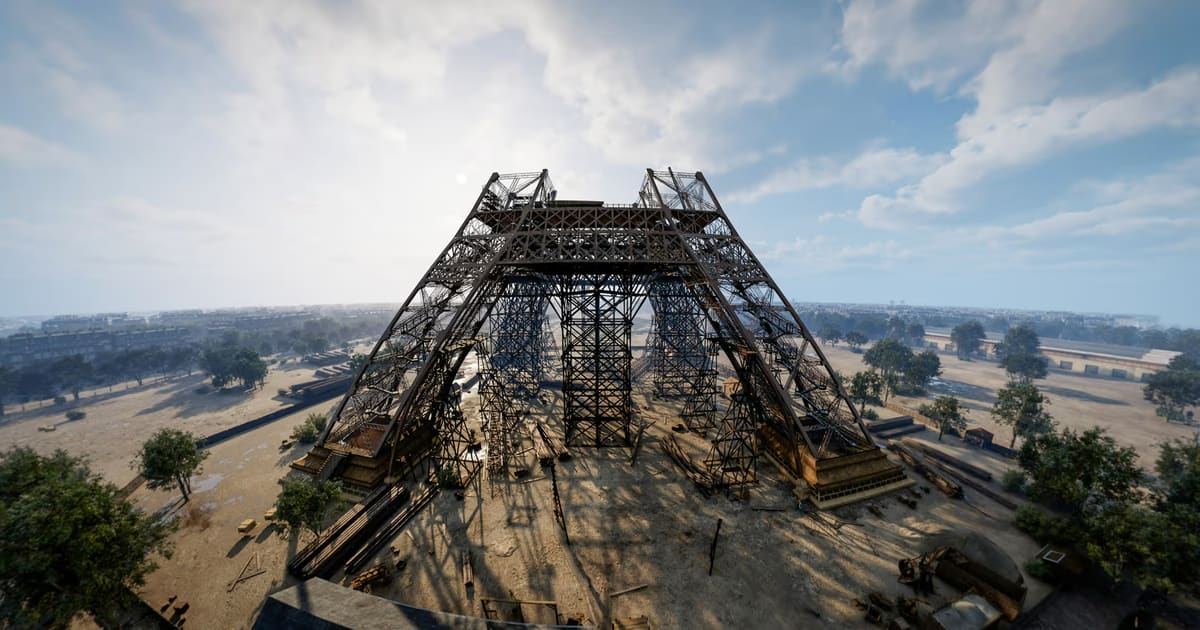
A hybrid approach, built for the best of both worlds. Our experiences happen open-air, in Paris: you walk the real banks of the Seine or the real Champ-de-Mars. At each observation point, you raise our “Binoculars” to your eyes, and there, in virtual reality, today’s scenery gives way to yesterday’s, aligned exactly onto the landscape in front of you.
In practice: the spectacular immersion of VR, without the isolation or the motion sickness. Lower the Binoculars and you’re back in the present, with your group. That’s what makes the experience accessible from age 8 and comfortable for everyone.
Do you need to know VR already?
No. No controller, no complicated setup: a guide is with you and it’s intuitive immediately. If you wear glasses, the Binoculars accommodate them like ordinary binoculars.
Want to feel the difference yourself? The best way to understand immersion is to live it: discover The Origins of Paris on the banks of the Seine, or The Symbol of Paris at the foot of the Eiffel Tower.